
One of the great what-ifs of Irish history is what would have happened if the 1916 leaders hadn’t been executed. On this date, 100 years exactly since the Easter Rising began, it’s worth asking another question, what would the rebels have done with their lives, had they lived?
A quick trawl thought the 1916 Proclamation signatories reveals a disproportionate number of writers. Padraic Pearse was a short story writer, playwright and poet, Thomas Mac Donagh wrote poetry and plays, Joseph Mary Plunkett was a published poet and journalist, James Connolly was a prodigious political commentator.
What this shows, of course, is that before they were armed combatants, the rebel leaders were part of a cultural revolution, and had the political atmosphere of the time been different and the Rising hadn’t happened, (or the leaders hadn’t been executed), these young men might well have pursued literary and artistic careers.
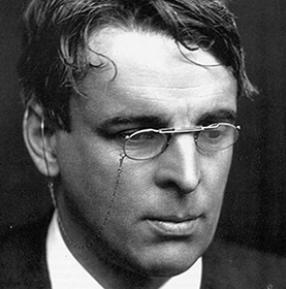
In the end, they chose the sword over the pen and it fell to others to explore the origin myth of the Republic. Ironically, the two writers most identified with creating the Rising on the page – poet W. B.Yeats and playwright Sean O’Casey – were not directly involved in events at all.
From opposite ends of the Protestant social scale, upper-class Yeats and working-class O’Casey explored the doubts and misgivings of the Rising’s “success” from a distance, both philosophically and geographically.
Most people mistakenly believe that Sean O’Casey – whose Dublin trilogy, Shadow of a Gunman, Juno and the Paycock and The Plough and the Stars charts the political foment of the turbulent decade from the Dublin Lock-out to the Civil War – was a combatant or at least a supporter of the Easter Rising. Given his ardent nationalism and socialism, he should have been.
Although O’Casey had been heavily involved in the Irish Republican Brotherhood (IRB) and in 1914 had joined the Irish Citizen Army (ICA), he did not support the Rising and played no part in it. He was distrustful of the move towards violence but in fact, it was a procedural wrangle with Constance Markievizc that put an end to O’Casey’s activism.
O’Casey believed that the countess’s membership of the nationalist Cumann na mBan, the female branch of the Irish Volunteers, should disqualify her from the Irish Citizen Army. ( The Volunteers had been set up as a response to Edward Carson’s Ulster Volunteer Force: the ICA had grown out of the Dublin Lock-out. ) O’Casey suspected Markievizc of spying for the Volunteers and demanded she be expelled. The matter was put to a vote and when O’Casey lost, he walked out.
The irony was that in January 1916 the Volunteers and the Citizen Army joined forces but at that stage O’Casey had cut his links with the Republican movement. As historian Padraig Yeates observed in his book, Lockout, “the upshot of the faction fighting was the Citizen Army lost a clerk and Ireland gained a playwright”.
O’Casey sat out the Rising hunkered down with his elderly mother in East Wall, though Christopher Murray, O’Casey’s biographer notes in Sean O’Casey: Writer at Work that he spent several nights of Easter Week roaming the city despite the fact martial law was in force. Known as a nationalist sympathiser, he was picked up on Thursday, April 27 during a sweep of the area and held by the British Army for two nights.
“The internees were deposited in the cellar of a huge granary nearby, where they remained until Saturday morning, playing cards and chatting with the soldiers and seeing, in the distance, a faint glow as O’Connell Street went up in flames,” according to Martin Marguiles, author of The Early Life of Sean O’Casey.
If O’Casey’s Rising was spent playing cards with the enemy, Yeats, the great poetic chronicler of the nation’s birth-pangs, was reading to them in London, where he was based at the time. Nine days before the Rising on April 15, Yeats had been invited to a charity reading in Piccadilly, chaired by the Chief Secretary of Ireland, Augustine Birrell, whom The New Statesman observed, spent most of the evening “with his head buried in his hands” ─ an attitude many would see as Birrell’s approach to the Rising itself.
Yeats’ first reaction to the news from home was to dismiss the Rising as “a piece of childish madness”. But he and Lady Gregory, with whom he communicated feverishly in the weeks following the Rising, were shocked to learn that they knew some of the Rising’s leaders personally. Yeats had allowed Pearse to stage free productions of his plays in St Enda’s School and MacDonagh had dedicated a book of his poems to Yeats. He moved in the same circles as Joseph Plunkett’s aristocratic nationalist family and, of course, Constance Markievizc had been a childhood friend in Sligo.
But though Yeats knew Pearse, he had publicly severed any association with Pearse’s politics, claiming that he was “flirting with the gallows-tree”.
As Yeats’ correspondence with Lady Gregory and his sister, Lily – the only member of the extended Yeats family who was in Dublin for the Rising – continued in the weeks following, his attitude to the insurrectionists begins to change. The execution of the Rising’s leaders contributed to the change of heart but distance from events was also a factor. He had received a letter from Maud Gonne (whose estranged husband, Capt John McBride was among those put to death) suggesting that the Irish cause had been elevated by the Rising “to a position of tragic dignity”.
“. . .she saw the ruined houses about O’Connell Street & the wounded & dying lying about the streets, in the first few days of the war. I perfectly remember the vision & my making light of it & saying that if a true vision at all it could only have a symbolical meaning,” Yeats wrote.
But by May 23, he was already beginning to see the late rebels as “the ablest & most fine natured of our young men”. According to Roy Foster (W.B.Yeats: A Life II: The Arch-Poet) Yeats was, by this stage, planning to write about the executed men in a poem that was to become Easter 1916 – “a terrible beauty is born” – perhaps the most quoted poem of the Rising. Though written between May and September of that year, it was not published till 1921.
O’ Casey took 10 years to distil the events of the Rising into dramatic form in The Plough and the Stars. The play premiered at the Abbey Theatre in May 1926. The Rising was a terrible mistake, O’Casey told Lady Gregory, shortly before the play was staged, “. . . and we lost such fine men. We should have won freedom by degrees with them.” It was these sentiments, explored through the characters, and the depiction of the Rising as a failed revolution – as well as perceived demeaning of the Tricolour and scenes of citizen looting – which excited riots in the Abbey. O’Casey had further offended by including an off-stage character, The Figure in the Window, whose oratory is based on Pearse’s speeches.
Republican women, led by Hannah Sheehy-Skeffington, and including Pearse’s mother and Mrs Tom Clarke, attempted to storm the stage. While Yeats tried to quell the high feelings by declaring the play as O’Casey’s artistic apotheosis, his words fell on deaf ears and the police had to be called to clear the theatre.
The incendiary effects of The Plough were down to O’Casey’s fearlessness as a dramatist, his distance from the events portrayed and the timing of the staging. As Christopher Murray points out, the 10-year anniversary of the Rising had just passed, but there had been no special public commemoration. “Most people wanted to forget all about the violence of recent years and get on with building and so-called decent life,” Murray observes. The Rising was a “dead issue. O’Casey’s play, by an ironic process of revisionism, made it a live one”.
A version of the post appeared on Headstuff.org:
http://www.headstuff.org/2016/04/fighters-and-writers-a-literary-view-of-the-1916-rising/


 mary morrissy