Postcards from Covid

When Covid was receding in 2022, I began looking at my back catalogue of stories and realised, to my surprise, that I’d written enough for a collection. Short stories can creep on you like that. Unlike a novel, a collection of short fiction grows and accretes over years, and usually isn’t the product of one singular bolt of inspiration. (Bolts of inspiration, I’ve found, are pretty thin on the ground, even with novels.) So if you’re a short story writer, you’ll always have a couple on the boil, or more accurately, simmering, in the background.

During the pandemic, I’d begun writing flash fiction – stories between 100 and 1000 words long – which is a growing niche area in fiction. My original plan with Twenty-Twenty Vision (The Lilliput Press) was to alternate more traditional short stories with a scattering of flash to create a looser mosaic of narratives.

The original manuscript was significantly longer than what has ended up between the covers here. The mix of short and flash just didn’t fly with publishers – lots of admiration for playing with form and stretching the definition of what a collection was, but not enough for them to offer publication.

In the face of rejection, I had to go back to the drawing board.  The first decision was to abandon the notion of mixing flash with short fiction. This was a real pity, as flash stories are energising and energetic, but perhaps sometimes a bit too “soundbytey” when read in large numbers together.  Reading a whole collection of flash together can lead to literary indigestion – like being offered a whole lot of canapés but no main course at a restaurant.  Mixing the two seemed like a good way to counteract this effect, to expand the readership for flash fiction and to enfold it into the general tradition of short storytelling.

With the flash excised from the collection, I had a dozen or more stories left. Many of them had been written pre-Covid and I hit on the notion of revisiting some of the characters I’d written about before to see how the pandemic had treated them.  So the collection contains many twinned stories – characters seen both before and after Covid.

For anyone writing short fiction, which I’ve always considered to be like ‘news from the front’ in the literary world, it’d be absurd not to include Covid. How could you ignore one of the most world-altering experiences of our current century that had happened to you but not in the world of your characters? So in Twenty-Twenty Vision, as the collection gathers pace, the pandemic creeps in.  

Now five years on from Covid, we seem to be ready – or perhaps finally able – to look at the pandemic in its entirety. Up to now we’ve been concerned with surviving and recovering, getting over it and getting on . Now perhaps we’re ready to confront the trauma of the pandemic and to consider its long-term effects on our working lives, our social lives and in our intimate lives.

Which is where the stories of Twenty-Twenty Vision come in. The characters are all of a certain age – close to my own – so the three Rs are greatly in evidence –  retrospection, recrimination and regret. They’re looking back and seeing their mistakes, inevitable for anyone hitting their sixties. And then Covid arrives. And although the theme is hindsight – the 20/20 vision of the title – it’s also a vision of those early days of the pandemic. 

The characters are dealing on the hoof with the Corona Virus – as it was called way back then, remember? e.g. Marie uses Covid restrictions as a cover to drop her best friend whom she suspects of having an affair with her husband; Olivia recognises she’s been staring love in the face her entire life in a queue at a vaccination centre; lockdown gives Adrienne an out after she forms an obsessive attachment to a young woman at work; Carmel can’t forgive her husband for his bankruptcy even after he becomes one of the pandemic’s early casualties.  

Short stories are a notorious hard sell in the publishing world. It seems generally accepted that people don’t read short fiction and that’s mirrored in sales figures. It’s a fact that has always amazed me in the era of the short attention span. You would think short fiction would be the ideal commuter read, the perfect length ( 2-4000 wds) for the screen-addicted. But them’s the statistics.

Given this, Twenty-Twenty Vision will probably be my last collection of stories.  I’ll go on writing in the form – once a short story writer, always a short story writer – but after three collections, I feel I’ve come full-circle. From my first collection in my thirties – entitled A Lazy Eye – which explored a flawed, youthful vision of the world –  to the more rueful, backward glance of Twenty-Twenty Vision in my sixties. Two different perspectives, 30 years apart.

When I look at them both together now, I wonder if, despite the general consensus, hindsight is always right?

Twenty-Twenty Vision by Mary Morrissy, published by The Lilliput Press, will be launched in Hodges Figgis Bookshop, Dawson Street, Dublin on March 26 @ 6pm.

Books and buses

You wait ages for a bus and then three come along at the same time. The odd time it’s the same for books. February and March are a crowded bus stop for me with three publications on the trot. The paperback edition of Penelope Unbound (Banshee Press) came out in late February – in the shops now, folks, in case you missed it first time. My new collection of short fiction, Twenty-Twenty Vision, (The Lilliput Presshttps://www.lilliputpress.ie ) – lands on March 20, with launches in Dublin and Cork, and hot on its heels, a super anthology from Dedalus Books featuring myself along with five other Irish women writers – Rosemary Jenkinson, Geraldine Mills, Mary O’Donnell, Nuala O’Connor and Tanya Farrelly – who edited the anthology – also being launched in Ireland in March. (Details to follow)

‘. . .a novel of great brilliance and inventiveness. . .Penelope Unbound is a masterwork.’

John Banville

‘Sharp, pitiless and heartbreaking. . . (Twenty-Twenty Vision) is a marvellous book.’

carlo gebler

Three little words

The recent story of Vicky Ball (48), the British author, whose success went viral after she tweeted about her sales at a marketing event, was touted around the maintstream press as a good news story. And on the surface, it is. A struggling author published by a small press, who suddenly hits the sales jackpot. What’s not to like? Within hours, Vicky’s post on X, which expressed her delight at having sold just two copies of her book at an authors’ event at the Galleywood Heritage Centre in Chelmsford, England, had attracted more than 24 million views and 745, 000 likes. As a result, her 2020 novel, Powerless, written during the Covid lockdown, began selling like hot cakes on Amazon.

Powerless, a thriller “with lots of twists”, shot up the Amazon besteller charts hitting number 3 on its teen and young adult fiction list. ( As a guide, to win an Amazon best-seller badge, you’d need to sell somewhere between 3,500 and 5000 copies within 24 hours.)

I don’t begrudge Vicky Ball her success. Really, I don’t. Who could not be cheered that this middle-aged teacher and creative writing student at the University of Essex has been catapulted into the literary big time in such a gloriously unexpected manner? (Although I am reminded of the words of that great American cynic, author Gore Vidal, who declared “whenever a friend succeeds, a little part of me dies”.)

But what’s really being celebrated here? Not Vicky Ball’s talent as a writer. Unless you count the power of these three words – “sold two books” followed by two grinning emojis – to transform her writerly reputation and her fortunes.

Perhaps it’s evidence of the amount of goodwill that still exists on social media that moved thousands of people to buy a book by an unknown author out of sympathy for her poor sales record. (Endearingly, Vicky Ball said she wasn’t feeling sorry for herself when she posted her X message: “I’ve done some events where I haven’t sold any.”)

We’ve all cheered at those David and Goliath stories where a small publisher gets an author on to a prestigous prize list, beating off competition from the behemoths in publishing, or those unlikely word-of-mouth successes where readers influence the success of an overlooked book by simply passing it on to their friends. But Vicky Ball’s sudden elevation has nothing to do with her work. It has to do with the power of social media. The only difference in this case is that it worked for the good not the detriment of its target.

By responding to Vicky Ball’s plight – one similar to many self-published authors or writers published by small presses – the social media public was recognising the sheer hard graft involved. These are writers who not only have to create the content i.e. write the books, but they have to be their own marketing and PR agents, and they often have to sell the books, one copy at a time. It’s a side of publishing that’s rarely spotlighted.

Vicky Ball has become the standard bearer for that tribe. But she’s only one. There are thousands who will never get the random stroke of good luck she has. I’m not arguing against her massive boost in sales. But my reservations are similar to the argument against giving money to beggars on the street. Your coin may help the person with her hand outstretched but it does nothing to counterbalance the inequities of the system that got her there.

Vicky Ball is exactly the same writer she was three weeks ago before all this happened to her. The only difference is that she has attracted the mercurial attention of social media and it, not her work, has “infuenced” her transformation into a marketing success.

Good luck to her!


Cooking the books

Even with the enormous growth of recipes online, there’s nothing quite like the heft of a cook book to anchor you in the kitchen. The stains of previous attempts – failed and successful – may shrivel and wrinkle the paper or stick the pages together – but they are testament to the fact that you have a culinary history. (That said, I, for one, am grateful for Yotam Ottolenghi’s cook books with their padded-cell covers and sheeny, stain-resistant pages, which acknowledge that preparation and cooking is a messy job. ) But cookbooks are not mere functional how-to guides; they’re emotional journeys.

When clearing my mother’s house after her death, the hardest items to jettison were her cookbooks. She was a great cook and baker, though I suspect her skills hadn’t come to her naturally. She went to classes in the School of Catering in Cathal Brugha Street as a young wife and her bible was All in the Cooking, a workaday volume of recipes for everyday life full of family stalwarts – lots of dripping, as I recall – on which a whole generation of 50s kids were raised. Her edition was falling apart – a sure sign that it had been pressed into service – and she had bound it in corrugated cardboard covers to keep it together. It was stuffed-full of transcribed rogue recipes, written in her own hand, as well as clippings from newspapers and magazines.

There was also a couple of big, bold, full-colour productions among her cook books, probably gifts. These were essentially coffee-table books from a time when cooking transitioned from being a practical virtue to a spectator sport, and colour printing came into its own. One I recall is The Hamlyn All Colour Cook Book, which, when I went searching for it online, I discovered was authored by Mary Berry. Interesting how the notion of the celebrity chef hadn’t quite happened in 1970 when this book was published. The Hamlyn volume is an illustrated social history of its time. It features a compendium of aspirant recipes for the upwardly mobile. Black Forest Gateau, Swiss Fondue, Chilli Con Carne, Prawns in Marie Rose sauce – dishes that are now being studiously deconstructed in an ironic way by the master chefs of today.

One book I came across in my mother’s things that I wasn’t familiar with was Full and Plenty by Maura Laverty. As I leafed through it I was amazed to discover that long before the Nigel Slaters and Nigella Lawsons of this world, Irish author Maura Laverty had written a cross-genre cookbook.

Hardly surprising since Laverty (1907-1966) was first and foremost a fiction writer, and creator of Ireland’s first TV soap – Tolka Row – in the 1960s. Born in Rathangan, Co Kildare, Laverty, one of nine children, led a colourful, if sometimes financially precarious life. Her father was a farmer on a two-hundred-acre holding, but his gambling ruined the family financially. He then set up a drapery business, but this enterprise also failed. Eventually, he died, and his widow turned to dressmaking to support herself and her children.

Maura moved to Spain as a teenager and acted as governess and later secretary to Princess Bibesco, a rich socialite and writer, who was born as Elizabeth Asquith, daughter of British prime minister Herbert Asquith. She subsequently became a foreign correspondent in Madrid, and wrote for one of the city’s newspapers, El Debate. She returned to Ireland in 1928 to marry James (Seamus) Laverty and in 1937 joined 2RN, the forerunner of RTE. She later became head of women’s and children’s programmes and substituted as the station’s “agony aunt”. When her husband ran into financial difficulties, she supported the family of three children, and became the breadwinner when the marriage broke down.

Writer Nuala O’Faolain recalls meeting her in the 50s. “Maura was in the world of Ireland and Dublin… she knew how to earn good money .She got me my first ever professional job, passing on a commission to research authentic recipes for the new Bunratty Banquet. . .but I used to feel loneliness coming from her. Three children were growing up on the proceeds of her hard work. Where was her husband ? A husband was never mentioned.”

Despite her acumen with money, Laverty never lost the feeling of financial hazard.  In 1946 she wrote:“Someone asked me the other day if I were getting a touch of arthritis in the first and second fingers of my right hand. I’m not, it’s just that my fingers are getting that way from having to keep them crossed all the time.” 

Her best known novels are closely autobiographical. Her debut, Never No More (1942) is based on her childhood recollections of life with her grandmother. It was well received by critics and came with an enthusiastic preface from Sean OFaolain. She followed it with Alone We Embark (1943), a novel about marital infidelity, which, although temporarily banned by the Irish censor (not apparently on moral grounds but for its depiction of harsh living conditions) won the Irish Women’s Writer’s Award. Her third novel, No More than Human, another semi-autobiographical work set in Spain, was published in 1944.

According to the Dictionary of Irish Biography, she may have drawn on her impressions of Dublin’s poor during a period living in the Fitzwilliam Lane area for her final novel, Lift Up Your Gates (1946), the story of Chrissie, a young girl growing up in the slums. However, her biographer Seamus Kelly, suggests that she might have also relied on personal experience. It’s believed that she was sent, aged 9, to live with a childless couple for two years, in Hardwicke Street in Dublin’s north inner city, which would have placed her there in the middle of the Easter Rising.

Laverty also wrote numerous children’s stories and a collection of her fairy tales was published posthumously in 1995. On top of that, she wrote three other cookbooks – Flour Economy (1941), commissioned by the government to teach housewives how to cope with wartime rationing. Kind Cooking (1946) – illustrated by artist Louis le Brocquy – and Feasting Galore (1952).

But the authorial voice in Full and Plenty (1960) is not of a woman of letters leaning on her prodigious reputation. In the introduction she writes – “The preparation of food has always been to me what literature or music or painting is to others” – as if she’d never written herself.

As food and design historian Rhona Richman Keneally remarks, the book was “part home economics manual, part fiction, part creative memoir, part assortment of historical and folk tales”.

“Unlike Laverty’s novels, which were banned or decried because they approached controversial subjects in a graphic way, her cookbooks could be successfully subversive in part because of their genre: they could fly under the radar, seemingly innocuous as mere accumulations of cooking instructions,” Kenneally adds.

The book showcases Laverty’s accomplishments as an author and playwright, but it never talks down to its audience. “Cooking,” she tells her readers, ” is the poetry of housework.”

Full and Plenty is set in the fictional Ballyderrig where the “author” of the cookbook, or the persona she adopts, lives, so that we see the recipes as belonging to characters she writes about. Each section is introduced with a short story in a playful mood, in which the featured food plays a part, sometimes fleetingly, sometimes centrally. In the “Bread” section, Mrs Feeney is in a tizzy because her 35-year-old son has got engaged and is inviting the fiancee to tea. Mrs Feeney can’t bake a cake to save her life, though she’s a champion bread-maker. However, the prospective daughter-in-law Anna is a “college-trained cook with classy notions about dressed-up dishes.” Mrs Feeney drafts in her controlling neighbour Mrs Donnelly to make the fancies, but when the “scornful college-trained cook” arrives, it’s Mrs Feeney’s soda bread she admires, while passing over Mrs Donnelly’s iced sponge and marble cake.

“I always think it’s in the cooking of plain food that a real cook proves herself,” Anna says to the assembled company, which includes Mrs Donnelly. “Any child could make a sweet cake that will pass. . . But there’s no way of disguising badly-made soda bread.”

The match with the mother-in-law is assured and Mrs Donnelly slinks away unnoticed.

“Fish” features a conscientious fishery board official who’s seduced into eating a poached salmon (poached in both sense of the word) in the home of his arch-enemy, Barney Malone, the local who’s been thieving fish from the local river. “Vegetables and Salads” tells the story of a middle-aged landlady Lottie Fenton, who won’t serve onions to her new lodger, Hugh Doherty, because they have painful associations; her first love dumped her because of her oniony breath. (As an “uninstructed orphan”, Lottie didn’t know “that a glass of milk sipped slowly or a mouthful parsley chewed leisurely” will destroy all evidence of onion-eating.) But one day, while Lottie is at the dentist, Hugh breaks the taboo by cooking stuffed onions the way his mother did and is caught in the act. As with most of these tales, all ends well when Doherty, a 50-year-old man holding a torch for his landlady, overcomes the horrified reaction to the transgression. With an apron still tied around his ample middle, he strides masterfully across the kitchen, takes Lottie in his arms and declares his passion.

Statia Dunne nabs the local doctor with her famous stew in “Meats, Poultry and Game”.

“Canapés, Sandwiches and Toast” features Nan Clery, housekeeper to widowed seamstress Rose Brennan, who has to support a family of four on the proceeds of her dressmaking business. (A familiar figure for Laverty after her mother’s experience – and then her own.) Tied together by circumstances, the two women form a partnership that lasts 30 years and is closer to a happy marriage than a mistress/servant relationship. It was a configuration not uncommon in the Ireland of the time, an extended and well-functioning female household. “She (Nan)helped to lay out Tessie, the youngest, when she died of meningitis. She packed Lena’s trunk for her when she went off to be a nun. She knitted six pairs of socks for Paddy to take to Africa when he got his job in the gold fields. And she helped to dress Clare the morning she married the Dublin insurance man.”

This piece, written in the first person recounting the story of these two women, assures the reader that most of the recipes that follow are from Nan Clery’s repertoire. As in her other writing, Maura Laverty drew very closely from life, while at the same time maintaining the “fictional” world she’d created in Full and Plenty.

“A close reading of the language and storylines in these works highlights the remarkable abilities and positive impact that Irish women could and did have in the domestic sphere and beyond,” Rhona Richman Keneally observes. “Evident also is the resourcefulness with which women could and did adapt to evolving economic circumstances and incursions of modernity, and the sense of accomplishment that could come with housework – and especially cooking – if contemplated as a means of empowerment not oppression, and as a vocation unequivocally warranting deep appreciation and respect.”

Interestingly, my mother’s copy of Full and Plenty is absolutely pristine. It doesn’t look like she ever used it. Maybe she just read the fictional and memoir bits? Maybe it was another unwanted gift?

I have yet to try any of the recipes. ( Statia Dunne’s doctor-winning stew would be good place to start, I think. ) But it has made me curious about this gifted, versatile Irish writer, who subverted form to become an early pioneer of food fiction.

Above: Maura Laverty in 1963. Photograph: Courtesy of RTE Archive.

Almost Bloomsday

In honour of Bloomsday, here’s an extract from Penelope Unbound, my speculative novel about Nora Barnacle that imagines a life for her without James Joyce. Here’s the assignation Nora and Jim fail to have before they reschedule for the iconic meeting on June 16.

They’d arranged to meet outside the Surgeon Wilde’s house, but she didn’t show. Told him a fib about having to work overtime, how Miss Fitzgerald came up to her on her way out the door, as she was trying to spear her hat with a pin in the hall mirror, and said that Molly Fowler was sick and couldn’t do her shift. 

Sure what could I do?  

It could have happened like that. Only it didn’t.  Instead she’d said – But Miss Fitzgerald, I have a date with my young man. 

As if they were an item but sure they’d only just met.  He’d picked her up on Nassau Street only a few days ago with a saucy smile and a sailor’s suit. A boy with jamjar specs, not her type at all.

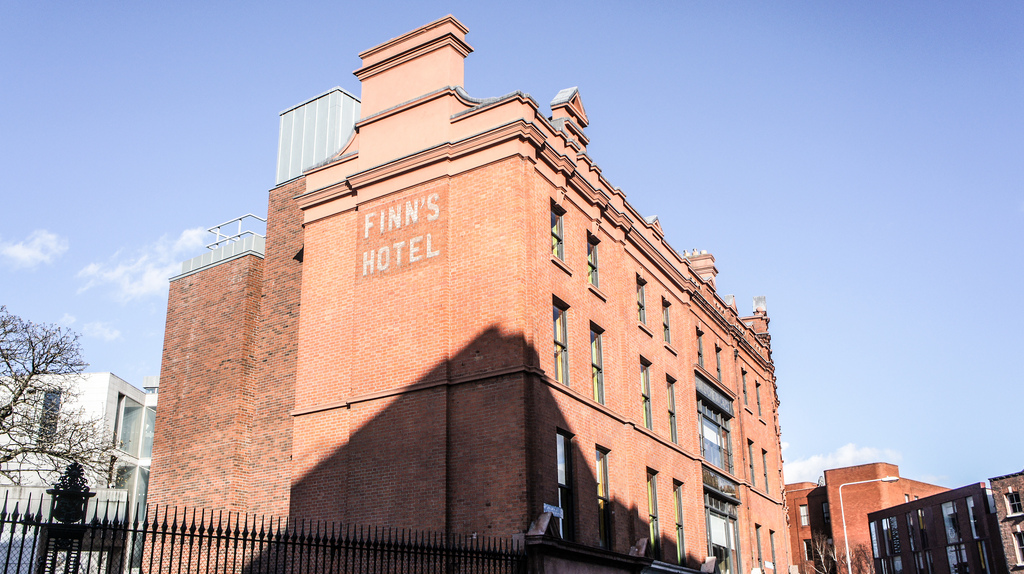
I see that, Miss Barnacle, says Miss Fitzgerald, looking into the glass behind her with a kind of smirk, more music-hall than spinster. And before Miss Fitzgerald had time to cajole, for she had a way of getting on the sweet side of you when she wanted something, Nora had pulled open the heavy front door of Finn’s and gone tripping out into the dusty sunlit lozenge of the street. 

But as she hurried, hand on hat, towards Merrion Square, a strange desolate feeling overtook her, a pang of doubt. She slowed her tripping step to a heavy-footed stroll, and then to a halt.  What had possessed her, to say yes?  Yes to a college boy with a boater. Though he wasn’t the first college boy she’d had. Hadn’t Sonny Bodkin been at the university, even if he didn’t finish, too old for her, they said – no, she wouldn’t think of him now, not now.  She darted around by Sweny’s Chemists and scurried across to the pillars of the Gospel Hall.  She could hear singing from within. The Brethren must be at it, but I thought they didn’t hold with singing. But the place is thronged with them. Just as well, this way she can spy on yer man without him seeing her. 

She remembered the specs he wore. He won’t pick her out from the crowd at this distance even though the sun is glancing coppery off her hair. And, sure enough, there he was, a stick of worry, standing at the corner, hands on hips. Then pacing a little this way and that. He had on the same get-up as the day he chatted her up. Not bad-looking up close, a bit skinny, pull-through for a rifle, when did he last have a square meal, I wonder, and his clothes had seen better days. Then she remembered she’d told him where she worked.  He could duck down to Finn’s, if he had a titter of wit, and ask after her and then her fib would be exposed.  He’d know then she’d stood him up.  Deliberate like. And it wasn’t that she wanted to say no, she just wasn’t sure about saying yes.  Outright. 

And if he had come to Finn’s looking for her, would that have decided her about him? She just wasn’t sure, not like with Sonny Bodkin. Poor Sonny who had stood in the Pres garden and called out to her in the flogging rain.  And she half-delighted, half-mortified by him standing there, loyal as a beaten dog while she hid in the darkness of the auntie-room letting on she wasn’t there.  But this fella was no Sonny Bodkin, she could tell that even from afar. Sure, no one could be.  No one could be the first after the first. 

He was dithering now, she could tell.  But so was she and the longer she waited the stranger he became.  Was he a foreigner, was that what made her hesitate? A Swede maybe with those blond looks?

 Reasons not to approach. Now that she was here she could find a dozen. The minutes passed, five, ten, and her delaying was like a jelly left to set. If she had a penny for every time he changed his mind she’d have a fortune. There he’d go, gathering himself up then doubling back like a dog at a post sniffing, then trying and sniffing again. The hum and the haw of him. 

Hello, hello, she could have rushed up all breathless and false and full of sorrys and old excuses he wouldn’t even listen to because he’d be so relieved. Fellas forget themselves. She almost moved then but she didn’t.  She was stuck to the spot as if she was the one being stood up. And as she stood there debating, didn’t he make her mind up for her.  Fixed his cap on his crown and strode away up the west side of Merrion Square.  In a temper, she’d have said, by the look of him.

 And then she felt the let-down. 

What did she go and do that for? 

What was all the mirror-gazing in Finn’s for, and wondering will I do? 

She remembered the lightness of her step as she had set off and now she was morose and cursing herself for being so perverse. 

What ails you, girl? That’s what Mamo used to say. What ails you.

 No, she told herself shaking her head, I did the right thing, a fella who’d pick you up on the street like that, what kind of fella would he be? Not a patch on Sonny Bodkin, that’s what. 

 She turned to go, checking one last time to see had he changed his mind.  But he hadn’t – he was a cross white speck in the summer sunlight now. She trailed back the way she came, her hat in her hand, her hair dejected. She hadn’t the heart to do anything else with her precious night off. If she knew where Vinny Cosgrave was she might seek him out, but no, if he saw she was keen, he’d only get a swelled head. 

Miss Fitzgerald was at the desk when she came in and raised an eyebrow. 

Back so soon, Miss Barnacle? She was a prissy one. 

He stood me up, Nora, said as she donned her apron, lucky for you.

Mayday, Mayday!

Do you have that sinking feeling about your book project?

Is it a lost cause?

Or is your lockdown novel like your hair – in need of a close cut?

Now’s the time to have someone take a look at that manuscript you’ve been hammering away at in the privacy of your own home since last March.

That’s where The Deadline Desk comes in – I do bespoke mentoring courses for beginners, minor surgery on short stories and full reader’s reports on longer fiction that’s in need of a second opinion.

Check out The Deadline Desk page on this site to see what I do and to read testimonials of satisfied customers, many of whom are published writers.

Or contact me on thedeadlinedesk@gmail.com

Plathology

In February it was quietly announced that Warren Plath, brother of the infinitely more famous Sylvia, had died in the US. He was the last surviving family member of Sylvia’s generation. Warren Plath had virtually no presence on the internet and the notice of his death – aged 85 – made no reference to his connection to the internationally known poet. It would be tempting to think this might mark the end of an era though the interest in Sylvia Plath shows no sign of abating, even now 48 years after her death.

For my generation, Plath was one of those writers whose work was handed around like samizdat. Her poetry collections, The Colossus and Ariel, and her novel, The Bell Jar, were staples on our bookshelves . In my early 20s, I devoured Letters Home, her correspondence between 1950-1963, edited by her mother, Aurelia. (It was Plath’s fate to be “edited” by those close to her. Much of the controversy about her legacy centres around her estranged poet husband Ted Hughes’ management of her work after her death by suicide in 1963.)

Plath’s letters had a certain resonance for me. I, too, was the daughter of a widow and recognised the push/pull relationship with her mother when I first read her letters in the early 1980s. (Otto Plath, Sylvia’s father died when she was 8.)

In a widowed family (since widowhood happens not just to the wife) the need for approval is concentrated on the mother. It’s often twinned with an underlying anxiety of what might happen should the remaining parent die. On the other hand, the daugther of a widow learns to withhold worries and tailor expectations – especially financial ones – for fear of overburdening her mother.  Signs on, even through much of her inner torments while at Smith College, and later in Cambridge, Sylvia’s letters to Aurelia were determinedly cheery.

Aurelia Plath was ambitious for her children and wanted the very best for them, despite – or perhaps because of – their straitened circumstances.  The dynamics of the widow’s family are all too evident in Sylvia’s young letters. She depended utterly on Aurelia, leaned on her for emotional and financial support, wanted to please her, but resented what she called her “hovering”. Her mother gave her conflicting messages – to excel and to conform.

Lest it be forgotten, the widowed mother often longs to be free of her double responsibilities as well. In the 1970s, Aurelia wrote: “I worked to be free of her (Sylvia) & at least live my life – not to be drawn into the complexities & crises of hers.”

After her first suicide attempt in 1953, Plath was given electric shock treatment at McLean, a high-end private hospital in Boston. Her stay there was funded by the author Olive Higgins Prouty, who was a mentor of Sylvia’s, since Aurelia could not have afforded it. (Mrs Prouty paid $2500 over several months to the hospital, a tidy sum at the time. She had not realised Sylvia’s stay would be so long when she first offered help.)

The most recent Plath biography Red Comet; The Short Life and Blazing art of Sylvia Plath by Heather Clark, drawing on new evidence, suggests that the decision to administer ECT was partly to do with Mrs Prouty’s threat to withdraw financial support. If Sylvia had opted for psychotherapy, for example, her stay at the hospital might have been extended for a year, or more.

Plath’s psychiatrist at McLean, Dr Ruth Beuscher, over-ruled the concerns of medical colleagues at the hospital, claiming that Sylvia’s “over-riding sense of guilt and unworthiness could only be purged by the ‘punishment’ of shock treatments”.

The medical necessity of the treatment seems to have been very far-down the list of priorities.

Ironically, after two of six sessions, Sylvia’s depression began to lift, even though the treatment was then in its infancy. ( Plath had been given ECT at another hospital earlier that summer which had been administered without muscle relaxants or anaesthetic.). She told friends it was like being murdered. She would never forget the effects of it: “I need more than anything. . .someone to love me, to be with me at night when I wake up in shuddering horror and fear of the cement tunnels leading down to the shock room.”

After her death, Ted Hughes claimed the controversial treatment “pervaded everything she said and did”. Nowadays we’d call that PTSD. Little surprise that one of the dominant tropes in The Bell Jar, an autobiographical novel about her experiences at McLean, is the image of the Rosenbergs going to the electric chair in 1953. And the metaphor continued to appear in her work. In a diary entry of June 1958 she described her life thus: “It is as if my life were magically run by two electric currents: joyous positive and despairing negative—whichever is running at the moment dominates my life, floods it.”

Although she was never diagnosed as such, Plath is often referred to in retrospect as manic depressive or bipolar.  But in many ways, it was the electric shock treatment that moved her into what Susan Sontag calls “the kingdom of the sick”. It medicalised Plath’s depression, turning it into a “condition”. But a reading of her early journals reveals nothing more than a young woman with a bad case of life.

She was 20 when she made her first suicide attempt, and her diaries from that time show what we might nowadays consider as typical existential angst, replete with the solipsistic striving of a high-achieving perfectionist and the disappointments of an idealistic young adult.

“I can’t deceive myself out of the bare stark realisation that no matter how enthusiastic you are, no matter how sure that character is fate, nothing is real, past or future, when you are alone in your room with the clock ticking loudly into the flash cheerful brilliance of the electric light,” she confided in her journal.

But they also show a woman in a pre-feminist era struggling with her female and her artistic identity.  “I’m just not the type who wants a home and children of her own more than anything else in the world. I’m too selfish, maybe, to subordinate myself to one man’s career.”

Even at that stage she was grappling with how to combine being a poet and a woman.

Sylvia Plath was facing those same choices in 1963 when she killed herself. She was a single parent, recently traumatically separated from Hughes, struggling to fend for two small (and at the time sick) children on her own – an unconscious mirror image of her mother? – while in the grip of a severe depression and the worst winter England had endured in decades.

She had an appointment at a psychiatric hospital set for the week following her death so help was at hand. But she was also consumed with dread that she might be forced into electric shock treatment again, something she knew she couldn’t face. It was almost as if the “cure” had become the illness.

However, she had resolved one of those choices. She left behind on her desk the completed manuscript of Ariel, her ground-breaking second collection of poems, which was published two years later to great acclaim and established her as a poet of standing.

As a tyro writer, I admired Sylvia Plath for how much she wrote. Her collected letters have been reissued in two massive volumes in 2017 and 2018, there are her journals and calendars, along with poems and fiction from an early age. She was constantly engaged with her interior life ( perhaps, sometimes, too much) and always observing – images and ideas from her letters turned up in poems, as did passages from her journals. There is no doubt how vividly she lived on the page. This wealth of material has also meant that Plath is a biographer’s dream. The sheer volume of material written about her amounts to a kind of pathology – or is it Plathology?

To which, I suppose, this blog is adding its two cents’ worth.

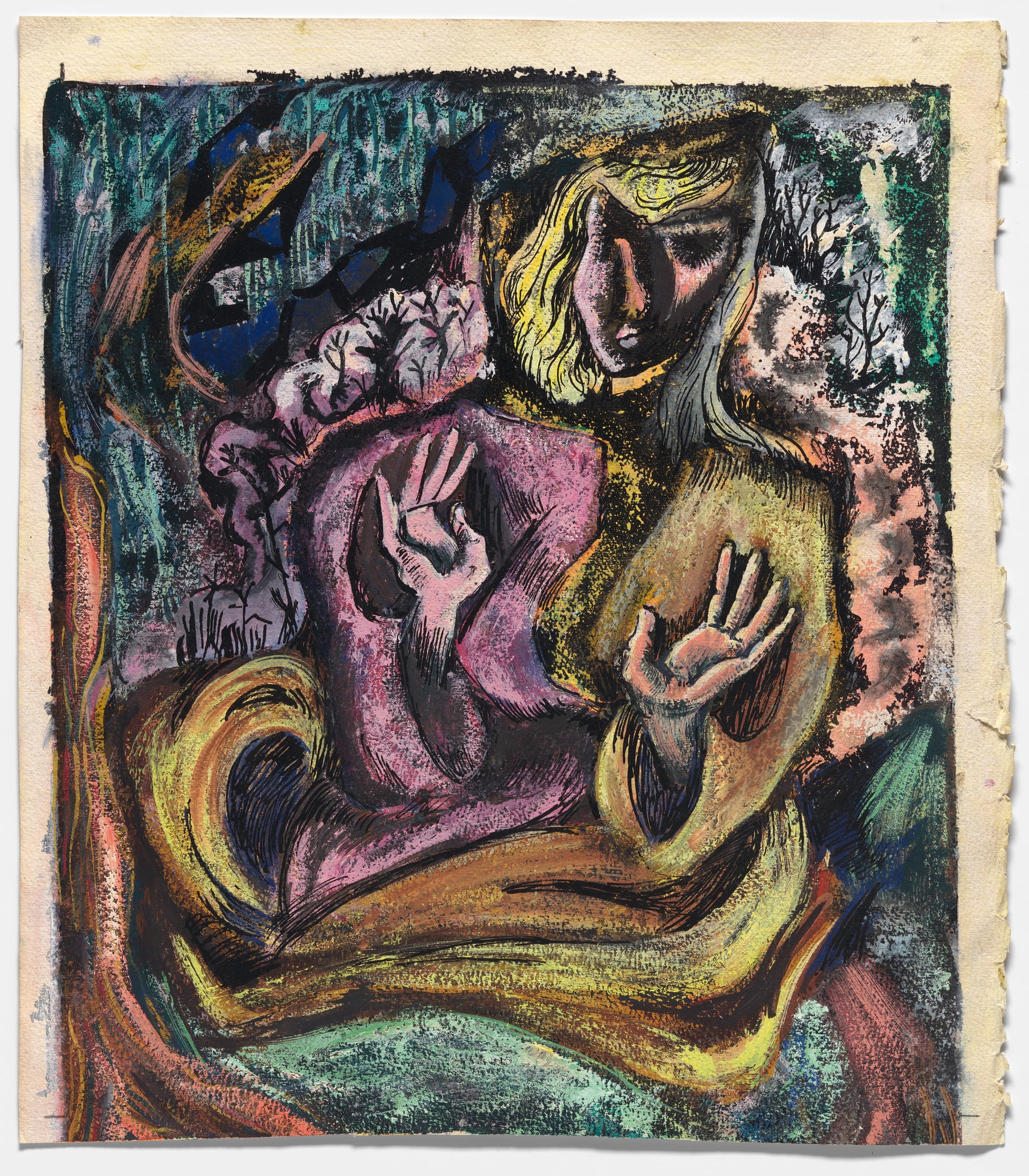
Above: Self-portrait in Semi-Abstract Style by Sylvia Plath, 1946: Estate of Robert Hitter

Feeling Unentitled

There’s usually an “aha” moment when you find the right title for a story, or it finds you.

With “Repossession”, which appears in the latest issue of The Lonely Crowd (a bumper issue of the Welsh journal celebrating five years in existence ) this moment never came, so as far as I’m concerned, it’s still a story in search of a title.

“Repossession” is about a middle-aged couple who buy their dream house at a knockdown price because it’s been repossessed from the previous owners by the bank. Shel, the wife, begins to suffer odd mental distrubances once they move in, which she suspects are linked to her scruples about benefitting from others’ misfortune, but the reader may not be so sure the two are linked.

Over numerous redrafts, the story’s title morphed into “Onset”, “Slippage”, “Drunkard’s Island”, and then with a kind of weary resignation, I went back to its original title, which by then had taken on the feel of a compromise. 

This was odd because it was this linguistic twinning that combines a ghostly haunting and property speculation in the same word – repossession – that prompted me to write the story in the first place. (Thankfully there’s no copyright on titles because as I was writing it, I discovered Lionel Shriver has a story of the same name in her collection of short stories, Property. Superstitiously, I haven’t read it.)

For some time, I had wanted to try my hand at a ghost story.  At the time of writing, I was teaching the ghost story genre to an undergraduate writing class and we had read Rose Tremain’s marvelously ambiguous story, ” Is Anybody There?” – a title that itself has echoes of that spooky poem of our childhood, The Listeners by Walter de La Mare.  (‘Is there anybody there?’ said the Traveler/Knocking on the moonlit door;)

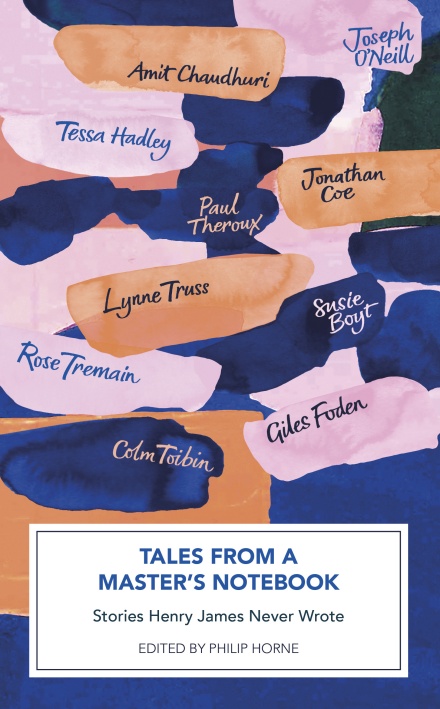
Knocking is the portal to the uncanny in Tremain’s story too, which is from Tales from a Master’s Notebook. Stories Henry James Never Wrote. (Vintage Classics), a wonderfully varied compendium of short fiction from ten writers (including Colm Toibín, Amit Chaudhuri, Tessa Hadley and Joseph O’Neill) who were asked to trawl through the notebooks Henry James left behind after his death and choose one of his unused ideas as a starting point for a new fiction.  

James spent 30 years filling his notebooks with thoughts and story ideas, anecdotes from dinner-parties and newspapers, things noticed on his travels. which formed the “germs” of stories for the future. As the collection’s editor Philip Horne remarks, some of James’s ideas read like “a good Hollywood pitch” : –

Couple Asleep – Woken in Night – Husband Nervous – So Wife Goes Down – He Hears Voices – She Won’t tell Him What Happened.

Man Has been Brave By a Fluke – Lives in Terror of Having to be Brave Again.

Young Man in Mid-Western Industrial Town Fills his Room with French Culture – Refuses the Chance to Go There.

Betrayed Wife Must Have Affair to Get Revenge – Can’t.

Wife Has Long Affair – Husband Dies – They Can Marry – What’s the Problem?

Tremain’s “Is Anybody There?” is about two elderly women living side by side in a small English village, one of whom has a dark secret from childhood. When we discussed it in class, we realized how ambiguous the reality of the story is.  We weren’t sure if anything we’re told happens in the story actually does. We didn’t know who the secret belonged to – the narrator or the neighbour?  Was the story a means for the narrator to tell her own story? Were there even two women at all?  Was one the figment of the other’s imagination?

Something about that slipperiness went into “Repossession”, I hope. As readers we’re encouraged to view Shel as flakey because of how the world perceives her.  There are hints of some old trouble – substance abuse, a mental breakdown? Even her over-scrupulous conscience is considered suspect by her husband. But the real kernel of the story for me is the experience she describes shortly after having moved into the new house.

“. . . I woke early in the morning and had the strangest sensation of not knowing who I was, as if I didn’t recognize the inside of myself. You’ve no idea what an odd sensation it was, like a kind of unmooring, a slippage.  I had to get up quietly and tiptoe around the house to find a mirror.  I found one leaning against the wall in the spare bedroom. Once I saw my face, I knew of course.  It wasn’t like being lost, I knew where I was, I just needed my reflection to tell me who I was.”

My godmother, a woman in her 80s, described exactly this sensation to me shortly before she died.  She was of perfectly sound mind and I remember being struck by the existentialist panic of this moment for her – waking up and not knowing who she was.  The only way she could “come back to herself”, she told me, was by looking in the mirror.   

I remember taking a note of it.  Like Henry James, I have dozens of notebooks where ideas can fester for a long time, and often die from lack of writerly oxygen. This one sat there for eight years waiting for its story to come along, but my godmother’s experience haunted me and was something I revisited in my thoughts.  What would it be like not to “know” yourself?  And to be aware that you didn’t.

Which brings me back to the title conundrum. Here are the ones I discarded and why.

Calling the story “Onset” I thought might unfairly emphasize what is a singular experience in the story.  It would skew the reader’s expectation towards a narrative of dementia.  Shel’s “episode” might foreshadow further “unmoorings”, but equally, it might not.  I’m imagining many of us have experienced similar instances of momentary self-estrangement.

My second title option, “Slippage”, also radiated from this moment in the story. But as a title it has broader connotations. It suggests the general sense of displacement Shel experiences when she moves house – not only in terms of location, but in her grasp of time – for example at one point, history, or the fruits of her historical subconscious, opens up in front of her. But it seemed to me that this title depicted the story’s atmosphere rather than its content.

“Drunkard’s Island” is the name of a real place in west Limerick which I salted away in a notebook 30 years ago and have always wanted to use. The trouble is, as a title, it fails to signpost anything for the reader beyond, perhaps, exciting curiosity. (Not a bad quality in a title.) But it tells you nothing about the narrative, so I jettisoned it.

Unsatisfactory as it is, “Repossession” is probably the title that steers the reader least, and in a ghost story I think that’s important.  It’s a genre that thrives on uncertainty. This title does what it says on the tin; it’s a story about a house that’s been repossessed.

But still I wonder.  Is the perfect title for the story still out there somewhere?

You can read ‘Repossession’ in Five Years: Issue Twelve of The Lonely Crowd.

Mistaken identity?

When it was announced in April that H. G.Carrillo had died of COVID-19, I realised he was the first writer I knew to have died of the virus. Although he was only an acquaintance, whom I followed spasmodically on Facebook (he had a keen interest in art and posted wonderful images almost daily), I felt the loss of his engaging presence in the world. He was 59.

I met Hache (pronounced Hatchay) – as he was known – when I taught at George Washington University in the 2008/9 academic year on a Jenny McKean Moore visiting professorship. It was a momentous year to be in DC, the year Barack Obama was elected, an event that seems now to have happened in some altered and very sane universe. I attended the inauguration and felt lucky to write about it for The Irish Times.

My other formative experience that year was being welcomed into the academic community at GWU, a community that included Hache.

At any given time, English departments in universities have a contingent of visiting academics and scholars who pass through the halls and often fall under the radar. This was not how it was at GWU where strangers were actively welcomed and included in the life of the department.

I can’t say that I “knew” Hache – and, in retrospect, many of his friends and colleagues will find themselves saying the same thing – but what I did know of him was energising. He was stylish and intellectually bracing. He was a friendly, curious colleague – as a visitor, sometimes, that’s all you need; someone to be curious about you – and he was a great teacher. How do I know? Well, you learn this from your students because you hear them talking, or they mention it in passing in an unforced manner. (And if you’re a worrier, you’re wondering what they’re saying about you in other classes! )

He was popular – long queues formed outside his office for consultations – and though he was a tough taskmaster, students admired him. On a teacher rating, one student wrote: “This dude will kick your ass all semester long, but you’ll end up with a grade that accurately reflects the effort you put in. He is literally scary smart and his understanding of people is like nothing I’ve ever seen. It won’t be an easy semester but you won’t regret it.”

So far, so straigthforward.

After Hache’s death, the Washington Post ran an obituary, which provided a familiar narrative of his life. Born in Cuba in 1960, escaped to the US on a refugee boat with his parents aged seven, a young life in Chicago. It was a biography that he developed in his 2004 novel, Loosing my Espanish, into a compelling fiction. But when the obituary appeared, Hache’s sister challenged these biographical “facts”. Hache was not Afro-Cuban, he was African-American, Susan Carroll said. Born in Detroit, his name was Herman Glenn Carroll, and in his youth went by the name Glenn. There were, she added, no Latinos in the family. His biography, in other words, was a self-made fiction.

After he became a writer in the 1990s, his family did not see much of him, his niece Jessica Webley (36) said, although they were aware of his fictitious backstory. He had repeated it so many times over the years to his professors and academic colleagues, to his husband and fellow writers, that “he probably believed it himself,” his sister Susan said.

Cuban Americans were quick to respond to Carrillo’s deception and call him out for cultural appropriation. When his death was announced on the PEN/Faulkner Foundation website, where he was chair of the board of directors, Cambria Francesco demanded they amend the announcement to highlight the fabrication. “This is extremely disrespectful and harmful to Cuban, Afro-Latino, and immigrant people when his (Carillo’s) notoriety and work is based off of a lived experience that is not his own.”

To those close to Hache, in particular his husband, Dennis van Englesdorp, this alternative identity came as a bolt out of the blue. Friends felt betrayed. “The news was a slap in the face for those of us who knew him. We mourned him, but we also reeled in shock. Hache passed for something he wasn’t, even at home with his husband in Berwyn Heights; he did the same with colleagues and students at George Washington University and at the PEN/Faulkner Foundation. I wasn’t the only one who felt betrayed. And so terribly sad,” wrote author Lisa Page, a close friend and colleague.

“He chose not to be from Detroit, eschewing his Midwestern roots. Crossing shark-infested waters in a boat bound for Miami was a better story than leaving Motown for the District of Columbia and beyond. His black life mattered even as he left pieces of it behind. He shed it, like a chrysalis, to fly off and become someone else.

“Hache chose to become a Latino writer, lacing his fiction with Spanish. . . But reinvention has a price. He erased his African American heritage when he created his Cuban backstory. “

At an intimate level, this deception must be extremely hurtful. For his family it represents rejection. For those who loved him, Hache’s fabrication calls into question the very foundation of their relationship with him, and makes his untimely death doubly distressing. They are left with the ultimate doubt – if his personal origin story was a lie, how much else was?

The concept of an African American “passing” as another racial identity makes Carrillo’s choice extremely controversial, given the history of race relations in the US. But in purely literary terms, he’s not the first writer to have created a pseudoynmous existence – the Brontes, George Eliot, Colette; the only difference is how fully he lived it out.

I’m reminded of Michaél MacLíammóir (1899-1978), a doyen of the Irish stage, who was born, coincidentally, on this day 121 years ago.

His real name was Michael Alfred Wilmore and he was brought up in Kensal Green in London. An established child actor who worked with Noel Coward, he also studied art at the Willesden School of Art. As a teen, he read W B Yeats and became passionate about all things Irish. He learned the language and translated his very English name – into a kind of cod Irish. Constructing a backstory for himself – born in Douglas, Cork, he told people – he arrived in Ireland in 1924 a newly renamed “stage Irishman”. During the 1920’s he travelled and acted extensively around Europe and on a tour of Ireland he met his life partner Hilton Edwards. They settled in Dublin where they lived as a highly visible gay couple at a time in Ireland when homosexual acts were criminalised. In 1928 they formed The Gate Theatre which became a showcase for modern plays and design.

MacLíammóir held on to his constructed identity to the end even when most people in Ireland knew his so-called origin story was not true. It didn’t seem to matter. It was one more facet of his highly “performed” life.

So when does impostorhood become a transgression? If we were to look through the 21st century lens of gender identity, wasn’t Hache Carrillo simply deciding who he wanted to be and how he wanted to be viewed and treated by the world? Isn’t this exactly the freedom the trans community is seeking with regard to sexual identity? The right to declare who you are and have society honour your call?

Or was he just a plain old impostor with a rich interior life?

Sounds to me like the perfect description of a writer.

Viral echoes from history

SONY DSC
Bella with her daughter, Susan

So surreal is the current Corona virus pandemic that I’ve found it almost impossible to write about it, even privately.  Even if I could formulate some thoughts on it, I doubt that there’s anything new I could say.  Being in quarantine seems to enhance the feeling of emotional distance from the experience. A privileged position to be in, I realise.

It’s a strange paradox. Ten years ago, however,  without having any first-hand experience of it, I was writing about a time of plague.

The eponymous heroine of my 2013 novel, The Rising of Bella Casey (Brandon Press),  the sister of the playwright Sean O’Casey,  had the ill-luck of becoming an early Irish victim of the Spanish ‘flu, over a hundred years ago.

The ‘flu epidemic swept through Europe and the US at the end of the First World War, and at its lowest estimate, claimed 21 million victims world-wide, a figure far higher than the war’s death-toll. (By comparison, the COVID-19 virus has, at time of writing, claimed 25,410 lives with over 565,000 cases registered world-wide.)

The ‘flu came in two waves – in early 1918, and then again later in the year.  It was known as the Spanish ‘flu because it was only in neutral Spain that newspapers were free to publish accounts of the spread of the disease. (Compare with Donald Trump’s odious “Chinese Virus” name-calling.)

However, it is now understood that the 1918 epidemic may have originated as early as 1916 in a British infantry depot in Etaples, 20 miles south of Boulogne. All newly-arrived British troops were sent for training at the northern French camp so that at any given time over 100,000 men were in residence.  Most lived in tents or temporary wooden barracks and conditions were overcrowded and unsanitary – a recipe for the spread of the respiratory virus.

In December 1916, dozens of soldiers at the camp began complaining of aches and pains, coughs and shortness of breath. As many as 40 % of these first victims died of what was described as “purulent  bronchitis”. It was a horrible death, where patients literally drowned in their own blood, their faces turning a peculiar lavender colour – indicating cyanosis (where the lungs cannot transfer oxygen into the blood)  – a tell-tale trademark of the killer ‘flu.

Other early outbreaks are placed in the US (Camp Funston, Kansas) and, ironically,  in China, both in 1917.

In Dublin, eye-witnesses remember it as the Black Flu. “When the 1914 War ceased, pneumonia swept through the country – every country ─ and took families away. . . The Black Flu came in 1918.  I was still a child.  It was a horrible old thing.  Well, my mother had the Black Flu and we only got her back from Heaven. Praying. And I remember sitting at her bedside and she was very, very sick. . . Oh, a dispensary doctor came up, but he had hundreds,” May Hanaphy told the author Kevin Kearns in Dublin Tenement Life: An Oral History of the Dublin Slums.

Bella Casey was not so lucky.  Her health was already compromised.  She had an underlying condition.

She had developed erysipelas, a skin infection caused by the streptococcus bacteria. Known alternatively as “holy fire” or St Anthony’s Fire, the condition can cause high fever, shaking, chills, fevers, headaches and vomiting. The skin lesions enlarge rapidly and are painful and hard to the touch transforming the affected skin so that it has the consistency of orange peel. Nowadays, it can be treated with antibiotics, but these were not available until 1928.

In Bella’s case, the skin rash may have been caused by an allergy to cleaning products of the time.  Although an educated woman, she spent the latter days of her life in poverty working as a charwoman. In The Early Life of Sean O’Casey, Martin Marguiles notes that “incongruously she always wore a pair of spotless white gloves and neighbours referred to her admiringly as ‘Lady Beaver’.” (Beaver was Bella’s husband’s name.)

“She suffered from headaches which became progressively more frequent and severe, until she had to stop scrubbing floors.  The headaches ─ symptoms of erysipelas – became so painful that she took to wearing a shawl, which made her white gloves appear more incongruous still.”

Bella’s husband, Nicholas Beaver, had died in his early forties suffering from GPI, general paralysis of the insane, an accompanying condition of tertiary syphilis.

In the end, however, the Spanish ‘flu claimed Bella Casey in 1918.  Her death certificate notes the cause of death as “Influenza, 10 Days Certified”. She was 52.

And now for the fiction from those facts.

Babsie, coming in at noon, found her mother still abed.  That in itself was strange for her mother was an early riser, but since Christmas she’d been poorly, laid low with a purulence of the lungs and a wild fever that had made her overheated one minute and perished the next. Babsie had put her husband’s dinner on – oh how she loved to say that, her husband; Babsie was a new bride – and leaving the door on Clarence Street on the latch she’d run around the corner to check on her mother.  She was relieved to find a peaceful scene and not the wracking sounds of coughing that had been going on for days. There was some kind of infection going round.  Some people blamed the soldiers for it; others said it was a kind of swine fever.  But that couldn’t be what Mam had, Babsie thought, for when would her mother have been mixing with either of those? She had urged her mother to call in the doctor but Mam had set her face against it.

“It’s just my old trouble,” she’d said to Babsie. “It goes quiet, you see, for a long time and then. . . it emerges again.”

The erysipelas was her mother’s old trouble.  Soon after she’d taken up charring, her mother’s skin had broken out in a rash. She’d had to wear gloves up to the elbow to hide her contagion.  A dress pair with a pearl detail for these were the only gloves her mother owned. But the rash had spread anyway.  It found its way to her face and washed up in a high tide close to her hairline.  She had to wrap a turban of fabric round her head when going out to keep the condition a secret.

“People will think it a want of hygiene,” her mother had said.  “But it’s a surfeit of cleanliness I’m suffering from, up to my oxters in suds all day.”

If you passed her on the street, you’d have given her a penny, Babsie thought, or be calling the clutchers what with the strange headgear and the dress gloves. The neighbours mistook it for another of her mother’s eccentric affectations.  My, my, the airs and graces, they would say, look at the Protestant wan, all tricked up as if going to a ball, and only off to do her charring.

Babsie’s brother John was sitting at the scored table reading a book.  Just like Uncle Jack he was, always stuck in a book. She poured tea from the cooling pot.  The milk when she added it curdled.

“How’s she been?” she asked him.

He shrugged, barely lifting his head from the pages.

“You’ve let the fire go out,” she said.  She tried to raise a flame from the embers in the grate.  The poker made a grinding sound as she hit the firebricks.

“Shh,” John said, “you’ll only wake her.”

“I wouldn’t have to do it at all, if you kept the place warm for her.  Is it too much to ask?”

Babsie was peppering for a fight so sick with worry was she about her mother.  But she seemed to be the only one.  She wanted only to be immersed in the newly-minted world of her marriage.  Everything about this house, like every other house they’d lived in, spoke of struggle.

“Has she eaten anything?” Babsie persisted.

John shook his head.  “She hasn’t moved since I got up.”

Only then did Babsie get up to investigate.  She tiptoed into the back room and over to the bed.  Drawing back the covers she placed a hand on her mother’s forehead.  She shook her gently by the shoulder.

“Mam,” she said gently, “wake up.”

She shook again, this time more roughly.

“Mam,” she repeated, panicked.

A tiny smart of irritation came over Babsie; she was forever trying to shake Mam  into action. She reached for her mother’s scabbed wrist – peeled back one of the gloves; yes, she even wore them in bed for fear of scratching herself unbeknownst in her sleep –  but Babsie knew even before she tried for a pulse.

“John,” she said evenly, “go and get Reverend Brabazon.”

“Ah Babs, I’m in the middle of me book,” he wailed.

Books, she thought, bloody books.

“Go,” she ordered, “this very minute.”

When he was gone, Babsie drew the curtains and stopped the clock.  She put the kettle to boil, for whom she did not know.  It was just something to do so she would not have to approach the bed again and look on her mother’s closed-in face.  She could not take it in; that the end would come like this, so quietly, as if her mother had just suddenly upped and surrendered.   Typical, Babsie thought, and inexplicably she felt her ire rising again.  It was something she had never understood. It wasn’t that her mother had lacked spirit – hadn’t she raised up five of them as a widow? – but her striving seemed always directed at appearances, the look of things as opposed to how they were. Well, Babsie thought, looking around, something would have to be done here. The scene looked peaceful, though hardly dignified.  Her mother’s face had a par-boiled look where previous bouts of the erysipelas had left angry blotches. The gloves and the makeshift turban seemed foolish and pathetic, and Babsie set to, unwinding the scarf from her mother’s head and peeling off the gloves, so that when the clergyman saw her, she would not look like something out of a harlequinade.

She unwound her mother’s hair from the matted mound the scarf had made of it.  Babsie lifted her head then while she combed the tangles out of it.  When she laid her mother’s head back on the pillow, her hair settled like a tortoiseshell fan.  Babsie laid her mottled arms by her side.  Then she straightened the bed.  Something tinny fell off as she turned down the counterpane. She had to go down on all fours to retrieve it.   It was her mother’s little birdcage. It was a useless little thing, she thought, not even brass but brightly painted metal made up to look like silver.  No pawn shop in town would look twice at it and so it had survived, a priceless treasure.  She weighed it in her hand and then lifted her mother’s and folded the stiffening fingers around it in a fist.  Tears came then, but nothing operatic – that was not in Babsie’s nature.  She wiped her eyes and steeled herself.   She went into the other room to fetch the two-pair  candlesticks.  There was a large dent in the stem of one, from what Babsie couldn’t recall. A domestic skirmish with her father, no doubt.  One of the many.  She lit them with a taper from the reawakened fire and set one down on each side of the bed. She bent and kissed her mother on the brow.   Then Babsie passed her fingers in swift benediction over her mother’s eyelids and closed them, her lips moving to some silent prayer.