The forgotten dead

anne enright

When Ireland’s Fiction Laureate, novelist Anne Enright, (above) gave a lecture in late November with the title “Giving Voice: Antigone and the Dishonoured Dead”, the unwary might have believed she was going to talk about Greek tragedy in general, and Sophocles’ play, Antigone, specifically.

But the real subject of Enright’s lecture lay in the dis-honouring of the dead that is at the heart of the play. (Briefly, the plot goes as follows: Creon, the ruler of Thebes, dishonours the body of his nephew, Polynices, by refusing to allow his burial. The untended corpse is used as a warning to other potential enemies of the state. Creon decrees that Polynices must lie “unwept and unburied”, until his sister, Antigone, decides to ignore Creon’s edict and buries him. Her actions lead to her own execution.)

So far, so Greek.

But Enright brought the theme of dishonour back home to the Irish context. It made her lecture a gripping and, it has to be said, an uncomfortable experience. (I mean this in a good way.) For this was a sustained and thoughtful polemic on the legacy of institutional child sexual abuse in Ireland. And for the audience in Cork, where I heard Enright’s lecture, many of the references were very close to home ─ the Bessborough mother and baby home, the Sunday’s Well convent.

Enright’s focus was less on the living victims of child abuse, than the dead ones.  The 796 babies and children who died in the Mother and Baby Home in Tuam between 1925 and 1961, whose bodies are unaccounted for; the bodies of 22 anonymous Magdalenes exhumed at High Park convent in  Drumcondra, Dublin, where more than one third of the 155 deaths were uncertified; the 102 babies who died in the Mother and Baby home in Bessborough, Cork in 1944 – a death rate of 82 per cent ─ of which only 76 are recorded officially.

Where are these missing children?  Where are they buried and why is there no record of them?

In this season of centenary commemorations, Enright tellingly compared the treatment of these dead with the state funeral accorded to Thomas Kent, one of the 1916 signatories, last September.  Kent’s body was exhumed from the yard of Cork Prison and reinterred with full honours in the family plot in Castlelyons, where the Taoiseach gave the graveside oration.

Enright’s brief as Ireland’s inaugural Fiction Laureate is to promote Irish literature nationally and internationally. But her first public engagement has given a clear signal that she intends not to confine herself to Ireland’s literary identity. What a pity then that the Irish media chose to ignore her lecture almost entirely. True, there wasn’t anything “new” in it. These facts have all been laid out in the public sphere before. (Enright paid tribute to two women who have been been tireless in their efforts in this regard – local historian Catherine Corless and the late journalist, Mary Raftery.)

What was new was Enright’s collation and patterning of the facts into a powerful testament to the forgotten dead.  Lest we forget.

The full text of Enright’s lecture has been published  in the London Review of Books. While welcome, its publication there speaks of another kind of burial, in an English literary graveyard.  It can be accessed at: http://www.lrb.co.uk/v37/n24/anne-enright/antigone-in-galway


Under the influence

5121D1uLuIL._SX320_BO1,204,203,200_

Although I’ve never met the American novelist Julianna Baggott, she has championed my work from afar and blurbed my most recent novel, The Rising of Bella Casey, enthusiastically.  Here’s a blog she wrote about discovering a hardback US edition of my first novel, Mother of Pearl, by fluke in a New England campground. A lucky coincidence, as it happens, and not the first time it’s happened.

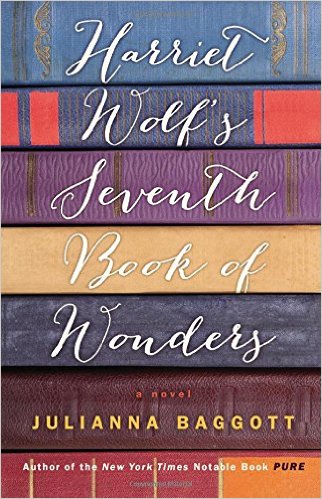
She generously credits  Mother of Pearl with influencing the writing of her recently published novel, Harriet Wolf’s Seventh Book of Wonders, which for any writer is a great tribute.

Julianna’s  done me another favour by introducing me to the AGNI blog, where this post first appeared.  It’s a site that boasts an eclectic mix of writerly concerns, founded as a magazine way back in the 1970s. I’m now an avid follower.

Meanwhile, I’m glad to report that both Mother of Pearl and The Pretender will shortly be available as e-books and in print on demand editions from Jonathan Cape.

A Bookish Love Story

by Julianna Baggott

My relationship with Mary Morrissy’s little-known debut novel, Mother of Pearl, is starting to feel like a love affair—a chance meeting, a lost love, then we find each other again. Or perhaps, I could put it more simply: girl finds book; girl loses book; girl gets book back again when she least expects it.

Morrissy’s novel first found me completely by chance, following me home from a London book-tour. This weekend, fourteen years later, it found me again by chance in a campground rec hall in North Egremont, Massachusetts.

This is how it began. In 2001, I was on tour for my first novel, giving an interview at a London publishing house. My husband Dave was with me and, while I answered questions, Dave was left to wander around and take any book he liked. The offices were lined with bookshelves with thousands of books on display.

My interview went long, and when I found Dave again, he had taken a ridiculous amount of books. I would have been embarrassed by his greed at a New York City publishing house, but was completely humiliated among the ever-polite British editors who seemed nervously bemused by the situation. Dave was beaming.

As we left, I let off steam and then eventually asked the obvious: how the hell are you going to pack all of these books and get them home?

I remember watching, for the first time, the British television show The Weakest Link, while, as a point of pride, Dave shoved every last book into our suitcases, which we hauled around for another week or so.

Once home, it took me a while to warm up to the books. But, eventually, I looked through them. One, in particular, caught my attention—Mary Morrissy’s  Mother of Pearl. There are a bunch of novels with this title, including one Oprah pick, but to get to Morrissy’s Mother of Pearl on Amazon, you have to misspell her name, Morrissey. It was not widely circulated. It didn’t receive broad review attention in the U.S.. It didn’t pop up on any bestsellers lists.

I loved the first sentence. “It had started as a shadow as Irene Rivers’ lung.” Then I disliked a word in the first paragraph (cheekily—she was describing the wind). I was a very picky reader back then, harsher than I am now, and almost put the book down. But I kept going and I loved every word thereafter. In fact, Morrissy’s Mother of Pearl became one of the most important books I’ve ever read. It formed my foundation as a novelist.

A half dozen years later, I was teaching a novel seminar to graduate students and assigned the book. The students quickly brought to my attention that it was out of print and very hard to find. I held tight to my sole paperback, which by now was dog-eared and underlined madly.

I started mentioning Morrissy’s novel to my editors along the way, hoping one would want to reprint it. When I heard of presses doing reprints, I’d mention the novel to them.

Eventually, I decided to track down Morrissy herself. I found her on LinkedIn in 2010. I never use LinkedIn, by the way, but she wrote me back the next day. “Many thanks for your message—so YOU are my reader out there!” We corresponded some in 2010. I was urging her to get the book in print again and connecting her here and there along the way. Again, we connected in 2013 and I blurbed her new novel, The Rising of Bella Casey.

Over the last eight years, my husband and I and our kids have lived in six houses. I lost track of my paperback, sadly. In our last big move, I suffered a Buddhist impulse to give the vast majority of my collection of books back to the universe. Then there was some confusion about my priority numbering system of boxing books and many of my most cherished novels were also given away. I can’t even talk about how much I miss my specific copies of so many books. Just last night, I was rereading King of the Jews and The Hours, two books that have stayed with me, and it’s fascinating to see the open pages at the beginnings and endings cluttered with notes about the characters I’ve worked on over the years while turning to Epstein and Cunningham. And then the notes in which you can see how I’m teaching myself how to write. Notes in the margins are lessons in how to do ambivalence, how to do absurd image in realism, how to love your characters, or, more vaguely, a note that reads, simply, “time.”

This past weekend, I found myself in an old New England rec hall at a campground. All four of my kids were with me and Dave and my folks. Amid the chewed up ping pong table and the whirring air hockey, there were a few shelves of used books. I headed over to them just to see what was there; I love the strange stain left from  random collections. As I was looking through, I saw Mother of Pearl written on a dark binding. 
1221668

It couldn’t be Morrissy’s book. Not possible. I pulled it out and found that it was, in fact, her book in hardback, which I’d never seen before. It was wrapped in a library-use protective jacket and had once been part of the Ardsley Public Library’s collection then seemingly sold off, it became part of the BookCrossing.com program, which encourages people to label then let loose a book into the wilds after which they can follow it, virtually, wherever it goes. On Tuesday March 10th, 2009, someone from Wingdale, New York, set Mother of Pearl free and, one way or another, this copy landed with me, possibly the most ardent Mary Morrissy fan in the country.

I’m not one to over-hype coincidence, to read life’s quirkiness as signs from the universe, but this feels like an opportunity to take stock. Now, with some distance, I can see why Morrissy’s debut novel was so important and influential to me. Mother-daughter relationships are enduring themes in my work and the obsessive theme in Mother of Pearl. Her novel opens in an Irish sanatorium in 1947, a place Irene refuses to leave because of her fear of the outside world even after she’s cured of tuberculosis. And it is my most recent novel, which I started working on eighteen years ago, Harriet Wolf’s 7th Book of Wonders, that is the most closely tied to Mother of Pearl. Opening in 1900, my main character, Harriet Wolf, grows up in a place that was known as The Maryland School for Feeble-minded Children and spends some time in the psychiatric hospital, Sheppard Pratt. After an illustrious career as a novelist, she becomes a recluse once again later in life, and her granddaughter, Tilton, also lives in fear of the outside world, much like Irene.

However, the more important influence of Morrissy’s novel happens line by line. Morrissy’s language is what moved me. Her vocabulary is unapologetically rich. And the beauty in her most brutal imagery is something I’ve strived for in so many of my novels. I’ve never been able to come close to her ability to expose the vivid interior imaginations of her characters, the worlds within that go unexpressed.

Now looking at this pristine copy—free from the marginalia of the earlier versions of my writerly self—I get to sit down with this novel again, hoping that I’m stirred anew while rediscovering what once tethered me more tightly to my craft. I begin again with a shadow on a lung.

https://agnimag.wordpress.com/2015/09/28/a-bookish-love-story/

Reading the Signs

merton roadseafield

Have you ever examined street signs in Dublin?  I mean those ordinary common-or-garden signs that adorn our gables and walls and serve to tell us where we are – that is if they’re not covered with roving greenery or placed so high up that you get a crick in your neck trying to read them. Those ones.

I hadn’t considered them much, either. Apart from their function, that is, of providing information. But that’s all changed. The reason I’m not only noticing, but examining, street signs – and taking photos of them on my phone – is related to the publication of my forthcoming collection of stories, Prosperity Drive (Jonathan Cape, January 2016).  The eponymous fictional street in Dublin is the triggering location of and the uniting thread running through the stories.

Jonathan Cape’s art department wanted to use an authentic Dublin street sign as part of the cover design. I offered to take some snaps to give them a notion of what they looked like and to alert them to the fact that our street signs are bilingual. I provided them with an Irish  translation for my fictional suburban street.  Or two, in fact.  Prosperity Drive can be rendered as Céide an Rathúnais, but my preferred version is Slí an Rathúnais (literally The Way of Prosperity), because of its clever double meaning. (Some of the stories in Prosperity Drive are set during the Celtic Tiger era.)

When I went looking for an image of the archetypal Dublin street sign, I was faced with a plethora of the current style of sign – white type on a blue background, sometimes with the district number in the right hand corner in reverse – blue on white. (Though with our new super-duper ZIP codes, these old single digits will soon begin to look a bit forlorn.) But what I was looking for was its predecessors.  These were tin, with a garden green background, white lettering and the Irish version of the street name in the old Cló Gaelach. Blame it on nostalgia, but when I was growing up Dublin in the Sixties, these were the standard signs and they remain fixed in my memory as the original and the best.

I didn’t hold out much hope of finding any left – rust and vandalism had surely put paid to them, I thought. But I was pleasantly surprised at how many of them still survive, and I didn’t have to travel very far from my Blackrock base to find them.

My other surprise was to find a huge variation in fonts, style and colours in Dublin street signs. (As an ex sub-editor, fonts, in particular, are a bit of a passion.) As well as the blue and white design, there are also black on yellow signs – particularly in Dún Laoghaire and Monkstown. Perhaps in the early days, each city borough had its own style of sign? I also found a great deal of competing signage. Sometimes – as with Priory Drive in Stillorgan (see below) – there were not only two different styles of signs, but a different Irish translation of the English street name – one at either end of the street.  In later signs – probably from the 1970s onwards, the Cló Gaelach was dispensed with, and the Irish was rendered in Roman script. Then the district numbers were added.

As you can see, I’ve now become a bit of an anorak about street signage. Who cares where I’m going, I’m more interested in what the sign looks like. I thought I’d hunted down every last variation, but it was only when looking at the collection of images on my phone, I noticed that not even the vintage  green signs are consistent. On some, there is a lovely white trim around the edges, which I think looks very classy. So classy I was tempted to indulge in a bit of vandalism myself and lever one of these beauties from its moorings. But I desisted. I’ll stick with my memories and the pantheon of place-names on my phone.

priory drive romanpriory drive


Joyce’s Other City

joyce's cafe

I’m just back from the Trieste Joyce School (June 30 – July 4) where I had the thrill of reading in the beautiful Art Deco Caffe San Marco, above, one of James Joyce’s many hang-outs in the city. Founded in 1914, when Trieste was still part of the Austro-Hungarian empire, the café was a meeting place for the city’s writers, radicals, and intellectuals. During Joyce’s ten years in the city beginning in 1904, he was a regular at the San Marco along with Triestine poet Umberto Saba and novelist Italo Svevo (often thought to be the model for Leopold Bloom in Ulysses).

It still attracts a literary crowd; in 2013 when the cafe was under threat of closure, writer and academic Claudio Magris, who regularly writes at a table there, made an impassioned plea to save the San Marco, describing it as “a place where you’re at peace, you read, you write, you chat. . . a heart of the city; a strong heart that beats calmly”.

The café has survived and hosted several events at the Trieste Joyce School. Now in its 19th year, the school is led by the calm and genial Irish scholar John McCourt, author of The Years of Bloom, about Joyce’s years in Trieste. He could be said to be following in Joyce’s footsteps as he has lived in Trieste since 1990. His local knowledge came to the fore during his immensely informative – and entertaining – walking tour where he brought to vivid life Joyce’s Triestine years.

During his research, McCourt recalled tracking down one of Joyce’s English language students in Trieste (Joyce worked for the Berlitz School), who was then aged 99. She remembered Joyce’s instruction – he apparently stuck to the manual – and wondered whatever became of Signore Joyce. (She hadn’t kept track of her erstwhile tutor.)

It seemed a little bit like coals to Newcastle reading from Dubliners 100 – Tramp Press’s centenary publication of new versions of Joyce’s stories ─ to Joycean scholars in a regular haunt in Joyce’s adopted city. (I rewrote An Encounter – see elsewhere on this blog.) But they were a great audience – despite the fact that it was a very hot night.

I also read from The Rising of Bella Casey, my novel about the sister of Sean O’Casey. Although O’Casey and Joyce were contemporaries, they never met – by the time O’Casey became prominent in Dublin, Joyce had already left, and even if he hadn’t, class and religion might have kept them apart. (Joyce was from a middle-class Catholic background; O’Casey working-class Protestant, though both shucked off their religion at an early age.)

But there were other echoes in the Joyce story that chimed with the experience of Bella Casey. When John McCourt talked about the relationship between James and his brother, Stanislaus, who came to Trieste on James’s urgings, the tensions he described seemed very familiar.

Stannie was a steady provider and a loyal – and very practical ─ supporter of his brother’s genius. He regularly saved Joyce and his family from penury, found them accommodation or shared his own with them. He was a fixer, debt-payer and first reader for his brother, but his was often a thankless role. After they became estranged – Stannie was less than enthusiastic about Ulysses and dismissed Finnegan’s Wake entirely – Joyce is said to have dismissed the loss of a brother as no more serious than mislaying a pair of gloves.

In the Casey family, Bella was often the one with her hand out. After her husband died, she was destitute, left with five children to raise alone, and she was forced to return to the family home, where O’Casey still lived. It was a situation that O’Casey deeply resented.

In his autobiographies (in which he referred to himself in the third person) he wrote: “So they struggled on, his mother always aiming at sparing as much as she could from her own dish as she dared, and paring a little from her own share of bread to faintly feed Ella (Bella) and her kids; and she went on darning night and day to prevent their rags from floating off their backs. It wasn’t a pleasant job for him (Sean) to be eating a dinner with a little army of hungry eyes watching him. . . At times, a surge of hatred swept through him against those scarecrow figures asleep at his feet for they were in his way, and hampered all he strove to do, and a venomous dislike of Ella charged his heart.”

Perhaps all this proves is that both Joyce and O’Casey were utterly single-minded in the pursuit of their art and that nothing – least of all the circumstances or the finer feelings of their siblings – was allowed to interfere with the work in progress.

A poet in the family


Time for some family bragging.  Julie juliem3Morrissy, right,  – my niece, as it happens – was one of several poets taking part in the Poetry Ireland Introductions series at the Irish Writers’ Centre on Tuesday, as part of the International Literature Festival.  The other readers included Eamon MacUidhir (who used to be Eddie Maguire, my colleague at the Irish Press, a million years ago!) Simon Lewis, Jennifer Matthews and Michael Naghten Shanks.  Julie’s been published in The Honest Ulsterman, The Dalhousie Review and Dear John, among others  And she’s just been shortlisted for the Melita Hume Prize – for a full collection by a poet under 35.  Julie did a Masters in Creative Writing at UCD and is about to take up a place on the PhD programme at the University of Ulster. Lucky them!
There were several memorable moments during the reading – Eamon MacUidhir’s fornicating snails on the underside of a bridge after Hurricane Charlie or Jennifer Matthews’ hilarious investigation of graffiti in Skyscrapers are Gay but I’m sticking with Julie’s glorious tribute to that most humble of kitchen implements, the euphonious mandolin slicer.

Julie will be reading on the Poetry Programme, RTE radio, this Saturday at 7.30pm.

History in brief

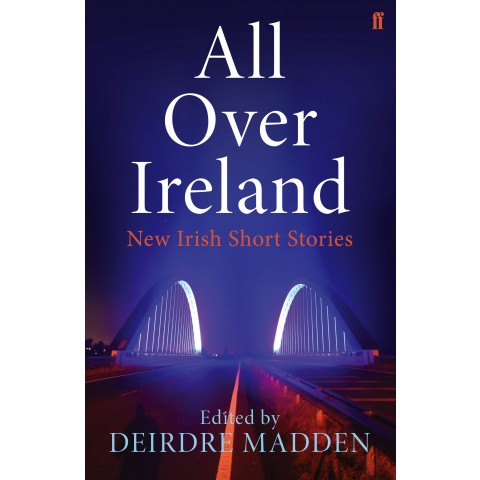
all over ireland coverThe historical short story is something I’ve not attempted before.  But for All Over Ireland, Faber’s latest annual collection of Irish short stories, I found myself, untypically, looking to the past.  I’ve always seen the short story as an escape from history, a great and welcome dip into familiar contemporaneity, an attempt to write and be in the here and now, as opposed to the terrain of my novels which is historical.

However, my contribution to All Over Ireland, is a story set during the Second World War in Ireland.  It’s titled Emergency, as the war was euphemistically called here because, as a neutral country, we were not technically at war.

It’s about a mother and daughter who are literally landed with a German parachutist and what they do with him.  It was sparked by a chance remark on the TV show Antiques Roadshow – I know, don’t ask –  from a woman who brought along a piece of a German parachute as her prized item.  But as I wrote it, I remembered a brilliant and hilarious short story by Aidan Mathews  – The Story Of The German Parachutist Who Landed 42 Years Later from his collection, Adventures in a Bathyscope.(1988). As with a lot of Aidan’s work, there was a delicious surrealism in his tale of a suburban Dublin family’s life disturbed by an alien visitor from history.

For my story, I played it straight; I couldn’t match Aidan’s quicksilvery wit. But though it is set in the past, I hope Emergency has the immediacy and urgency of the short story form, and that it feels to the reader  – as it should for the characters – as if it’s happening right now.

All Over Ireland is about to hit the shelves.  The tradition of publishing an anthology of what’s going on in the short story, started with the late, great David Marcus, to whom Irish writing, and particularly the short story, is  hugely indebted; since David’s death, each new volume is guest edited. This year it’s novelist Deirdre Madden and it’s a great collection, if I may say so. (As a participant, that may sound big-headed, but I’m delighted to be featured with these writers – Colm Toibin, Frank McGuinness, Eoin McNamee, Belinda McKeon, Ita Daly and Andrew Fox, among others.)

All Over Ireland will be published on May 21.

A novel that might never have been

hero_2015

Last Monday was a red-letter day for my novel, The Rising of Bella Casey, published under the Brandon imprint of O’Brien Press. It was one of five Irish novels nominated by libraries for the lucrative International Impac Dublin Literary Award 2015 – and I mean lucrative, €100,000! –  along with Donal Ryan’s The Thing about December, The Guts, Roddy Doyle, Transatlantic by Colum McCann and The Herbalist by Niamh Boyce.

Apart from being in such good company – 142 Irish and international writers – the long-listing is also a vindication of O’Brien Press’s sturdy individualism as a small independent Irish publisher. The Rising of Bella Casey was roundly and generally rejected by many prestigious publishing houses, both in the UK and the US, before Michael O’Brien took a gamble and published it.

What made the Impac announcement a bitter-sweet occasion, however, was that O’Brien Press, celebrating its 40th anniversary this year, has just had its publishing grant slashed by the Irish Arts Council – from €63,000 last year to €10,000 for 2015. This despite O’Brien’s unchallenged contribution to Irish children’s publishing for several decades, and its re-establishment of the Brandon imprint, which is committed to publishing serious Irish literary fiction.

The Rising of Bella Casey and Frank McGuinness’s Arimathea were the debut novels published by Brandon last year. If either of these two novels were to be submitted to Brandon in 2015, there’s a good chance that neither of them would see the light of day.  The Impac long-listing means that there’s a world stage for a courageous Irish publisher being starved of funding at home. For me, it means vindication for The Rising of Bella Casey, a novel that without O’Brien Press, might never have been.

Writing on fire

surge

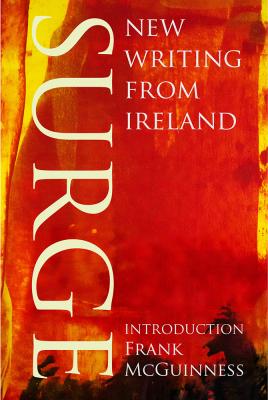
The cover of Surge is fiery looking, as befits an anthology of new writing.  The volume from Brandon Press is a celebration of the old and the new; its publication marks the 40th anniversary year of O’Brien Press and is named after a Dublin literary magazine of the 1930s/40s established by Thomas O’Brien, among others. (Thomas founded O’Brien Press  in 1974.)  The name may be old but the content is all new. It contains work hot off the keyboards of a dozen or so student writers from all over Ireland.

If you want to know what’s happening in creative writing at UCD,Trinity, Queens Belfast, UCC and NUIG, then this volume is a showcase of new names in the fiction firmament.  But there’s more. The anthology represents, more than any dry university curriculum listing could, the ethos of creative writing scholarship – about which there is often skepticism. (Can writing be taught etc etc. . . ) For along with the newbies, there are also fresh stories from established writers who tutor and mentor on these courses such as Frank McGuinness, Eilis Ni Dhuibhne, Mike McCormack  – and yours truly. (For obvious reasons, I’m particularly proud of the students who represent UCC’s inaugural MA in Creative Writing – Madeleine d’Arcy and Bridget Sprouls.)

The idea of the fiction workshop is to mimic the medieval craft guild, in which tyro writers get together with old hands to learn the trade.  What this volume represents is a composite picture of that process.  If you want to see who’s learning from whom, don’t look to the index at the back before reading the stories and maybe you’ll be surprised to find you often can’t tell the master from the apprentice. Rather like looking in on a fiction workshop, where it’s often not clear who’s in charge. And all the better for it.

Surge will be launched at the Dublin Book Festival on November 15

Fearless theatre

Photograph: William Burdett-Coutts

In December 2012, 23-year-old Jyoti Singh Pandey was gang-raped and savagely beaten by a group of men on a bus in Dehli and died of her injuries three weeks later. In Nirbhaya,(meaning Fearless), South African playwright Yaȅl Farber creates a piece of testimonial theatre centred around the incident, which ignited massive public protests in India.

The play is not just about the brutal rape and murder of Jyoti Singh Pandey, which is recounted and then enacted on the stage. It also contains the testimonies of five other victims of sexual violence – a dowry bride set alight by her in-laws, a Bollywood actress brutalised by her father, a child assaulted by a “kindly” neighbour, a married woman forced to choose between her children when finally she breaks away from her violent husband and a rebellions Indian emigrant to the States who’s gang-raped on the streets of Chicago.

What gives this production such emotional clout is that the actors are telling their own stories, not enacting a fiction. Each one – including the dowry bride who bears the horrific facial scars of her burning ─ has been the victim of sexual violence.

This may seem a strange choice for this blog ostensibly about fiction and history, since the issue of sexual violence against women is current and the play is documentary not fictional. But this is a piece of theatre that manages to combine the passion of agitprop with the artfulness and stagecraft of great drama. I saw it on Tuesday but have only now been able to formulate my responses to it. I came out of the theatre numbed and lost for words. This happens so rarely in theatre that it’s worth shouting about it when it does.

 Nirbhaya runs at the Pavillion Theatre, Dun Laoghaire until August 2.

Historical hot-house

West_Cork_Literary_Festival_2014_-_image_Wendy_Dison_Oak_-_Copy_194_128_s_c1

Feel like a sojourn in the south-west? I’m leading a historical fiction workshop next week  at the West Cork Literary Festival, July 7 – 11, in Bantry. The Bantry festival is a great event, intimate, serious in intent but great fun, and, of course, there’s the wonderful location. I’m hoping to use the work of writers appearing at Bantry – including Audrey Magee and Eibhear Walshe – during my workshop so participants can hear them live and on the spot.

Here’s the spec. . .

Want to be the new Hilary Mantel or Sarah Waters? Dream of delving into the recent or distant past like Colum McCann or Colm Toibin? Do you have an idea that might become a historical novel, or have you already started? Then this workshop is for you. Aimed at intermediate-level writers, we will explore different approaches to historical fiction; how to imagine yourself into another time; research – when and how to do it; the ethics of writing about real people; the melding of fact and fiction.

This workshop will be a creative hot-house experience and participants should be prepared to share their ideas, develop their own work during the workshop and, most importantly, to write – lots!

See http://www.westcorkmusic.ie/literaryfestival