Germany calling

 audrey cover 2

Audrey Magee is a name you might not have heard of,  but you will. Her debut novel, The Undertaking, is coming out with Atlantic Books early in February. It’s a novel set in Germany and Russia during the Second World War about an arranged marriage between a soldier on the front and a woman who wants to secure a financially independent future with a war widow’s pension. It features harrowing accounts of the Eastern Front, and Stalingrad in particular, as well as the dire privations on the home front in Berlin.

I had the treat of getting a sneak preview of this novel over a year ago in MS form and I was blown away. Watching the German TV series, Generation War, shown on RTE recently, set in the same locations and covering the same territory, I was reminded of how much more powerful Audrey’s book was in terms of concentrated emotional heft.  And while her focus is narrow – Peter Faber and his wife, Katherina – the philisophical scope of the novel is enormous, touching on themes of betrayal, patriotism, denial, survival guilt and retribution.

This is a fierce and fearsome novel and doesn’t read at all like historical fiction.  First of all, much of it is in dialogue. Audrey banishes the retrospective view, and makes the siege of Stalingrad sound like it’s happening right now and you’re in it. She takes her reader by the scruff of the neck and doesn’t let go. The writing is elegant, spare and lean and carries a powerful emotional clout you won’t forget.  I haven’t.

Audrey talks about the inspiration for the novel in this interview:  www.youtube.com/watch?v=YOJquB4TgCQ

She Do the Police in Different Voices

Image

The Rising of Bella Casey is to be RTE Radio’s Book on One next week, January 20 – 24. The night-time slot consists of 15-minute excerpts broadcast, Monday to Friday.  One of the challenges of the programme is to edit down a 300-page novel to roughly 25 pages so that the listener gets a flavour of the book. That’s producer’s Aoife Nic Cormaic’s job.

Sometimes the books are read by actors; sometimes by the authors.  I chose to read mine.  It’s a strange experience.  On the one hand, who could be more familiar with the text than the writer? On the other, editing and reading for radio requires you to look at the book almost as if you’d never seen it before.Unlike a public reading,where you can make eye contact with your listeners and judge the reaction, the broadcast is a dramatised interpretation aimed at a faceless audience.

Having done the recordings, now the challenge is to listen back to them.  And to hear your voice as other people hear it!  RTE Book On One is on nightly, 11.10pm

Bella and Sean, as Hollywood saw them

download

It’s not surprising that the late great Peter O’Toole  played Captain Boyle in one of Ireland’s classic plays, Sean O’Casey’s Juno and the Paycock. The Irish-born actor produced and acted in a 1966 version of the play at the Gaiety Theatre, Dublin, sharing the stage with Siobhan McKenna and Jackie McGowran. But what might be more surprising is that his first wife, Sian Phillips, played O’Casey’s sister, Bella –  subject of my latest novel, The Rising of Bella Casey –  on screen.

The film, based on O’Casey’s autobiographies and titled Young Cassidy,  was a major Hollywood production and shot on location in Dublin.  It was due to be directed by John Ford but Ford  fell ill a couple of weeks into production and was replaced by Jack Cardiff. The film featured a star-studded cast – Michael Redgrave  (as W B Yeats),  Edith Evans (Lady Gregory) Maggie Smith and  Julie Christie.  Flora Robson,  Jackie McGowran  and T P McKenna, played the roles of  O’Casey’s mother and brothers.

Perhaps the most interesting piece of casting was the actor, Rod Taylor, playing Jack Cassidy, a thinly disguised version of O’Casey himself.  The Australian beefcake was an odd choice to play the bookish O’Casey, but the playwright  approved of the casting (Sean Connery and Richard Harris were also considered for the part) though he didn’t live to see the film.

The reception of the film was mixed.    The New York Times found the brogueish Irishness of the production charming, but dismissed John Whiting’s screenplay as “long on character, short on plot,”  echoing  Lady Gregory’s verdict on the first play O’Casey sent to the Abbey Theatre.  Young Cassidy, the review went on,  “may thrill the romantics, but it will leave the realists looking at holes through the screen”.

Sian Phillips  Young Cassidy (1965)rod taylor

Sian Phillips, left, as Bella and Rod Taylor as the “brawling, battling” Sean O’Casey, in Young Cassidy (1965)

Teaching creative writing – the Irish solution

cw book

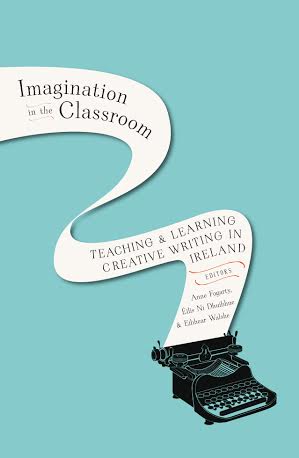
Here’s a first – a collection of essays on the creative writing scene in Ireland by teachers and writers (the roles often overlap). Four Courts Press have put  Imagination in the Classroom  together with a chic New Yorker-style cover and a lively mix of opinions and philosophical musings contained within.  The idea for the book grew out of a conference held in the RHA in October 2012 and is a snapshot of the creative writing teaching scene in Ireland. (I have to declare an interest – I’m in it!)  

Notwithstanding that creative writing has now found a niche in the Irish university curriculum, many writers still find their way into the craft  through community-based workshops and writing groups outside of academe. Happily, this sector is also represented with Roddy Doyle’s account of “Fighting Words” and Nessa O’Mahony’s article on teaching online with the Open University.   But  it would have been nice to have seen contributions from the indefatigable mentor and writer Yvonne Cullen (https://www.facebook.com/…/YvonneCullensWritingTrain/10227850) and poet/teacher Michael  O’Loughlin, who spoke at the RHA conference,  included in the mix.

Sister in the shadows

Caroline Kennedy Photograph: nycprowler.com

Christina Hunt Mahoney reviewed The Rising of Bella Casey in last week’s Irish Times.  Here’s her take on the novel complete with Caroline Kennedy reference!

O’Brien Press continues its impressive revival of the Brandon imprint with Mary Morrissy’s first novel in more than a decade. The Rising of Bella Casey is the imaginative afterlife of an historical person, not the first time Morrissy has constructed such a fiction. The Pretender is the postmodern tale of a Polish factory worker who claimed to have been the Grand Duchess Anastasia. Morrissy’s new book partakes of a related tradition: a fictive life of a family member who was a satellite to a great writer. We’ve had Rameau’s Niece, by Cathleen Schine, and several incarnations of Shakespeare’s sister, so why not an Irish entry into the genre?

Morrissy’s oeuvre is small but fine, also including the metafictional Mother of Pearl and a disturbing collection of short stories, A Lazy Eye (the protagonist of the title story, in a timely detail, envies Caroline Kennedy’s good fortune to have had a father worthy of assassination). Morrissy’s work has been recognised with a Cullman Fellowship at the New York Public Library and a prestigious Lannan Literary Award. She is truly a writer’s writer, but one with an avid following.

Isabella Casey was Seán O’Casey’s sister, a minor figure in his multivolume autobiography. Fifteen years her brother Jack’s senior, Bella was a second mother to the boy who would “rise” to fame years later. The real Bella married beneath her and seems to have fallen out of the family narrative. Morrissy recreates for her a life that fills the gaps in her story.

Dodging bullets

As the novel opens, on Easter Monday, 1916, we see an obsessed, middle-aged Bella risking her life, and that of her young son, dodging bullets on Dublin’s streets to drag an abandoned piano back to their house. (This is a book in which keyboard instruments come and go, indicating changes in the family’s fortunes.) Bella’s rescue of the piano is a symbolic act, restitution for years of deprivation with an abusive English soldier. The novel then returns to Bella’s early days as the promising scholarship girl, the proud new teacher in Dominick Street, and finally the victim of the violent act that brought an end to her dreams.

The geography shifts twice to England – signalled by a change in font – and the reader encounters a blocked Seán, working on his life’s story, first in Battersea and later in Totnes. Here the novel becomes more complex, also more akin to the writer’s earlier style. Not only is she creating Bella’s lost years, she is simultaneously crafting a fiction to explain Seán’s reluctance to deal with Bella’s life in print, told from his perspective. O’Casey, in Morrissy’s rendering, is a complex portrait, part socialist activist, part judgmental Edwardian brother.

His character is also hampered by being in possession of only some of the “facts” of Bella’s downfall, facts that are totally of Morrissy’s devising. There is thus something of a Chinese puzzle here, suitably couched in the melodramatic rhetoric of the period. The tone mimics some of O’Casey’s own writerly language, influenced as it was by his early exposure to the music hall and popular theatre. His characters also appear regularly, and he is given to thinking of his sister’s life as theatre.

Bella’s predicament is Dickensian, down to Morrissy’s decision to name the villain of the piece Reverend Leeper. Dickens or no, the crime committed within her pages is so brutal the nearly comical name and representation of Leeper seems to undercut the author’s intent. Similarly, with so many women in the novel who seem perfectly capable of defending themselves, one wonders at Bella’s continued naivete, pretension and timidity.

But The Rising of Bella Casey is a welcome volume, especially as we commemorate a formative stage in Ireland’s history and those who helped to make that history.

On location in Henrietta Street

HENRIETTA_STREET_-_DUBLIN_(402556531) credit wikipedia

The Rising of Bella Casey will feature on RTE’s cultural review programme tonight (RTE, 10.50pm).  There’ll be a couple of short readings and an interview with presenter John Kelly. The interview and readings were recorded in 12 Henrietta Street, one of Dublin’s best maintained Georgian streetscapes.

Henrietta Street  was developed between 1729-1758 for the Georgian gentry but fell into disrepair in the late 19th century as the well-to-do migrated to leafy suburbs beyond the canals.  By 1911, the street was a haven of notorious tenements with as many as 825 people living in abject poverty in just 15 houses. Number 12, designed by Edward Lovett Pearce, was built by banker and property speculator Luke Gardiner between 1730 and 1733.  Its first known occupant was William Stewart, 3rd Viscount Mountjoy and later 1st Earl of Blessington.

Now privately owned, Number 12 still maintains the spirit of its formal Georgian elegance – marble fireplaces, exquisite stucco work – as well as the marks of its later decline. The lips of the steps of the ruined staircase are worn into smooth hollows by the weary tread of the oppressed; there are glimpses of lathwork – the very skeleton of the house – behind the crumbling plaster walls.  The walls are like a geological cross-section showing the variegation of paint layers applied over the years, roseate and lichen green. Damp has left its shadows and draughts whistle through the unadorned casements.

As I stood shivering at the first floor windows, looking out on to the rain-slickened cobbles and the car-less, unpeopled street, it was easy to imagine myself back into my heroine Bella Casey’s world (she lived in a tenement on Fitzgibbon Streeet). Our host, Kevin, kindly lit a fire in a downstairs room and we huddled gratefully close to it, between takes, clasping takeaway coffees in the Stygian gloom.

Number 12  has not been made over or prettied up and all the better for that; in its present unrestored but nonetheless cherished state, it allows the visitor to imagine its various manifestations by inhaling its history on the spot.

The Works  can be seen on the RTE player: http://www.rte.ie/player/ie/show/10232969/

IMG00049-20131121-1032

A Cork celebration of 2013 novels

time presentmaking way

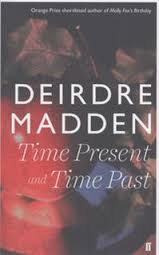
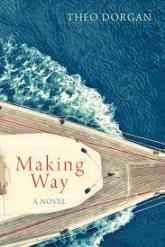
The Rising of Bella Casey (Brandon Press)  is getting its Cork baptism on Thursday, December 5, at the Triskel Arts Centre at 8pm. I’m sharing the event, “A Celebration of Irish Novels published in 2013”,  with novelists Deirdre Madden (Time Present and Time Past) and Theo Dorgan (Making Way), so I’m in very good company.

Deirdre’s novels include The Birds of the Innocent Wood, Nothing is Black, One by One in the Darkness, Authenticity and Molly Fox’s birthday. Two of her novels have been shortlisted for the Orange Prize. The Guardian described Time Present and Time Past (Faber) as “a subtle, deeply thoughtful novel, its tone so clear that the writing plays over character and action like water over stones”.

Poet, screenwriter and cultural commentator Theo Dorgan has published two prose accounts of his transatlantic journeys by boat, Sailing for Home and Time On The Ocean.  Making Way (New Island Books) is his  first voyage into fiction. “This is controlled storytelling – writing a novel is like sailing a boat, requiring a mixture of craft and intuition…Theo Dorgan has both.”  –  Eilis Ní Dhuibhne

The event is happening at the Triskel Arts Centre on Thursday, December 5, 8pm.

Tickets €5 (includes wine reception) available from Triskel box office and online at www.triskelartscentre.ie  All welcome!

The house that Joe built

Photograph courtesy of www.stephenburke.com
Photograph courtesy of http://www.stephenburke.com

Did you know that Leeson Street, Dublin, was once called Suesey Street?  Or that it was renamed in the mid-1700s after Joseph Leeson, a powerful scion, brewery owner and property magnate?   Leeson, who went on to become the first Earl of Milltown (the Dublin suburb was also named for him for his entrepreneurial activities there) , commissioned the building of Russborough House, Co Wicklow, in the 1740s.  And  he it was who originally packed the house full of art treasures gathered on his several grand tours of Europe in the late 18th century.

In The Story of Russborough House, Valerie Ryan charts the history of the Palladian mansion that Leeson built which looked out on the Poulaphuca Falls (later to be subsumed by the Blessington Reservoir). But it’s much more than a history of bricks and mortar.  Ryan’s book is full of strange facts and odd connections.

Almost everyone associates Russborough with Sir Alfred Beit who took the house over in 1951.  His art collection (including masterpieces by Goya, Velasquez and Vermeer) was the target of two high-profile thefts – the first in 1976 by an IRA gang which included Rose Dugdale, and then again by the notorious criminal Martin Cahill (“The General”) in 1986. The Beit collection was eventually bequeathed to the State and now hangs in the National Gallery.

But what I didn’t know was that Joseph Leeson’s original art collection was  also handed over to the State in 1904, courtesy of Geraldine, Lady Milltown.  So extensive was Leeson’s bequest of paintings, sculptures, furniture, silverware and books that the gallery’s Milltown Wing had to be built specially to accommodate it.

This is the kind of book I love – impeccably researched, packed with quirky detail and for a historical novelist like me, full of magpie facts and narrative openings. . .

In its time, Russborough has attracted its share of celebrities, including Jackie Onassis, Mick Jagger, Marianne Faithful.  But for more celebrity secrets associated with the house, we’re going to have to wait for Sir Alfred Beit’s diaries due to be opened in 2075, or 21 years after the death of Queen Elizabeth II, whichever comes first.

The Story of Russborough House is available in selected bookshops or from http://www.blessingtonbookstore.ie/


. . . then we take Berlin

Berlin_for_free_Titel_01

I have come to a sense of place in my writing very slowly.  When I started to write – back in the 1970s – I was intent on removing all traces of the “local” from my work.  I was afraid of being parochial and I was out of sympathy with the brand of Irish fiction that maundered on about the landscape, the bogs and the mountains.  I had grown up in a Dublin suburb and felt there was nothing specifically “Irish” about it – as far as I was concerned, it was like any other suburb in the Western world; a place of quiet desperation where nothing happened.

My debut collection of stories, A Lazy Eye, was shorn of place-names, or where there were names, they were neutralized, generic-sounding. The real names of Irish places didn’t seem “real” to me then; they seemed inauthentic, too Oirishy.  Perhaps that was some kind of post-colonial cultural cringe on my behalf.  Who knows?

Mother of Pearl, my first novel, continued the trend.  Based on a real-life kidnapping in Dublin in the 1950s, I set the action in a made-up city divided by a sectarian conflict – I envisaged the north of the city being Belfast and the south being Dublin.  Because the story had a mythic quality I didn’t want it to be grounded too closely in political realities; hence the disguise.

But, I discovered, historical fiction is merciless in its demands about place. With my second novel, The Pretender, set during the First World War and based on the story of Anna Anderson who claimed, falsely, to be Grand Duchess Anastasia, daughter of the last Tsar of Russia, the chickens came home to roost, if I can mix my metaphors.  Now I was duty-bound to real places – Berlin, Posnan, Charlottesville, Virginia – albeit not home territory, and places altered by time and war.  But real places, nonetheless, and demanding faithful re-creation.

Now I’ve come full circle. The Rising of Bella Casey – just published − which dramatizes the life of the sister of playwright Sean O’Casey, placed me firmly back on home turf.  My own city, Dublin, immortalized by the city’s stage laureate O’Casey in the early 20th century during one of the most turbulent periods in Ireland’s history. There could be no reaching for disguise this time. The novel is littered with place names – Dorset Street, Dominick Street, Mary Street, East Wall, Mountjoy Square, Fitzgibbon Street, Rutland Place and many more locations with strong O’Casey associations. These names no longer sound fake to me – have I changed, or have they?

I will be reading from The Rising of Bella Casey and discussing a sense of place in fiction as part of the Dublin Books Festival during a Reader’s Day event with Alison Jameson and Jennifer Johnston at Smock Alley Theatre, Dublin, on Saturday, November 16, at 10 a.m. See http://www.dublinbookfestival.com

Two degrees of separation

louis-macneice

In 1918, the year Bella Casey died at the beginning of the Spanish ‘flu epidemic, the poet Louis McNeice (above) was just 11 years old.  Bella was living in the tenements of Dublin; McNeice was growing up as a son of the rectory in Carrickfergus, Co Antrim.  So what’s the connection between them?  The Rising of Bella Casey is.

McNeice happens to be on of my favourite poets but that;s not the reason he has an underground connection to the novel.  He’s there because sometimes when you’re writing historical fiction, people and dates happily collide.

McNeice’s mother, Elizabeth (Lily) Clesham trained as a teacher with the Irish Church Mission in Clonsilla, Dublin, in the 1880s.  At the same time Isabella Casey was studying at the Church of Ireland Model School on Marlborough Street (now site of the Department of Education).  There’s absolutely no evidence that these two young women – devout Anglicans both, trainee teachers and exact contemporaries –  met, let alone knew each other, even though they shared the same historical space (much like James Connolly and Nicholas Beaver – see my post October 22).

However, I like to think that Dublin was a small city then and if there’s no proof that Bella and Lily were acquainted, there’s equally nothing to say they weren’t. So I played God; I got them together at a teachers’ social in October 1889 and, hey presto,  they became fast friends on the page. 

Elizabeth Clesham was born on October 18, 1866 (a year-and-a-half after Bella Casey) and was brought up outside Clifden. Her father, Martin Clesham, had been born a Catholic but had converted to the Church of Ireland. Here was another point of similarity between Bella and Lily. Michael Casey, Bella’s father, was also a convert having been proselytized by the Protestant evangelist Rev Alexander Dallas, founder of the Irish Church Mission, which ran mission  or “ragged” schools in Ireland from the 1850s onwards.

Michael Casey worked as a clerk in the Irish Church Mission (ICM) headquarters on Townsend Street and Lily Clesham taught in ICM ragged schools in Dublin and Galway so that was another ready-made link between the two women. I began to feel they should have met.

Lily met clergyman John McNeice, the father of the poet, around this time. (He also makes a cameo appearance in The Rising of Bella Casey.) They married in 1902. Rev John McNeice served in the North of Ireland from 1899 onwards and in the 1930s was appointed Bishop of Down and Connor and Dromore.

Lily Clesham suffered from severe depression following Louis’ birth in 1907 and in 1913 she was moved to a nursing home in Dublin.  The five-year old Louis never saw her again; she died of TB on December 18, 1914.  Her death had a profound effect on the poet.  In his poem, Autobiography, he writes: –

My mother wore a yellow dress;                               
Gentle, gently, gentleness.
Come back early or never come.
When I was five the black dreams came;
Nothing after was quite the same. 

I tried to imbue “my” Lily Clesham in The Rising of Bella Casey  with that same sense of gentleness.  Certainly, it is that quality in her, that ignites her friendship with Bella Casey. As for Louis McNeice, he never got over the early loss of his mother.  He is buried with her in the churchyard at Carrowdore, Co Down. 

IMG00044-20131025-1114Louis McNeice as an infant pictured with his mother in 1907.

mc neice grave         The Carrowdore graveyard where McNeice is buried with his mother.