Stealing babies

exam261013ElizabethBrowne_large

The South African baby kidnap trial currently hitting the headlines has uncanny similarities to a notorious Irish baby-snatching case in the 1950s, which provided the inspiration for my first novel, Mother of Pearl.

The South African story goes like this: Zephany Nurse was kidnapped from Groote Schoor hospital in Capetown on April 30, 1997 within days of her birth and raised by her kidnapper as her own child.

Zephany’s biological parents, Celeste and Morne Nurse,  went on to have another daughter, Cassidy, who was co-incidentally sent to the same school that Zephany attended. The two girls were remarkably similar in appearance and formed an immediate friendship despite the four-year gap between them. Morne Nurse arranged to meet Zephany and alerted the police to his suspicions that she was his daughter. DNA tests were conducted which confirmed that Zephany was the Nurses’ long-lost daughter and at 17, she was returned to her biological parents.

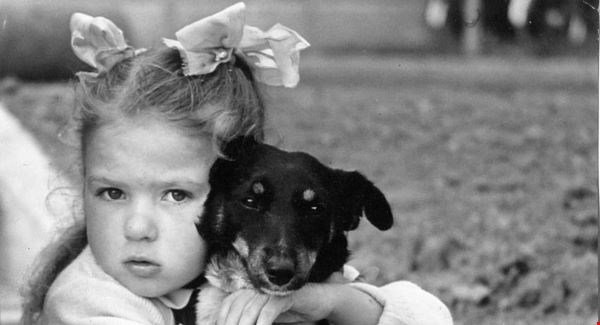
Elizabeth Browne, above, was kidnapped from a pram on Henry Street in Dublin on November 25, 1950.  Her kidnapper, Mrs Barbara McGeehan, who lived in Belfast, took     her north on the train and passed her off as her own child to her unsuspecting husband.

Four years later – and this is where truth is stranger than fiction – Mrs McGeehan travelled south again and stole another child, this time a boy, Patrick Berrigan, from outside Woolworths on Henry Street.  As luck would have it,  a fellow passenger on the Belfast train noticed Mrs McGeehan, in particular that she had no milk for her baby, and went to the dining car to get some.  Afterwards when the alert was raised about the Berrigan baby kidnap, she remembered this incident and contacted the police.

Mrs McGeehan was traced to her home in the White City estate  in Belfast where police found the Berrigan baby and the four-year-old Elizabeth Browne, now renamed Bernadette. In these pre-DNA days, she was identified by a distinctive birth mark, and her parents, news-vendors John and Bridget Browne, travelled to Belfast to claim her.

When I came to write Mother of Pearl, which  is a re-imagining of the central events of the story rather than a straightforward retelling of the facts, the first authorial decision I made was to drop the second kidnap from the plot because, ironically, I thought readers simply wouldn’t believe it.  In the writing of fiction, truth is no defence. Just because something really happened doesn’t mean that readers will accept it in a work of fiction.

What interested me most in the story of Elizabeth Browne – who died of cancer aged 38 in 1988 – was the identity trauma of a four-year-old being forcibly removed from a loving home and familiar “parents” and being returned to a family, who though biologically related, were strangers to her. It’s a predicament  where a just solution would be hard to imagine; the judgement of Solomon comes to mind.

But in the real life story  an accommodation was reached.  Again this is another fascinating fact that didn’t go into my novel. After Mrs McGeehan served a two-year jail term for the kidnap, the Browne parents made contact with her. Every year with her parents’ blessing, Elizabeth would travel to Belfast for a holiday with the woman who had stolen her away.  It suggests an emotional wisdom even Solomon would be proud of.

Mother of Pearl, which first appeared in 1997,  will shortly be reissued as an e-book by Jonathan Cape.

Prosperity Drive, my new collection of stories, will be published tomorrow, February 25.
Coupled with Chekhov

Anton-Chekhov-510x274

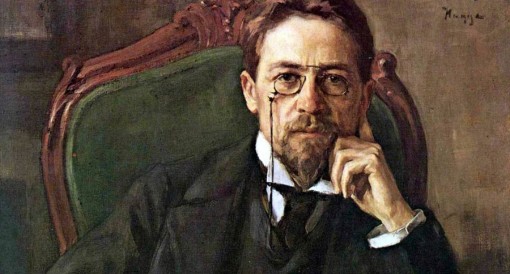
Two weeks ahead of publication ahead, the Irish Times is ahead of the posse with novelist and short story writer  Eilis Ni Dhuibhne’s dream review of  Prosperity Drive in today’s paper and online, in which she links my name with Chekhov!

It’s a real treat to read a collection of short stories that presents totally engaging characters, genuinely interesting storylines, and subtle emotional insights – in English that is as correct as it is polished. Mary Morrissy’s use of language is exceptionally supple and imaginative. Her images and metaphors are original and apt. She can be hilariously amusing. Still, it’s not all about style, which can sometimes camouflage thin substance, or suggest that the writer lacks faith in her ideas and themes.

Morrissy is much too subtle a writer to feel the need to advertise her mastery of English. Indeed, in some ways she is hardly like an Irish writer at all – more like a Canadian (Alice Munro) or even an English one (Julian Barnes or Penelope Lively, for instance).

Her subject matter in Prosperity Drive is Ireland and the Irish – specifically the suburban middle classes. The 18 stories are mainly about people who live on, or were born on or otherwise connected to, Prosperity Drive, a typical south Dublin road. The cover of the book, showing one of the beautiful old green road signs, with the street name in English and in Irish in the old Cló Gaelach, is an absolute delight.

The device of the “linked collection” has been around for a long time, and enjoyed a recent resurgence (such as in Elizabeth Strout’s Olive Kitteridge.)

But, in a sense, nearly all short story collections that don’t employ the device ostensibly are linked anyway, by the landscape of the author’s imagination and experience: Frank O’Connor’s Cork, Edna O’Brien’s Clare.

It is an almost obvious step from the unity of place that occurs spontaneously to deliberately set all short stories in a collection in one named place: a town, a parish or, as in this instance, a prim and proper road with front and back gardens, cars in the driveways, and secrets in the bedrooms.

This is the sort of place where most Irish writers have lived for 100 years but which has slowly emerged to take its place in the sun, or rain, of Irish fiction.

Street characters

Any suburban road supplies a goodly quantity and variety of characters and dramatic incident, rich pickings for any writer.

Characters who recur frequently in this book belong to the Elworthy family: the opening story, The Scream, introduces us to Edel Elworthy, an elderly woman suffering from memory loss, being nursed on her deathbed by her daughter Norah. “Remember, remember, remember what?” is the last line in this story.

Over the course of Prosperity Drive, much is remembered – the inside stories of the Elworthys and their neighbours. The final story brings us right back to the beginning, and tells us how Edel met Victor, her husband and father of Trish and Norah, who figures in several of the stories.

“Edel has never told anyone how she and Victor had met. She was ashamed of it because it had not been a lucky accident. She had seen him and wanted him; the direct line between wanting and having had never been so clear to her. He had been sitting at the heel bar. It was the latest innovation in Roches Stores, an American idea.”

First love, middle-aged love, illicit love, divorce, bereavement, child- rearing, emigration, holidays. Illness, death. And work – in kitchens, offices, the classroom, the printing works and newspapers. All the “ordinary” things that make up our lives are described here. But there is nothing ordinary about the stories themselves.

Sensationalism not needed

Morrissy never resorts to the sensational to create a strong tale. Murder, incest, serious violence, rape – none of it affects Prosperity Drive very often, although they do occur from time to time. A young woman, the hired help, gases herself in one of the outstanding stories, Miss Ireland.

In one of several stories set abroad (Prosperity Drive folk travel) Anita manages to conceive a child with a man she meets in a cloakroom when the ship stops for a day in Aden. Is it a rape or consensual? The question is not answered.

Morrissy has an acute sense of how attitudes change, and Anita certainly doesn’t consider herself a victim. She unzips her dress herself. Later she feels a sense of triumph. “She had gone beyond [the other girls], left them behind with their useless and florid romantic speculations.” Yesterday’s romance is today’s rape. Morrissy tells us what happened, and allows us to make up our own mind about it.

In refraining from judgment, she is a true heir to Chekhov and the great writers.

In general, extremely interesting things happen in these stories without the intervention of guns, knives or psychopaths.

Apart from her seduction of her husband in the Heel Bar, Edel Elworthy brings another dark secret to her grave, and one which is more original but no less alarming than a murder.

Little dramas happen all time in our suburban lives. And little dramas are the best subject matter for short stories, which must reveal the world in a grain of sand.

In the hands of a master storyteller such as Morrissy, minor incidents are much more entertaining and revealing than sensational events.

Above all, it is the brilliantly acute observation of every sort of detail – of place and time, of the foibles and passions of people – that makes the work so impressive and so thoroughly enjoyable.

Seldom has Irish suburban life – especially the lives of girls and women been so sensitively and wittily, portrayed. Morrissy captures it all: the civil servants on the bus, the children out playing on the road, the mildewed old swimming baths at Sandymount or Blackrock. The office parties and the typing pools. The old taffeta ball gown in the wardrobe and the shiny crocked car on the drive.

Her clear-eyed vision and her deep compassion, along with her lovely sense of the comic and her exceptional literary articulacy, make this an outstanding collection.

Éilís Ní Dhuibhne’s latest stories appear in The Long Gaze Back and A Kind of Compass

Exploding the novel

prosperity cover

February 25 is publication day for my new collection of linked short stories, Prosperity Drive. Jonathan Cape, my publishers, have described the collection, as an exploded novel, which is an apt description since the content has a distinctly boom-time flavour. (The last boom, that is!)

“All the characters in this mesmerising book begin their journeys on Prosperity Drive. Everything radiates out – often internationally – from this suburban Dublin street, and everything eventually returns to it. It is an Ireland in miniature. Like an exploded novel, Prosperity Drive is laid out in stories, linked by its characters who appear and disappear, bump into each other in chance encounters, and join up again through love, marriage or memory.”

Here’s what Hilary Mantel said about it – yes, that Hilary Mantel!

‘Mary Morrissy is a wonderful writer. These stories are entertaining and deft, so skilfully balanced and interwoven that when you begin to pick out the pattern it is a real moment of delight.’

Along with the blurbs the books has garnered, I’m also really delighted with the cover. Originally, the designers were going for a generic image of a suburb, but this is much more arresting – both visually and in its culturally authentic depiction of the book’s landscape. This is unmistakably an Irish suburban street with its bilingual street sign – good to see the Irish language getting equal billing in a UK publication! Also, whether unwitttingly or not, the Irish Tricolour makes a subversive appearance in the cover’s colour scheme – the white of the girl’s tee-shirt, the orange of her skirt, the green of the street sign.  All in all, it’s quite a revolutionary statement. . . See more on: www.penguin.co.uk