‘Like champagne. . . or the Aurora Borealis’

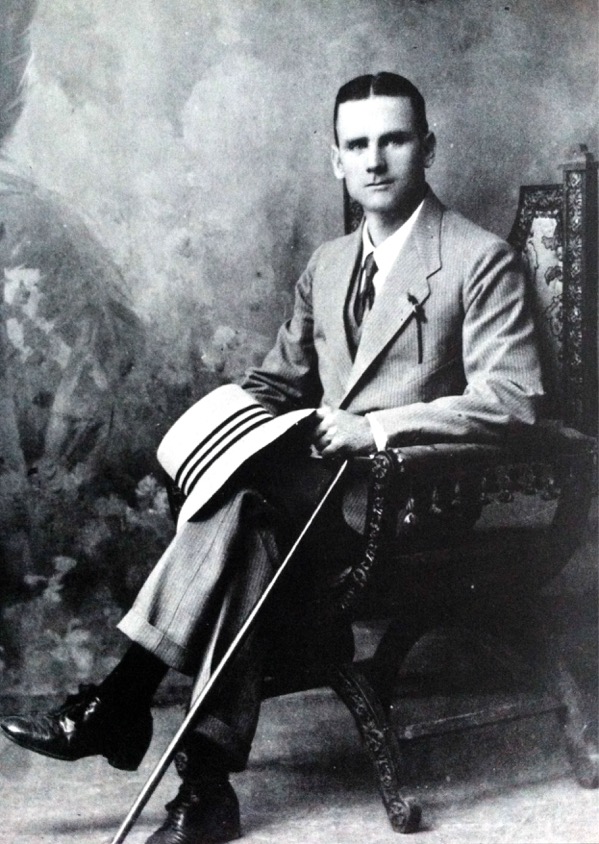
Brendan Behan

The death of maverick Irish writer, Brendan Behan, (above)  50 years ago, has been much remarked upon. But Behan shares this anniversary year with another major Irish literary figure, playwright Sean O’Casey, who appears as a character in my latest novel, The Rising of Bella Casey, which tells the story of his sister Bella.

The bare biographical details of Behan and O’Casey’s lives tell their own story. Behan died aged 41 on March 20, 1964, from alcohol-related diabetes. Six months later, O’Casey passed away aged 84. The age gap between them belies how much they had in common, although their lives did not cross.

Behan was certainly influenced by O’Casey’s work, particularly his Dublin trilogy – Shadow of a Gunman, Juno and the Paycock and The Plough and the Stars. Although a Protestant, O’Casey was brought up in straitened circumstances in northside Dublin and combined his literary career with a political radicalism, although he was a late bloomer as a writer. He was in his forties before his first play was staged.

Born 43 years after O’Casey in the same neighbourhood, Behan, a Catholic, was a precocious talent. He began writing in his teens contributing to Irish Republican magazines.  His work was heavily influenced by his political commitment.  In Behan’s case, that commitment included active involvement in the IRA, which resulted in two spells in prison.

Borstal Boy – a play based on his novel of the same name is now running at the Gaiety Theatre, Dublin in a new production directed by Conall Morrison – describes Behan’s first sentence in England for IRA activities. The Quare Fella tells of an execution at Mountjoy Jail when Behan was imprisoned there, and The Hostage deals with an IRA kidnapping of a British soldier.

Through very different routes, both  came to roughly similar conclusions in their writings about the fight for Irish freedom – “that while the issues involved were nationalism and imperialism, the ordinary poor had nothing to gain and a great deal to suffer in the cross-fire” as Colbert Kearney notes in The Writings of Brendan Behan.

But perhaps the most telling difference between them was one of temperament and habits.  Unlike Behan, O’Casey was a tea-totaller. In his biography of O’Casey, Christopher Murray remarks:”It is a sobering thought, if the pun will pass, that had O’Casey taken Behan’s path, he would have been dead before a single play had been staged. . .”

Conversely, Behan described himself as a drinker with a writing problem.

O’Casey’s view of Behan’s work is not recorded, but he was almost paternal in his concern for the younger writer. In an interview in the Irish Press on May 9, 1961, he remarked: “It’s sad to see this man abusing himself like he is.  If he does not mind his talent it will fade.”  On Behan’s death, he told the Evening Press: “One thing Brendan Behan never did was to exploit his own talents. . . He died too quickly.”

Behan was reverent in his admiration of O’Casey.  In a BBC television interview on November 29, 1962 he declared “. . .any playwright, certainly any Irishman writing plays in the past forty years that denies that O’Casey influenced them is a fool –  a liar. Yes, of course, he influenced us all.” In Brendan Behan’s Island, he went further: “I come from the same area as Sean O’Casey about whom I don’t intend to say anything for the simple reason that it would be like praising the Lakes of Killarney – a piece of impertinence.  A far as I’m concerned, all I can say is that O’Casey’s like champagne, one’s wedding night, or the Aurora Borealis, or whatever you call them – all them lights.”     

Sean O’Casey died on September 18,1964

Bella Casey’s War

ww1 poster

On  the eve of the centenary of the outbreak of the First World War, I thought it would be fitting to chart the influence of the war on Bella Casey, the heroine of my novel, The Rising of Bella Casey (Brandon, 2013).

Bella (b.1865)  was the eldest of the family of five, which included Dublin’s premier playwright Sean O’Casey. The Protestant Caseys, and Bella in particular, were steeped in the tradition of service in the British Army. Two of Bella’s brothers had soldiered with the Army. Tom Casey saw active duty in the Boer War (he died in February 1914 ) and Mick, who had served in the Royal Engineers in the 1890s, re-enlisted in 1915. Bella’s teenage son, James “Sonny” Beaver, also joined the Royal Navy in 1915.

Bella’s husband, Nicholas Beaver, had been a career soldier with the King’s Liverpools regiment in the 1880s. Beaver was struck down with the mental effects of syphilis in 1905, and was committed to Dublin’s Richmond Asylum where he died in 1907. Bella was left destitute with five children to raise alone.

Her brother, Sean O’Casey, being an avowed socialist and staunch nationalist, would not have served in the British Army on principle but he often drew on his background of solid, working-class Protestant loyalism for his work. He might not have had personal sympathy for these beliefs, but there was no doubt he understood them.

Although he was fearless in tackling thorny political issues in his plays – the depiction of the Easter Rising in The Plough and the Stars, for example, caused riots in the Abbey Theatre when it was staged in 1926 –  it was to take O’Casey almost a decade to approach the horrors of the First World War. In 1928 he submitted his play, The Silver Tassie, to the Abbey Theatre.  It constitutes a different kind of war service, an unflinching polemic on the futility of battle.

In the first act we see Harry Heegan, a young Dublin sporting hero who plays on the winning team for a soccer trophy (the silver tassie of the title) on the day he is due to return to the front. The second act of the play is an operatic depiction of Heegan and his war-weary comrades set in the rain-soaked trenches of France. A ruined monastery forms the backdrop; a broken crucifix dominates the scene. Strange liturgical chanting mixed with parlour songs replace conventional dialogue, in a highly stylized rendering of the absurd horrors of war. Nothing in the play up to this prepares the audience for this daring expressionism. Acts Three and Four bring us back down to earth, but all has changed. Heegan, now confined to a wheelchair as a result of a war wound, returns to Dublin, embittered and disillusioned. His girlfriend has gone off with his best friend Barney, who has won the VC for saving Heegan on the battlefield. In the community where he was hailed once as a hero, he meets only bafflement and distaste. No one can understand the trauma he’s been through. This is so common a trope in war narratives now that it is barely remarkable, but at the time, it was a revolutionary perspective.

Director and founder of the Abbey, W.B.Yeats, and O’Casey’s friend, was not convinced, however.  He turned the play down out of hand. In the history of literary rejections, they don’t come more savage than this. Yeats claimed that O’Casey knew nothing about the First World War: “You have no subject,” he wrote, “You are not interested in the Great War, you never stood on its battlefields or walked its hospitals and so write out of your opinions. . . ” He dismissed the bravura second act as an interesting technical experiment; after that, he added, “there is nothing”.

Given O’Casey’s strong and enduring family ties with the British Army, Yeats’s accusation that O’Casey was not familiar with his subject matter could hardly have been more wrong. O’Casey was not a man to take such criticism lying down. He inquired tartly if Shakespeare had been at Actium before he wrote Antony and Cleopatra or visited Philippi in preparation for Julius Caesar. And had Yeats himself travelled to Tir na nÓg as a preparation for his esoteric dramas, O’Casey demanded. The battle lines between the two men were firmly drawn.

Furthermore, as well as having family members fighting in the war, O’Casey had talked to soldiers returned from the Front. In 1915, he was hospitalised with TB in St Vincent’s Hospital. The wards were thronged with wounded soldiers newly arrived from France. While recovering O’Casey recalled listening to accounts of the “slime, the blooded mud, the crater and the shell-hole” that had become “God’s kingdom on earth”. These first-hand accounts must surely have inspired the nightmarish visions of the second act of The Silver Tassie. But Yeats insisted that the play lacked unity of action.

In such criticism he missed O’Casey’s point entirely. The disconnect between Act Two and the rest of the play was absolutely intentional. As one contemporary critic has put it: “The experience of a foot soldier caught up in the madness of battle is impossible to reconcile with the world that exists outside it: it is a personal apocalypse that relates to nothing even as it changes everything.”

After its rejection by the Abbey, The Silver Tassie did find a home.  It was premiered in London at the Apollo Theatre in 1929, starring Charles Laughton and Barry Fitzgerald.  But the war between Yeats and O’Casey was to continue for several more years.  They eventually patched things up and The Silver Tassie was staged at the Abbey in 1935 but the relationship between the two was never quite the same again.

As for Bella, who had seen her husband and brothers serve with the British Army and her son fight in the war, she was the only member of the family who did not survive the First World War. On January 1, 1918, she died of the effects of influenza.  This was the beginning of the Spanish ‘flu  epidemic that was to sweep through Europe that year and claimed more victims than the hostilities did.

An edited version of this post was broadcast as part of  RTE’s Sunday Miscellany World War One Roadshow, August 3.  See http://www.rte.ie/radio1/sunday-miscellany/

Fearless theatre

Photograph: William Burdett-Coutts

In December 2012, 23-year-old Jyoti Singh Pandey was gang-raped and savagely beaten by a group of men on a bus in Dehli and died of her injuries three weeks later. In Nirbhaya,(meaning Fearless), South African playwright Yaȅl Farber creates a piece of testimonial theatre centred around the incident, which ignited massive public protests in India.

The play is not just about the brutal rape and murder of Jyoti Singh Pandey, which is recounted and then enacted on the stage. It also contains the testimonies of five other victims of sexual violence – a dowry bride set alight by her in-laws, a Bollywood actress brutalised by her father, a child assaulted by a “kindly” neighbour, a married woman forced to choose between her children when finally she breaks away from her violent husband and a rebellions Indian emigrant to the States who’s gang-raped on the streets of Chicago.

What gives this production such emotional clout is that the actors are telling their own stories, not enacting a fiction. Each one – including the dowry bride who bears the horrific facial scars of her burning ─ has been the victim of sexual violence.

This may seem a strange choice for this blog ostensibly about fiction and history, since the issue of sexual violence against women is current and the play is documentary not fictional. But this is a piece of theatre that manages to combine the passion of agitprop with the artfulness and stagecraft of great drama. I saw it on Tuesday but have only now been able to formulate my responses to it. I came out of the theatre numbed and lost for words. This happens so rarely in theatre that it’s worth shouting about it when it does.

 Nirbhaya runs at the Pavillion Theatre, Dun Laoghaire until August 2.

Historical hot-house

West_Cork_Literary_Festival_2014_-_image_Wendy_Dison_Oak_-_Copy_194_128_s_c1

Feel like a sojourn in the south-west? I’m leading a historical fiction workshop next week  at the West Cork Literary Festival, July 7 – 11, in Bantry. The Bantry festival is a great event, intimate, serious in intent but great fun, and, of course, there’s the wonderful location. I’m hoping to use the work of writers appearing at Bantry – including Audrey Magee and Eibhear Walshe – during my workshop so participants can hear them live and on the spot.

Here’s the spec. . .

Want to be the new Hilary Mantel or Sarah Waters? Dream of delving into the recent or distant past like Colum McCann or Colm Toibin? Do you have an idea that might become a historical novel, or have you already started? Then this workshop is for you. Aimed at intermediate-level writers, we will explore different approaches to historical fiction; how to imagine yourself into another time; research – when and how to do it; the ethics of writing about real people; the melding of fact and fiction.

This workshop will be a creative hot-house experience and participants should be prepared to share their ideas, develop their own work during the workshop and, most importantly, to write – lots!

See http://www.westcorkmusic.ie/literaryfestival

Brought to Book

paintings in proust

I’ve just done one of those quickie questionnaires on the Irish Times website.  I love reading these things but it’s a strange sensation to read your own!  And, of course, you get troubled by esprit d’escalier – all the cool and impressive answers you should have given… But the spirit of the exercise is not to think too much about the questions, I think, and  not to brood too much about your answers.  And , above all, to remember that it’s newspapers, folks; it’ll soon be wrapping up someone’s virtual fish.  Or lurking behind a pay wall.

What was the first book to make an impression on you?

Oliver Twist by Charles Dickens. It was one of many classics read to me when I was very young.

What was your favourite book as a child?

Jane Eyre by Charlotte Bronte.

And what is your favourite book or books now?

Too hard to be definitive about this as favourites keep on changing, don’t they? But I would count Alice Munro as one of my favourite writers and I happily revisit her dozen or so volumes of short stories regularly.

What is your favourite quotation?

“Fail again, fail better” – Samuel Beckett

Who is your favourite fictional character?

Can I say Jane Eyre again?

Who is the most under-rated Irish author?

Eilis Ní Dhuibhne. Her range is amazing. She writes in Irish and English, across several different genres. Her short fiction, in particular, is formally inventive and often wryly funny. The Dancers Dancing, her novel about the Irish college experience, should be a classic.

Which do you prefer – ebooks or the traditional print version?

I read both. I prefer traditional print, as I love the book as object, but am attracted by the ease and lightness of ebooks.

What is the most beautiful book you own?

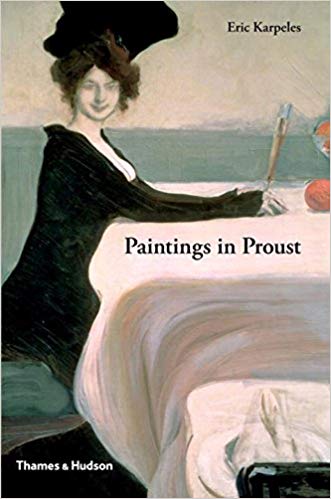
Paintings in Proust by Erik Karpeles – this is a companion book to Proust’s A La Recherche de Temps Perdu with reproductions of all the art Proust mentions in his text. It’s a beautiful to hold, the reproductions are exquisite, and it’s a fascinating sidelong view of Proust’s masterpiece.

I write at home in a small study that used to be the spare bedroom until I jettisoned the bed and forced guests to sleep on a sofabed in the living room. I do a first draft in long-hand – an old habit which I’m too superstitious to depart from now.

What book changed the way you think about fiction?

The Broken Estate by James Wood. Or anything by James Wood – he’s a literary critic who constantly forces me to re-evaluate reactions to books I’ve read. I don’t always agree with him, but he always makes me think twice.

What is the most research you have done for a book?

Probably for my most recent novel, The Rising of Bella Casey, about Sean O’Casey’s sister. I was awarded a research fellowship at the New York Public Library as I was starting the novel so I was in residence in one of the most extensive libraries in the world. Usually, I write the novel first, then do the research afterwards – but for this novel, the procedure was reversed. I researched Sean O’Casey’s papers (housed in the NYPL), read his letters and the various biographies of him, as well as foraging through testimonies of tenement life, the effects of syphilis, the first World War and the social history of the early 20th century. All of this was at hand and I ended up with more material than I knew what to do with – for that novel and for others yet to be written.

What book influenced you the most?

Again, it’s hard to answer this. As a writer, the books that have influenced me most – though probably subliminally – are the novels I read in my mid-teens, an age when you’re wide open to being carried away. Carson McCullers and Flannery O’Connor both had that effect on me at that age. I felt I had stumbled on a great secret finding them and I think they hover still around my writing somehow.

What book would you give to a friend’s child on their 18th birthday?

Oh God, I’d probably give them a book token and let them choose. Otherwise I’d give them Down and Out in Paris and London by George Orwell which I read at 18. I was mesmerised by it because it was about Paris, where I’d never been, and because it was so dark, raw and edgy and a million miles from my own very sheltered existence.

What book do you wish you had read when you were young?

Ulysses by James Joyce

What advice would you give to an aspiring author?

Write – a little and often. Read a lot.

What weight do you give reviews?

Enormous if they’re good.

Where do you see the publishing industry going?

If I knew the answer to that. . .

What writing trends have struck you lately?

The predominance of present-tense narratives in short fiction and the large number of polyphonic novels.

What lessons have you learned about life from reading?

I don’t look to reading to teach me about life; I use it to escape life.

What has being a writer taught you?

Dogged persistence.

Which writers, living or dead, would you invite to your dream dinner party?

I would like to invite the residents of The February House, a literary commune set up in Brooklyn in the early 40s, which counted among its many members Carson McCullers, Benjamin Britten, W H Auden, George Davis, Paul and Jane Bowles, Gypsy Rose Lee, Klaus and Erika Mann, along with a host of famous visitors, including Anais Nin and Louis Mc Neice. Rather than be the host of the dinner party, I’d like to be a fly on the wall during one of their gatherings.

Brought to Book: Mary Morrissy on Alice Munro, Jane Eyre and James Wood.

True to the spirit of Joyce

Image

I’m really thrilled with this review by John Boland  in the Irish Independent of Dubliners 100, which gives special mention to  An Encounter, my take on Joyce’s story of the same name. The book, from newcomers Tramp Press – run by the indefatigable Lisa Coen and Sarah Davis-Goff –  showcases the work of 15 contemporary Irish writers who recast Joyce’s stories a hundred years after they first appeared in 1914.

‘It is not my fault,” James Joyce told his London publisher, Grant Richards, “that the odour of ashpits and old weeds and offal hangs round my stories. I seriously believe that you will retard the course of civilisation in Ireland by preventing the Irish people from having one good look at themselves in my nicely polished looking-glass.”

Less vehemently, he also told Richards that his intention was “to write a chapter of the moral history of my country and I chose Dublin for the scene because that city seemed to me the centre of paralysis. I have tried to present it to the indifferent public under four of its aspects: childhood, adolescence, maturity and public life”.

He wrote those words more than a 100 years ago and now, on the centenary of the first publication of Dubliners, we are offered 15 new stories bearing the same titles that Joyce used, each of them written by a contemporary irish author, and each of them purporting to offer modern ‘cover versions’ of the original.

That, at any rate, is the phrase used by Thomas Morris, who has edited the book for Tramp Press, which was founded in the past year by Sarah Davis-Goff and Lisa Coen, both of whom met when when they worked at Antony Farrell’s Lilliput Press – where the former discovered Donal Ryan’s The Spinning Heart, which was previously rejected by more than 40 publishers.

It’s unclear, though, what Morris (who recently took up editorship of The Stinging Fly magazine) means by “cover versions” – indeed, his blithely offhand introduction, which is more about himself than the project in hand, suggests not only that he’s unsure himself, but also that he’s not really too bothered about it anyway.

This may explain why he includes a story by Paul Murray that was originally published in 2011 under the name Saint Silence and that’s here been retitled A Painful Case, even though its account of the strange relationship that evolves between a contemptuous (and implausible) restaurant critic and a contemplative monk bears only the most tenuous connection, whether in scenario or tone, to Joyce’s tale about Mr James Duffy.

Nor can it easily be discerned how Patrick McCabe’s raucously fanciful The Sisters bears any relation to Joyce’s opening story, or Peter Murphy’s laboriously contrived The Dead to its majestic antecedent.

And a few other stories are simply too poorly conceived and executed to have merited inclusion in any serious collection. But there are some intriguing – and, indeed, a few outstanding – stories here by writers who have sought to imagine current correspondences to their assigned originals – even if very obliquely in the case of Donal Ryan’s take on Eveline and Eimear McBride’s on Ivy Day in the Committee Room.

Yet while Ryan and McBride have been the two greatest recent discoveries in Irish fiction, the finest stories here – and also the truest to the spirit of the enterprise – are by less acclaimed writers, though mention should also be made of John Boyne’s Araby, in which a boy’s crush on a rugby-playing older boy evokes some of the desolation to be found in Joyce’s original beautiful story. John Kelly’s A Little Cloud, which recasts the condescending Ignatius Gallaher as a New York-based novelist and has him meeting the hapless Little Chandler (here Inky Chandler) in the Merrion Hotel, is also persuasive, as is Andrew Fox’s After the Race, set in Manhattan and involving boasting businessmen as the embodiments of paralytic malaise. Joyce would have known them for what they are.

And he would have appreciated Michelle Forbes’s affecting version of Clay, in which Maria has become the overweight and innocent Conor making his way home to the bleak domestic outpost of Cherrywood, where he’s mocked by a group of trick-or-treating teenage girls.

He would have recognised, too, the hollowness of housewife Kathleen’s existence in Elske Rahill’s A Mother. The story falters towards the end, but the desperation of the loveless Kathleen as she contrives a ghastly social evening is poignantly captured.

Finest of all, though, is Mary Morrissy’s reimagining of that great story, An Encounter, with mitching schoolboy Joe Dillon now becoming schoolgirl Jo Dillon as she and the narrator embark on a mundane though ultimately life-changing jaunt through the middle-class peacefulness of Churchtown and Dartry. The story stands on its own but it’s also true to the spirit of Joyce, who would have applauded its lovingly detailed evocation of place.

Dubliners, a hundred years on

Dubliners 100

I’ve just got a sneak preview of  the cover of Dubliners 100, the book of short stories Tramp Press is bringing out in June to commemorate the 100th anniversary of the publication of Joyce’s Dubliners.

Fifteen writers were asked to do “cover versions” of the stories in Dubliners – the brief was fairly open and the recasting of the stories was left entirely to us. Luckily, I was one of the writers asked. The story I got to rework was An Encounter which is not one of the stories that immediately appealed when I first read Dubliners 35 years ago. (My favourite then was Araby, as I’ve written elsewhere on this blog).

But as a result of this commission from Tramp Press, I have read An Encounter very closely over the past few months. It’s one of those stories that offers up its mysteries slowly – a true sign of art – and it has displaced Araby, of my youthful affections, as my mature favourite of Joyce’s stories.

Not much seems to happen in An Encounter.  Two boys, keen for adventure, go on the mitch from school and meet an old man, who may or may not be an exhibitionist. The man speaks to them in a strange fashion; the narrator is oddly entranced by this man but his friend, being more pragmatic, runs away. The result of the encounter is inconclusive but the relationship between the boys – the bookish narrator and his more phlegmatic friend – is changed subtly as a result of it.

The challenge in recasting Joyce is to try to recreate the spirit of the story without resorting to pastiche (and even pastiching Joyce is fairly difficult).  He spoke, famously, about the “scrupulous meanness” of the language in Dubliners which accounts for the intensity of emotional effect in the stories. When recasting An Encounter, I went for  the intensity of emotion – but the stinginess of language I found harder to achieve.

The rewriting of Joyce’s story has been a journey of rediscovery – looking at an overlooked story (overlooked by me, that is ) and finding a slow-release masterpiece. Now I can’t wait to see how my fellow writers – John Kelly, John Boyne, Donal Ryan, Peter Murphy, Elske Rahill, Oona Frawley, Eimear McBride, Pat McCabe and Sam Coll among others – have channelled Joyce.

Dubliners 100, edited by Tom Morris,  is published by Tramp Press on June 5th.

He ain’t heavy, he’s my brother

Siblings are often in danger of being traduced in print when there’s a writer in the family. Sometimes they bite back, biographically or fictionally. Others, like Bella Casey, the heroine of The Rising of Bella Casey (Brandon Press, 2013), my novel about the Irish playwright Sean O’Casey and his sister, don’t get the chance of a right to reply.  One of the triggers for writing Bella’s story was O’Casey’s decision to kill her off  ten years before her time in his autobiography.

Perhaps the best known set of literary siblings were the Brontës, but they happily shared a literary territory, particularly as teenagers. Later, the sisters’ fictional depiction of one another seems to have been heavily disguised – and, more importantly, was not contested. In the course of my research, I did some trawling through works where literary siblinghood was either hotly debated on the page, or – as in the case of Bella Casey –  a sister or brother was airbrushed out of the family album.

Stannie 1904

1. Stephen Hero: by James Joyce

This early work featured many episodes drawn from Joyce’s family life and, in particular, Stephen’s close relationship with his brother, Maurice (read Joyce’s real-life brother, Stanislaus, pictured above) Joyce subsequently rewrote it as A Portrait of the Artist as a Young Man but he excised much of the material relating to Stanislaus. In later years, Stanislaus wrote a psychologically riveting memoir of Joyce’s early life, My Brother’s Keeper. “It is terrible,” he observed “to have a cleverer older brother. . .I perceive that he regards me as quite commonplace and uninteresting – he makes no attempt at disguise – and though I follow him fully in this opinion I cannot be expected to like it.”

2.Monkeys: by Susan Minot

Susan Minot’s “semi-autobiographical” debut novel caused a family storm when it was published in 1986. It follows the lives of the seven Vincent children, their Catholic mother and alcoholic father in an atmosphere of New England privilege. The novel inspired a veritable symphony of competing sibling creativity. Sister Eliza Minot published The Tiny One in 1999, covering the same events, brother George penned a murder mystery, The Blue Bowl,  about a large family in which one of the sons is accused of killing his father. Sam Minot, who claimed the father-killer character in George’s novel was based on him, replied with a self-published memoir entitled The Strange Poverty of the Rich. There are three other Minot siblings who have yet to contribute to the debate.

A S Byatt

3. The Game : A.S Byatt

A Brontean tale of two sisters who as children share an imagined alternate universe based on the Arthurean tales, but who are divided by the same creativity as adults. When Cassandra, a single Oxford don, sees one of her childhood fantasies portrayed in her sister Julia’s novel, the stage is set for a showdown. Byatt’s sister, Margaret Drabble, described the novel as “a mean-spirited book about sibling rivalry and she sent it to me with a note signed ‘With love,’ saying ‘I think I owe you an apology’.”

4. The Peppered Moth: Margaret Drabble

Drabble’s first novel, The Summer Bird-Cage was also about a pair of rivalrous sisters, one single and the other who opts for a wealthy marriage. But it was not until Drabble’s 2011 novel, The Peppered Moth was published, that Antonia Byatt railed publicly against her sister’s fiction. Byatt was exercised by the character of Bessie Bawtry in the novel which is based on the Drabbles’ mother, Kathleen. She is quoted as saying that she “would rather people didn’t read someone else’s version of my mother”.

5. Little Women: Louisa May Alcott

Louisa May Alcott did not have the same problems when she mined sibling territory for her series of novels about the March sisters – maybe because the proceeds were going towards supporting them. Troubled by her family’s genteel poverty, she vowed at age 15 that she would be rich. Little Women was a commissioned work; her publisher wanted “a book for girls”. The novel, based on Louisa and her sisters coming of age in the American Civil War, was published September 30, 1868 and was an instant success.

steve jobs

6. A Regular Guy: Mona Simpson

Tom Owens drops out of college and becomes a Silicon Valley biotech millionaire. He’s a barefoot in the boardroom kind of entrepreneur who eventually gets pushed out of the company he helped create. Sound familiar? Simpson’s brother was Apple founder, Steve Jobs, above, who was adopted days after birth. Simpson’s novel is written from the point of view of Owens’ estranged daughter, Jane. Jobs’ response to the novel is not recorded but Lisa Brennan-Jobs, his daughter by a first marriage, was furious. “In the first few pages, I was confronted with my family, my anecdotes, my things, my thoughts, myself in the character Jane. And sandwiched between the truths was invention—lies to me, made more evident because of their dangerous proximity to the truth.”

7. Hideous Kinky: Esther Freud

Hippie mother Julia leaves the predictability of Tunbridge Wells with her two daughters, aged 4 and 7, for Morocco where they live a low-rent life in Marrakech. The elder girl, Bea, based on Freud’s sister, Bella, insists on a conventional life in the midst of the chaos, going to school etc while the younger sister and child narrator of the novel watches uncomprehendingly as her rackety mother hitches herself up to various men and explores Sufism while the family slides further into impoverishment. When asked what her sister thought of the autobiographical novel, Esther Freud said Bella’s memories of the sojourn in Morocco were not compatible with hers. But she added that her sister had relished the novel.

frank mccourt

8. Angela’s Ashes: Frank McCourt:

Frank McCourt ‘s fictionalised memoir was a fore-runner of the misery lit genre back in 1996. Its depiction of a miserable Irish childhood with a brood of brothers enraged the residents of Limerick where the McCourts grew up. McCourt’s brothers, Malachy and Alphie each subsequently produced memoirs of their own – A Monk Swimming and A Long Stone’s Throw respectively. They didn’t argue with their brother’s account; they merely added their own voices to the family narrative with further adventures, mostly in the US.

9. Big Brother: Lionel Shriver

Lionel Shriver’s latest novel is inspired by her dangerously overweight brother Greg, who was contemplating gastric surgery when he suffered a fatal heart attack in 2009. Shriver has turned the story into a novel in which the brother – now called Edison – takes charge of his obesity with a rigorous diet imposed by his sister, Pandora, with weight issues of her own. Shriver was determined to fictionalise her brother’s story. “It was the inspiration,” she said of his death. But she added that her real brother was very complicated. “I don’t think he would’ve fit in a book.”  And if he were still alive, the novel might never have been written.

dorothy wordsworth

10. Daffodils: William Wordsworth:

I wandered lonely as a cloud, Wordsworth wrote, but by right he probably should have used the first person plural. He was with his devoted sister Dorothy (in the portrait above) when they saw the long belt of daffodils as she notes in her diary. “. . . they grew among the mossy stones and about them, some rested their heads upon these stones on a pillow for weariness & the rest tossed and reeled and danced & seemed as if they verily laughed with the wind. . . ” Dorothy’s journals were full of observations of nature and the siblings’ life together, some of which found their way into Wordsworth’s verse. Indeed, he consulted her journal when he came to write Daffodils and that, it seems, is how she intended it. It was for William that Dorothy kept the journal.

Marilyn and Sean – fashion icons

Marilyn Monroe posing in her Aran sweater

What do Marilyn Monroe and Sean O’Casey have in common? They never met and she never appeared in any productions of the playwright’s work. However, she was a fan. On a visit to England in 1956 with then husband Arthur Miller, she said the person she most wanted to meet was O’Casey and she had read the first volume of his autobiographies. But there is another unlikely connection between them – a Dublin shop.

Cleo is a knitwear and handcrafts shop on Dublin’s Kildare Street, opened by Kitty Joyce in the 1930s, and now run by her daughter.  It’s the subject of a book by Hilary O’Kelly (Cleo: Irish Clothes in a Wider World, Associated Editions). The book tells the story of the shop’s foundation and features photographs from the shop’s back catalogues of celebrity customers wearing its merchandise, including Marilyn Monroe and  O’Casey.

Having spent several years inhabiting the world of Sean O’Casey while writing The Rising of Bella Casey,I thought I was familiar with almost every facet of the playwright’s life.  Except this one – Sean O’Casey as fashion icon!

After O’Casey moved to London in 1926, he rarely returned to Ireland.  He was stung by Yeats’s rejection of his WW1 play, The Silver Tassie, in 1928, a decision which deprived him of a natural repertory of actors to perform his work.  It hardened his attitude towards Dublin and fastened his self-imposed exile in England. However he did visit Dublin at least once afterwards – he came on a holiday with his wife, Eileen, in 1935.  Perhaps it was then he acquired the Aran jumper shown in the Cleo catalogue.  Or perhaps it was later, sent to him as a gift or ordered by mail?

In the photograph featured here, O’Casey also wears a decorated skull cap, another distinctive accessory he favoured in latter years. In her memoir, Sean, O’Casey’s wife Eileen remembers their daughter, Shivaun, bringing home a brightly-coloured felt cap she had made in school. “Trying it on, he found it most comfortable, and this was how his collection of caps began.  Frequently he was photographed in one; people would send him others from many countries, and he would make his choice for the day as the mood took him.”

The cap featured in the title of O’Casey’s last book, Under a Colored Cap,(1963), a collection of articles “merry and mournful with comments and a song” dedicated to his granddaughters, Alison and Oona. O’Casey’s daughter Shivaun used the same title for her film documentary of her father in 2005.

Sean O'Casey with his wife, Eileen, in distinctive coloured cap and Aran sweater
Sean O’Casey with his wife, Eileen, in distinctive coloured cap and Aran sweater


Fiction – the asylum for the insane?


SONY DSC

For some reason, I’ve always written about institutions. There is a lunatic asylum in both The Pretender and The Rising of Bella Casey  and a TB sanatorium in my first novel  Mother of Pearl.  Perhaps it’s a feature of writing historical fiction, predominantly based in the 19th century where the state played a more heavy-handed part in individual lives. I found this blog on celebrated inmates of insane asylums of that era fascinating.  .  .

InterestingLiterature's avatarInteresting Literature

By Suzanne Shumway

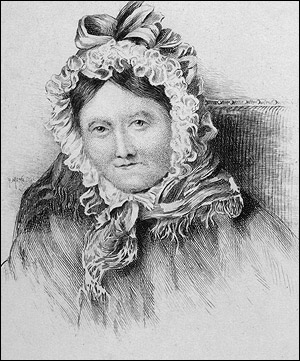
1. Mary Lamb (1764-1847), sister of the essayist, poet, and playwright Charles Lamb. In 1796, Charles checked himself into a private asylum and spent six weeks there, never dreaming that a few months later, his sister would fall victim to a madness so severe that she would kill her own mother in a fit of rage. Although Mary was confined to Fisher House Asylum immediately after the murder, a verdict of lunacy assured that Lamb escaped punishment, and she was eventually released into Charles’s custody. However, she occasionally returned to an asylum when she felt madness coming on.

2. Rosina Bulwer Lytton (1802-1882) was the wife of the immensely popular novelist Edward Bulwer-Lytton. Theirs was a love match, but the relationship hit the skids within eight years of their marriage. When her husband took up with other women, Rosina protested, and the result was a legal separation…

View original post 517 more words