Nora Barnacle’s ‘buried life’

The admission of his wife’s secret grief, about which he knew nothing, and the intensity of her feelings, both chills and haunts Gabriel. “He had never felt that himself towards any woman, but he knew such a feeling must be love.”

The story of Michael Furey chimes almost exactly with Nora Barnacle’s youthful biography.

Michael “Sonny” Bodkin, from Prospect Hill in the city, was Nora’s teenage sweetheart. She was 15 and Sonny was 18 and a student in University College Galway, when they met. According to Nora’s Galway biographer, Padraic O Laoi, she was very impressed by his “gentility and manliness” and became very attached to him..

The opportunities for courtship for teenagers were then very limited, according to O Laoi, so Nora would visit the Bodkin sweetshop at Prospect Hill and there “throw eyes” at Sonny as they “chatted and joked and passed small pleasantries”. But after only a year, Sonny was stricken with TB. He was sent to the County Infirmary but his medical treatment was not successful and he died there on February 11, 1900. He was buried in Rahoon Cemetery two miles north west of the city.

Sonny was not the only bereavement Nora had suffered. Her first crush, aged 13, was on another Michael – Michael Feeney, a neighbour boy she’d grown up with, who was a few years older. At 16, Feeney contracted typhus, developed pneumonia and died in the Galway Workhouse in 1897.

These early deaths had a profound effect on Nora. She met Joyce a mere four years after Sonny’s death, and she confided in him about it. It’s likely that she showed the him the shop at No. 2 Prospect Hill where she flirted with Sonny, when Joyce visited the city in 1909. And in 1912 on a second visit, she took him to Sonny’s grave.

She must have also told him about Michael Feeney. It appears that Joyce combined details from both of these experiences for the character of Michael Furey in “The Dead”.

But as Brenda Maddox’ s biography, Nora, notes: “It hardly matters where he got the facts for ‘The Dead’. Joyce rearranged and patterned his materials to suit his art and his ear.”

Sonny Bodkin was Nora’s “buried life, her past”, Joyce wrote.

That buried life was commemorated in Rahoon Cemetery earlier this year when President Michael D Higgins unveiled a plaque at the Bodkin vault to honour the real-life associations that informed Joyce’s fictional masterpiece. In doing so, the president said he was acknowledging “something incredibly important” – the influence of Nora Barnacle’s “sense of recall and her sense of embedded memory” on Joyce’s life and work.

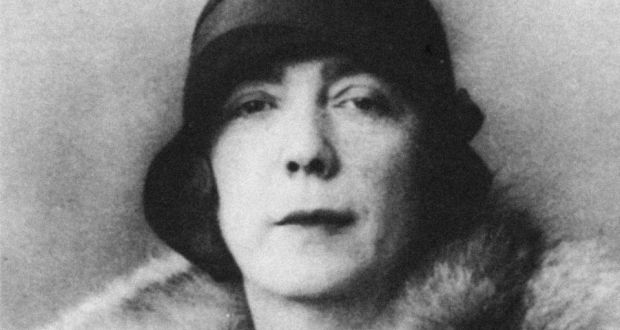
Photograph: Nora Barnacle as a teenager in Galway c 1895-1900
Finding a new wife for James Joyce

Penelope Unbound, my new novel from Banshee Press, imagines an alternative life for Nora Barnacle without James Joyce. One of the challenges of writing speculative fiction is dealing with the domino effect. In other words, once you start tinkering with one life, all the other lives contiguous to it start to change too.

In the universe of Penelope Unbound, Joyce’s Ulysses has not been written, Dubliners has not been published and James Joyce and Nora Barnacle are no longer together.

As author of this universe, it was my job to find new partners for both of them. It’d be a spoiler to write at any great length here about Nora’s new partner, apart from revealing that he, like many of the characters in the novel, is a real person.

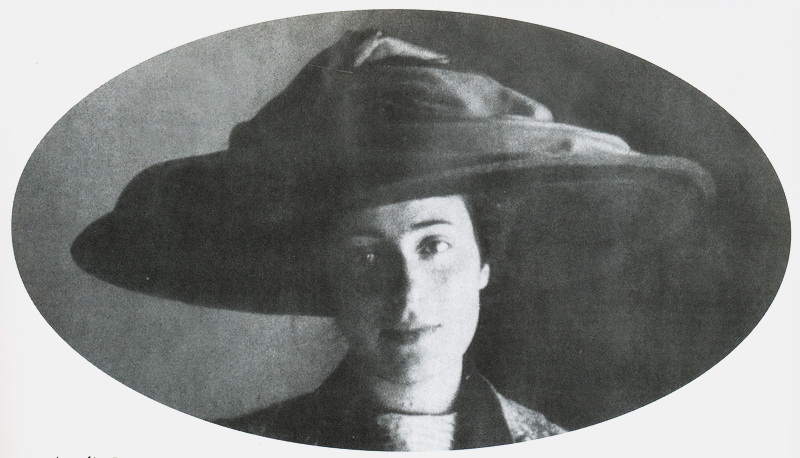
The other challenge was in finding a new wife for James Joyce. I chose Amalia Popper – pictured above – who was one of his many female English pupils in Trieste and who is generally considered to be the fantasy love object in Joyce’s short narrative fragment Giacomo Joyce, posthumously published in 1968.

Amalia Popper was born in 1891 into a prominent Jewish family in Trieste. Her father was a businessman, her mother a painter. Hers was a privileged upbringing, with a first-rate education supplemented by private tuition in English with Joyce. When she met Joyce first in 1908 she would have been 17 and in the last year of high school, although she studied with him again for entrance exams to university.

In Giacomo Joyce Joyce describes in elliptical terms his infatuation with the unnamed “lady of letters” who is pale of cheek, with ” long lewdly leering lips”, and eyes that “dim the breaking East”. He notes her “cobweb handwriting, traced long and fine with quiet disdain and resignation, a young person of quality”.

He is painfully uncertain in her presence, outside of the teacher/pupil scenario.

“I rush out of the tobacco shop and call her name. She turns and halts to hear my jumbled words of lessons, hours, lessons, hours: and slowly her pale cheeks are flushed with a kindling opal light.”

As the narrative continues his voyeuristic desire quickens. “I hold the websoft edges of her gown and drawing them out to hook them I see through the opening of the black veil her lithe body sheathed in an orange shift. It slips its ribbons of its moorings at her shoulders and falls slowly; a lithe smooth naked body shimmering with silvery scales.”

But the infatuation remains just that, and his feelings undeclared. At the end of Giacomo Joyce, the mystery” lady”, wearing a red hat and carrying a furled umbrella, walks out of his life.

But that was not the end of Amalia Popper’s association with Joyce.

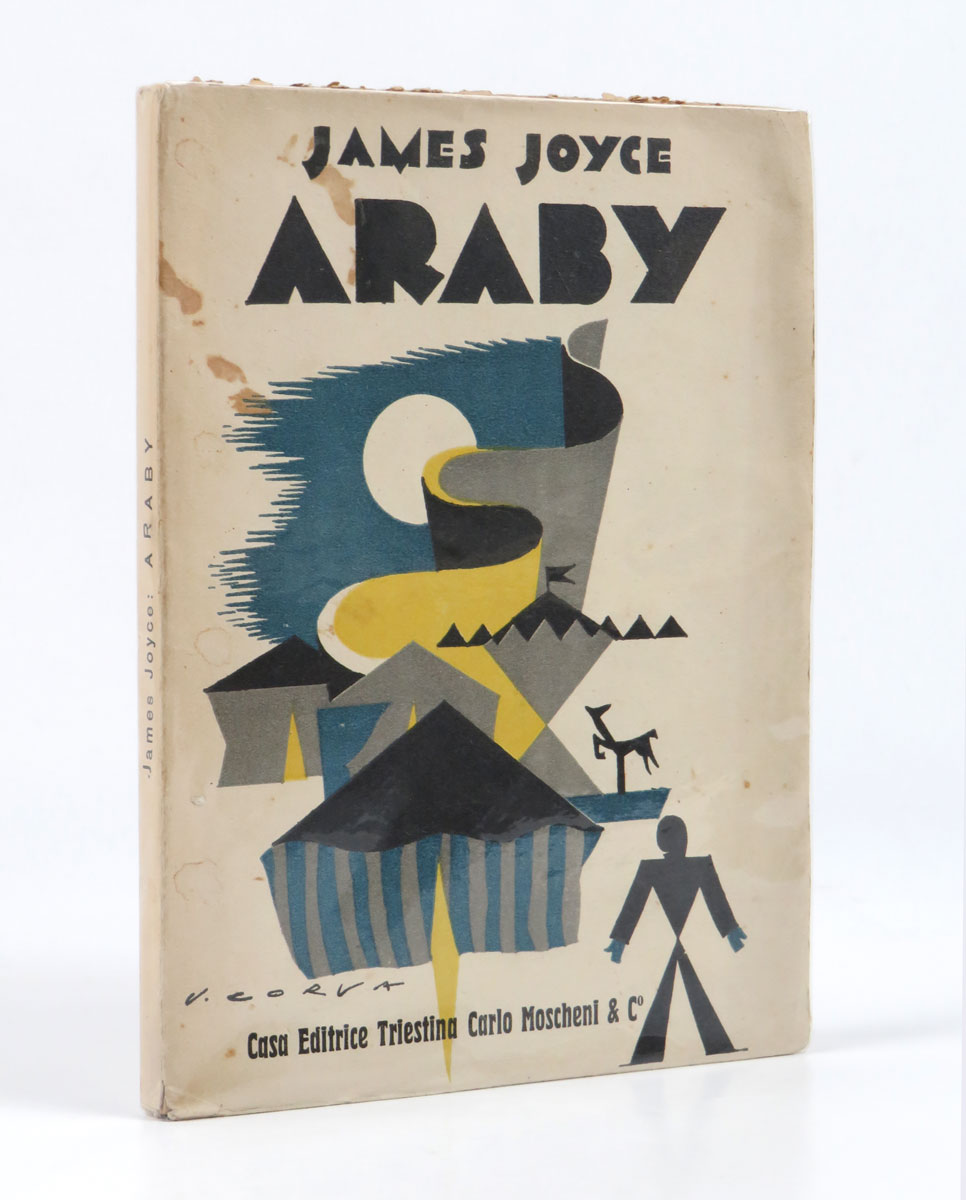
In 1929, over 20 years later, she became Joyce’s first Italian biographer and translator. Joyce’s brother Stanislaus had commissioned her to write an essay but she opted instead to translate some of the stories in Dubliners – “Araby”, “A Little Cloud”, “Counterparts”, “Eveline”, and “The Dead.”  Joyce revised and corrected the translated texts and in 1935 they were collected in Araby (pictured above) accompanied by a brief, authorised and, by all accounts, rather anodyne biography.

Given that Giacomo Joyce is a catalogue of the pains of infatuation, it’s ironic that Araby was chosen as the title of the translations. (It’s not clear whether Popper chose the title or Joyce insisted on it.) Either way, the story from Dubliners is perhaps Joyce’s most heart-rending take on the theme of unrequited love – a young boy who undertakes an odyssey to buy a trophy for the girl he’s afraid to approach.

If it was Amalia who titled it Araby, perhaps, subliminally, she knew of Joyce’s feelings and this was a nod to them. But that’s in the realm of speculation and I’ve done enough of that already!

However, if you were looking for the perfect literary wife for Joyce, Amalia Popper would have been a prime candidate. She was an intellectual, a scholar of Latin and Greek, with an abiding interest in literature. Conversely, Nora Barnacle left school at 12, never read Joyce’s work and in the early days of their association felt he’d have been much better off giving up writing and taking up singing as a career. But then, marriages are rarely made with such qualifications in mind.

Amalia Popper left Trieste in 1910 to study at the University of Florence. She subsequently married Michele Risolo, who was to become prominent as the editor of the Fascist newspaper Il Popolo di Trieste, and who was disapproving of the link between his wife and Joyce, even as she was translating his work. When Giacomo Joyce was published a year after her death, he consistently denied his wife was the mysterious woman described in it.

Amalia continued working as a translator, teacher and newspaper critic until her death in Florence after a long illness in 1967.

Penelope Unbound will be launched in Cork on Thursday October 12 at Waterstones @ 7pm, and in Dublin on Tuesday October 17 at Hodges Figgis @ 6pm.

Nora with an H

With only a month to go to publication date (October 5), I’m in author’s limbo. Penelope Unbound is out of my hands but not quite born yet. However, I do know what the cover looks like – some very clever graphics from Anna Morrison – and some great endorsements from fellow writers – thanks to Jan Carson, Kevin Power, Lisa Harding and Nuala O’Connor. There’s now nothing to do but wait until it’s launched.

The novel from Banshee Press is about Norah Barnacle. Just her. Not James Joyce, but as you can see from the cover, it’s impossible to escape his presence in the novel. It’s impossible to escape his presence, full stop! Even so, Penelope Unbound is a speculative fiction which imagines a life for Norah Barnacle without James Joyce.

It’s a “what” if tale. In it, I play the Goddess and split the pair up just after they arrive in Trieste in 1904. Joyce left Norah at the railway station when he went off to scare up funds and accommodation leaving her to guard the luggage. She waited the best part of a day for him to come back. In real life, she waited, but in Penelope Unbound she doesn’t.

I give Norah a completely different life without Joyce, although I do grant them a reunion – in Dublin 11 years later – but you’ll have to buy the book to see how that goes.

Eagle-eyed readers (especially all my old sub-editor pals out there) may notice that “my” Norah Barnacle has an H at the end of her name. This is not just a fictional device to emphasise the speculative nature of the book. In fact, according to Brenda Maddox’s biography, Nora, she was christened Norah, and before she met Joyce, that is how she spelled her name. It was he who insisted she change it – perhaps in deference to his literary hero Ibsen’s Nora in A Doll’s House?

So I unwind the clock and stick with the spelling she used as a young woman in Galway and the early part of her stay in Dublin. In her early letters to Joyce, she still signs herself Norah, but at some stage in 1904 she becomes Nora, perhaps when she became Jim’s (as she called him. )

While society demanded that women relinquish their family name on marriage for centuries, being asked to alter or change your first name is something different because it is so tied up with your singular identity. In this case, it was only a different spelling, but it created a before and after in Norah/Nora Barnacle’s life. This may very well reflect the truth of their situation – Norah and Joyce’s meeting certainly changed both of their lives.

But by insisting she change her name, Joyce became the “author” of her new identity as Nora.

And that’s the one we’re still using 119 years later.

Penelope Unbound is published by Banshee Press, October 5, 2023.

Almost Bloomsday

In honour of Bloomsday, here’s an extract from Penelope Unbound, my speculative novel about Nora Barnacle that imagines a life for her without James Joyce. Here’s the assignation Nora and Jim fail to have before they reschedule for the iconic meeting on June 16.

They’d arranged to meet outside the Surgeon Wilde’s house, but she didn’t show. Told him a fib about having to work overtime, how Miss Fitzgerald came up to her on her way out the door, as she was trying to spear her hat with a pin in the hall mirror, and said that Molly Fowler was sick and couldn’t do her shift. 

Sure what could I do?  

It could have happened like that. Only it didn’t.  Instead she’d said – But Miss Fitzgerald, I have a date with my young man. 

As if they were an item but sure they’d only just met.  He’d picked her up on Nassau Street only a few days ago with a saucy smile and a sailor’s suit. A boy with jamjar specs, not her type at all.

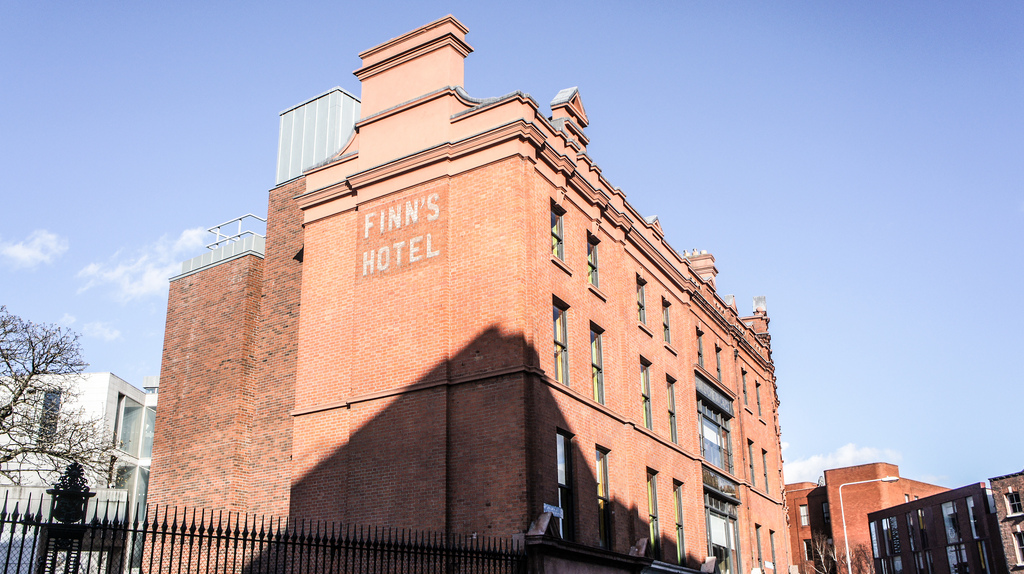
I see that, Miss Barnacle, says Miss Fitzgerald, looking into the glass behind her with a kind of smirk, more music-hall than spinster. And before Miss Fitzgerald had time to cajole, for she had a way of getting on the sweet side of you when she wanted something, Nora had pulled open the heavy front door of Finn’s and gone tripping out into the dusty sunlit lozenge of the street. 

But as she hurried, hand on hat, towards Merrion Square, a strange desolate feeling overtook her, a pang of doubt. She slowed her tripping step to a heavy-footed stroll, and then to a halt.  What had possessed her, to say yes?  Yes to a college boy with a boater. Though he wasn’t the first college boy she’d had. Hadn’t Sonny Bodkin been at the university, even if he didn’t finish, too old for her, they said – no, she wouldn’t think of him now, not now.  She darted around by Sweny’s Chemists and scurried across to the pillars of the Gospel Hall.  She could hear singing from within. The Brethren must be at it, but I thought they didn’t hold with singing. But the place is thronged with them. Just as well, this way she can spy on yer man without him seeing her. 

She remembered the specs he wore. He won’t pick her out from the crowd at this distance even though the sun is glancing coppery off her hair. And, sure enough, there he was, a stick of worry, standing at the corner, hands on hips. Then pacing a little this way and that. He had on the same get-up as the day he chatted her up. Not bad-looking up close, a bit skinny, pull-through for a rifle, when did he last have a square meal, I wonder, and his clothes had seen better days. Then she remembered she’d told him where she worked.  He could duck down to Finn’s, if he had a titter of wit, and ask after her and then her fib would be exposed.  He’d know then she’d stood him up.  Deliberate like. And it wasn’t that she wanted to say no, she just wasn’t sure about saying yes.  Outright. 

And if he had come to Finn’s looking for her, would that have decided her about him? She just wasn’t sure, not like with Sonny Bodkin. Poor Sonny who had stood in the Pres garden and called out to her in the flogging rain.  And she half-delighted, half-mortified by him standing there, loyal as a beaten dog while she hid in the darkness of the auntie-room letting on she wasn’t there.  But this fella was no Sonny Bodkin, she could tell that even from afar. Sure, no one could be.  No one could be the first after the first. 

He was dithering now, she could tell.  But so was she and the longer she waited the stranger he became.  Was he a foreigner, was that what made her hesitate? A Swede maybe with those blond looks?

 Reasons not to approach. Now that she was here she could find a dozen. The minutes passed, five, ten, and her delaying was like a jelly left to set. If she had a penny for every time he changed his mind she’d have a fortune. There he’d go, gathering himself up then doubling back like a dog at a post sniffing, then trying and sniffing again. The hum and the haw of him. 

Hello, hello, she could have rushed up all breathless and false and full of sorrys and old excuses he wouldn’t even listen to because he’d be so relieved. Fellas forget themselves. She almost moved then but she didn’t.  She was stuck to the spot as if she was the one being stood up. And as she stood there debating, didn’t he make her mind up for her.  Fixed his cap on his crown and strode away up the west side of Merrion Square.  In a temper, she’d have said, by the look of him.

 And then she felt the let-down. 

What did she go and do that for? 

What was all the mirror-gazing in Finn’s for, and wondering will I do? 

She remembered the lightness of her step as she had set off and now she was morose and cursing herself for being so perverse. 

What ails you, girl? That’s what Mamo used to say. What ails you.

 No, she told herself shaking her head, I did the right thing, a fella who’d pick you up on the street like that, what kind of fella would he be? Not a patch on Sonny Bodkin, that’s what. 

 She turned to go, checking one last time to see had he changed his mind.  But he hadn’t – he was a cross white speck in the summer sunlight now. She trailed back the way she came, her hat in her hand, her hair dejected. She hadn’t the heart to do anything else with her precious night off. If she knew where Vinny Cosgrave was she might seek him out, but no, if he saw she was keen, he’d only get a swelled head. 

Miss Fitzgerald was at the desk when she came in and raised an eyebrow. 

Back so soon, Miss Barnacle? She was a prissy one. 

He stood me up, Nora, said as she donned her apron, lucky for you.

Bringing up the bodies

nora b

T’is the season for exhumations. First it was Franco, now it’s Joyce.

Dublin city councillors agreed last week to approach the Government with a view to repatriating the remains of  James Joyce, buried with his wife Nora Barnacle in Fluntern cemetery in Zurich. Labour councillor Dermot Lacey, who proposed the motion, said it would be “honouring someone’s last wishes” – a delightfully vague locution. Does he mean Joyce?  Does he know something we don’t?

However, unwittingly, Cllr Lacey is right.  Seventy years ago, it was Nora Barnacle’s hope that Joyce’s remains be returned to Ireland. It was a matter of honour for her, perhaps tinged by a touch of funeral envy.

In 1948, still living in Zurich because she wanted to be close to her husband’s grave, Nora observed the official pomp and ceremony with which the body of the poet W. B. Yeats was repatriated to Ireland from the south of France where he’d died in 1939. (Yeats had long expressed a wish to be buried in Drumcliff  churchyard in Sligo.)

“The coffin was taken from France to Galway bay by a ship of the Irish navy; there the widow, her children and the poet’s brother were piped aboard.  Then a funeral procession escorted them from Galway to Sligo where Yeats was buried with a military guard of honour and representation from the Irish government,” writes Brenda Maddox in her biography of Nora. “Why not the same for Joyce?”

The answer at the time, of course, was that Yeats was in much higher standing in Ireland than Joyce was; he had served as a Free State senator, a “smiling, public man”, whereas Joyce remained in the Irish imagination of the time as “shocking, blasphemous and arrogant”, as Maddox puts it, whose books if not outrightly banned were seized at the borders.

However, unofficial approaches were made. Joyce’s American patron, Harriet Shaw Weaver asked Count Gerald O’Kelly, a former diplomat and art critic and Georgian afficionado, Constantine Curran, a boyhood friend of Joyce’s, to inquire if the Irish Government or the Royal Irish Academy would consider requesting the return of the body.

Miss Weaver believed that if Joyce’s remains were repatriated, then Nora and Joyce’s son, Giorgio, might consider returning themselves.  (Nora had told American interviewer, Sandy Campbell, that she’d like to have a “cottage in Ireland, but the Irish don’t like Joyce so there you are”.)

Maria Jolas, another lifelong campaigner for the Joyces, added her support saying that Joyce ‘s body should be be brought back because his widow wished it and because he was a towering figure of Irish literature.  With a view to her audience, she also declared that Joyce remained a good Catholic.

But this view was not shared in Dublin.  Count O’Kelly’s back-channel inquiries revealed there was little support for Joyce’s repatriation.  Ireland had apparently not forgiven him for his scandalous work and the plan came to nothing.

Unlike the 1948 campaign, the present move by Dublin city councillers seems motivated more by gain than honour.  The James Joyce “industry” has long been a tourist goldmine for the city.

The Bloomsday celebrations – memorialising June 16, 1904, the day Joyce had his first date with Nora, and the date he chose to set his novel Ulysses on – is a fixture on the tourist calendar, although it started as a spontaneous tribute to the writer by a small group of literati in Dublin.

Comic writer Brian O’Nolan (otherwise known as Flann O’Brien/ Myles na gCopaleen), poet Paddy Kavanagh, writer Anthony Cronin, registrar of Trinity College, A J Leventhal, publican John Ryan and dentist Tom Joyce, a cousin of Joyce’s, made the first Bloomsday pilgrimage on June 16, 1954.

The shambolic expedition, complete with two horse-drawn cabs – echoing the one taken by Bloom and his friends to Paddy Dignam’s funeral in Ulysses – was cut short before all the sites in the novel could be visited, due to the amount of alcohol that was consumed and the fractious mood of the participants. (Fisticuffs threatened between O’Nolan and Kavanagh)

Since then, Bloomsday  – still observed and enjoyed by Joyce’s literary admirers – has been all but hijacked for its tourist potential by the Dublin authorities.  It’s those same authorities who’ve been leading the charge to dig up Joyce from his burial place in Zurich and bring him home.

The Swiss authorities are thinking the same way. Director of the Joyce Foundation in Zurich, Fritz Senn said there would be “resistance” in Switzerland as Joyce’s  grave has become a major tourist attraction there. After all, Senn pointed out, Joyce never accepted Irish citizenship and the Irish Government of the time neglected to send an envoy to his funeral.

The Swiss provided much-needed sanctuary for the Joyces at the the outbreak of World War 2 and Nora continued to live there till her death in 1951.

Both cities clearly have their eye on the next big Joyce anniversary which comes in 2022, marking 100 years since the publication of Ulysses. 

In the meantime, is it a case of bring up your bodies? If so, who’s next – Samuel Beckett?  Look out, Montparnasse!