Nora Barnacle’s ‘buried life’

The admission of his wife’s secret grief, about which he knew nothing, and the intensity of her feelings, both chills and haunts Gabriel. “He had never felt that himself towards any woman, but he knew such a feeling must be love.”

The story of Michael Furey chimes almost exactly with Nora Barnacle’s youthful biography.

Michael “Sonny” Bodkin, from Prospect Hill in the city, was Nora’s teenage sweetheart. She was 15 and Sonny was 18 and a student in University College Galway, when they met. According to Nora’s Galway biographer, Padraic O Laoi, she was very impressed by his “gentility and manliness” and became very attached to him..

The opportunities for courtship for teenagers were then very limited, according to O Laoi, so Nora would visit the Bodkin sweetshop at Prospect Hill and there “throw eyes” at Sonny as they “chatted and joked and passed small pleasantries”. But after only a year, Sonny was stricken with TB. He was sent to the County Infirmary but his medical treatment was not successful and he died there on February 11, 1900. He was buried in Rahoon Cemetery two miles north west of the city.

Sonny was not the only bereavement Nora had suffered. Her first crush, aged 13, was on another Michael – Michael Feeney, a neighbour boy she’d grown up with, who was a few years older. At 16, Feeney contracted typhus, developed pneumonia and died in the Galway Workhouse in 1897.

These early deaths had a profound effect on Nora. She met Joyce a mere four years after Sonny’s death, and she confided in him about it. It’s likely that she showed the him the shop at No. 2 Prospect Hill where she flirted with Sonny, when Joyce visited the city in 1909. And in 1912 on a second visit, she took him to Sonny’s grave.

She must have also told him about Michael Feeney. It appears that Joyce combined details from both of these experiences for the character of Michael Furey in “The Dead”.

But as Brenda Maddox’ s biography, Nora, notes: “It hardly matters where he got the facts for ‘The Dead’. Joyce rearranged and patterned his materials to suit his art and his ear.”

Sonny Bodkin was Nora’s “buried life, her past”, Joyce wrote.

That buried life was commemorated in Rahoon Cemetery earlier this year when President Michael D Higgins unveiled a plaque at the Bodkin vault to honour the real-life associations that informed Joyce’s fictional masterpiece. In doing so, the president said he was acknowledging “something incredibly important” – the influence of Nora Barnacle’s “sense of recall and her sense of embedded memory” on Joyce’s life and work.

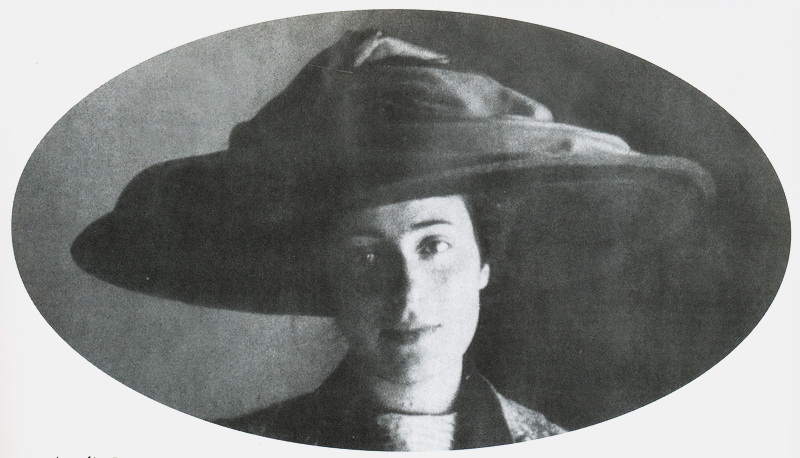
Photograph: Nora Barnacle as a teenager in Galway c 1895-1900

Mr Barnacle – take your pick!

In my recently published novel, Penelope Unbound, which splits James Joyce up from his wife, Norah Barnacle, and gives both of them an imagined life apart, I had to indulge in some literary matchmaking. My first task was to find a new wife for Joyce. I paired him off with Amalia Popper (see blog of October 10) a young woman he’d taught in Trieste, and for whom he held a romantic torch. His poetic fragment about unrequited love, Giacomo Joyce, was supposedly inspired by Amalia.

But that was only one half of the story. I also had to find a new romantic partner for Norah Barnacle. Somehow, I couldn’t imagine she’d be alone for long.

One of the fictional contenders for her hand was the Italian modernist writer and reluctant businessman, Italo Svevo, who, in real life, was a friend of Joyce’s (pictured together above). He came to Joyce for English lessons in Trieste in 1907.  As the friendship developed, Svevo (a pen-name ; his real name was Ettore Schmitz) admitted to Joyce his own literary ambitions. 

He’d written and self-published two novels, Una Vita (1893) and Senilità (1898), which had sunk without trace . The ignominy of this, and his burgeoning career as a businessman working for his wife’s paint manufacturing business, led to his abandoning his writing.

When Joyce read Svevo’s ignored early work, he proclaimed him a fine novelist, the equal of Anatole France. But he was too obscure a writer himself to be able to do much to aid his pupil’s literary efforts.

For his part, Svevo provided Joyce with lots of material for Ulysses. As Joycean scholar Terence Killeen notes, much of what Joyce wrote about Leopold Bloom’s Jewish background came from Svevo. “On the most basic level Joyce derived information about Jewish customs and perceptions from Schmitz (Svevo); he constantly bombarded the unusual Triestine businessman with queries about such matters. Schmitz, though he was not even formally a Jew by this stage, had experienced enough of that world as a child and a young man to be able to pass on a great deal of knowledge.

“There is also good reason to believe that elements of Bloom’s character derived from Schmitz. Bloom’s diffidence, his not entirely thoroughgoing cynicism, his gentleness, his reasonableness, the breadth of his sympathies, all seem to be characteristics that Schmitz shared.”

(Joyce also borrowed Svevo’s wife’s name, Livia, and her hair, for the Anna Livia of Finnegans Wake.)

However, after a gap of 25 years – described as “one of the longest sulks in literary history” – Svevo returned to writing and produced his masterpiece, La Coscienza di Zeno, (The Conscience of Zeno) in 1923 when he turned to Joyce again. This time, Joyce, living in Paris as a celebrated author after the publication of Ulysses, was much better placed to be of assistance. He helped to get Zeno published and turned the book into a literary success.

The Conscience of Zeno purports to be the journal of a man undergoing psychoanalysis, written at the behest of the analyst, and then published by the analyst to avenge the patient’s termination of his treatment.

Zeno Cosini, a Trieste businessman now in his late fifties, is a “hypochondriacal, neurotic, delightful, solipsistic, self-examining and self-serving bourgeois, a true blossom of the mal du siècle,” writes critic James Wood. ”The novel we are reading is supposed to constitute his memories.” 

Zeno recalls his attempts to give up smoking as well as his farcical attempts to find a wife. He goes through the four Malfenti sisters but ends up marrying the one he at first found the ugliest. He also describes his forays in business – Zeno is a terrible businessman who accidentally does very well.

“The entire novel must be read in the light of the comic paradox whereby Zeno thinks he is analysing himself while at the same time being certain that psychoanalysis lacks the means to analyse him. And given this paradox, what are his confessions for? ” writes Wood.

The novel, one of the first to challenge and mock psychoanalysis in the early 20th century, was an enormous success, thanks in no small part to Joyce’s promotion of it. Though perhaps not well known here, The Conscience of Zeno is considered a masterpiece of Italian modernism.

But that’s just mere real life.

None of this happens in Penelope Unbound.  Instead, Norah and Jim get parted; Joyce never meets Svevo. And it’s Norah Barnacle whom Svevo befriends. She ends up working in the Svevo household, first as a servant then as a governess to Svevo’s daughter Laetitia. 

And then? Well, you’ll have to read the book to find out.

The Conscience of Zeno was published 100 years ago this year; Italo Svevo was born on this day in 1861.

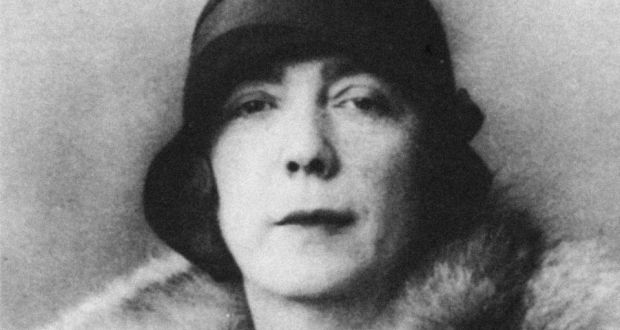
Photographs: (Top) James Joyce and Italo Svevo. (Below right): Norah Barnacle, a1926 portrait by American photographer Berenice Abbott.

Finding a new wife for James Joyce

Penelope Unbound, my new novel from Banshee Press, imagines an alternative life for Nora Barnacle without James Joyce. One of the challenges of writing speculative fiction is dealing with the domino effect. In other words, once you start tinkering with one life, all the other lives contiguous to it start to change too.

In the universe of Penelope Unbound, Joyce’s Ulysses has not been written, Dubliners has not been published and James Joyce and Nora Barnacle are no longer together.

As author of this universe, it was my job to find new partners for both of them. It’d be a spoiler to write at any great length here about Nora’s new partner, apart from revealing that he, like many of the characters in the novel, is a real person.

The other challenge was in finding a new wife for James Joyce. I chose Amalia Popper – pictured above – who was one of his many female English pupils in Trieste and who is generally considered to be the fantasy love object in Joyce’s short narrative fragment Giacomo Joyce, posthumously published in 1968.

Amalia Popper was born in 1891 into a prominent Jewish family in Trieste. Her father was a businessman, her mother a painter. Hers was a privileged upbringing, with a first-rate education supplemented by private tuition in English with Joyce. When she met Joyce first in 1908 she would have been 17 and in the last year of high school, although she studied with him again for entrance exams to university.

In Giacomo Joyce Joyce describes in elliptical terms his infatuation with the unnamed “lady of letters” who is pale of cheek, with ” long lewdly leering lips”, and eyes that “dim the breaking East”. He notes her “cobweb handwriting, traced long and fine with quiet disdain and resignation, a young person of quality”.

He is painfully uncertain in her presence, outside of the teacher/pupil scenario.

“I rush out of the tobacco shop and call her name. She turns and halts to hear my jumbled words of lessons, hours, lessons, hours: and slowly her pale cheeks are flushed with a kindling opal light.”

As the narrative continues his voyeuristic desire quickens. “I hold the websoft edges of her gown and drawing them out to hook them I see through the opening of the black veil her lithe body sheathed in an orange shift. It slips its ribbons of its moorings at her shoulders and falls slowly; a lithe smooth naked body shimmering with silvery scales.”

But the infatuation remains just that, and his feelings undeclared. At the end of Giacomo Joyce, the mystery” lady”, wearing a red hat and carrying a furled umbrella, walks out of his life.

But that was not the end of Amalia Popper’s association with Joyce.

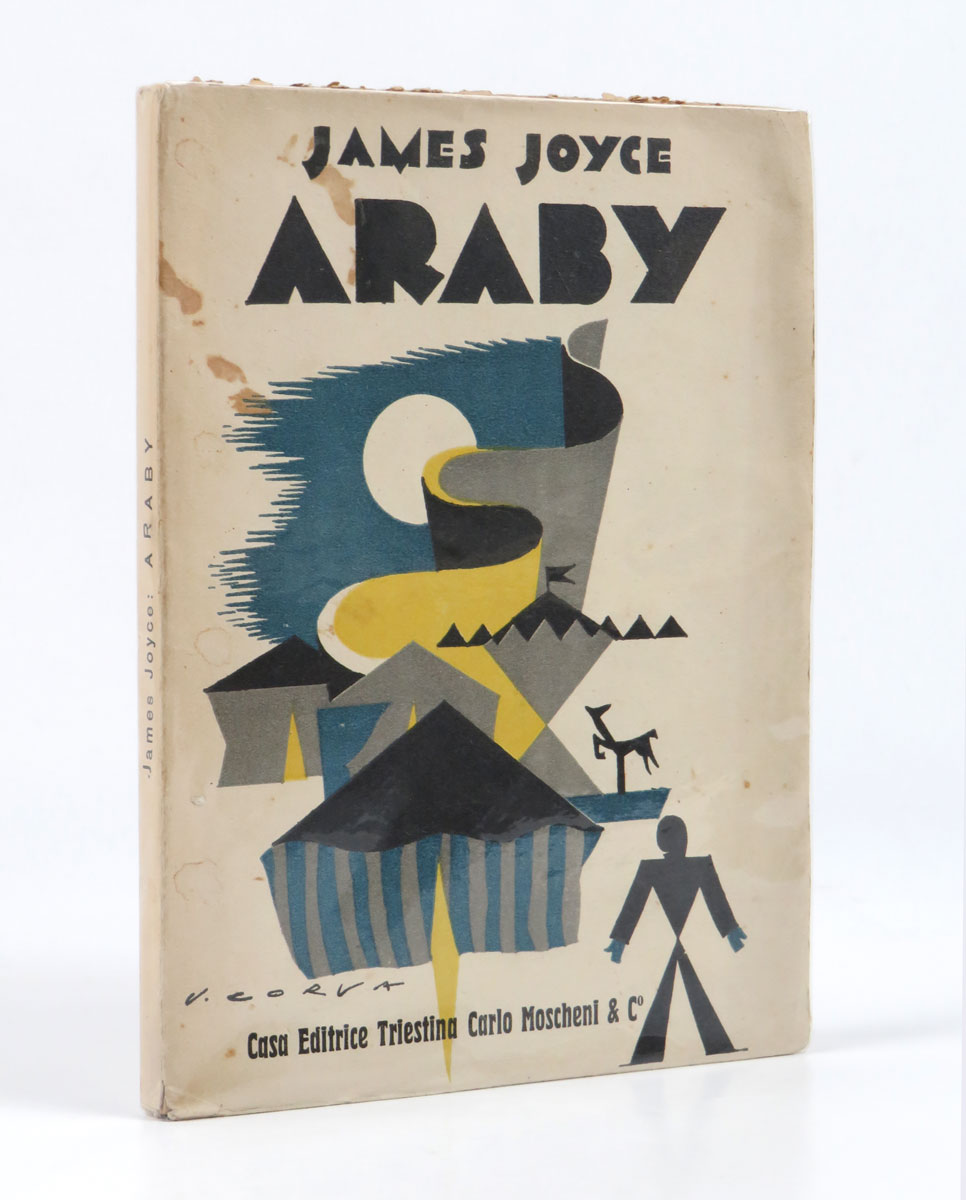
In 1929, over 20 years later, she became Joyce’s first Italian biographer and translator. Joyce’s brother Stanislaus had commissioned her to write an essay but she opted instead to translate some of the stories in Dubliners – “Araby”, “A Little Cloud”, “Counterparts”, “Eveline”, and “The Dead.”  Joyce revised and corrected the translated texts and in 1935 they were collected in Araby (pictured above) accompanied by a brief, authorised and, by all accounts, rather anodyne biography.

Given that Giacomo Joyce is a catalogue of the pains of infatuation, it’s ironic that Araby was chosen as the title of the translations. (It’s not clear whether Popper chose the title or Joyce insisted on it.) Either way, the story from Dubliners is perhaps Joyce’s most heart-rending take on the theme of unrequited love – a young boy who undertakes an odyssey to buy a trophy for the girl he’s afraid to approach.

If it was Amalia who titled it Araby, perhaps, subliminally, she knew of Joyce’s feelings and this was a nod to them. But that’s in the realm of speculation and I’ve done enough of that already!

However, if you were looking for the perfect literary wife for Joyce, Amalia Popper would have been a prime candidate. She was an intellectual, a scholar of Latin and Greek, with an abiding interest in literature. Conversely, Nora Barnacle left school at 12, never read Joyce’s work and in the early days of their association felt he’d have been much better off giving up writing and taking up singing as a career. But then, marriages are rarely made with such qualifications in mind.

Amalia Popper left Trieste in 1910 to study at the University of Florence. She subsequently married Michele Risolo, who was to become prominent as the editor of the Fascist newspaper Il Popolo di Trieste, and who was disapproving of the link between his wife and Joyce, even as she was translating his work. When Giacomo Joyce was published a year after her death, he consistently denied his wife was the mysterious woman described in it.

Amalia continued working as a translator, teacher and newspaper critic until her death in Florence after a long illness in 1967.

Penelope Unbound will be launched in Cork on Thursday October 12 at Waterstones @ 7pm, and in Dublin on Tuesday October 17 at Hodges Figgis @ 6pm.

Nora with an H

With only a month to go to publication date (October 5), I’m in author’s limbo. Penelope Unbound is out of my hands but not quite born yet. However, I do know what the cover looks like – some very clever graphics from Anna Morrison – and some great endorsements from fellow writers – thanks to Jan Carson, Kevin Power, Lisa Harding and Nuala O’Connor. There’s now nothing to do but wait until it’s launched.

The novel from Banshee Press is about Norah Barnacle. Just her. Not James Joyce, but as you can see from the cover, it’s impossible to escape his presence in the novel. It’s impossible to escape his presence, full stop! Even so, Penelope Unbound is a speculative fiction which imagines a life for Norah Barnacle without James Joyce.

It’s a “what” if tale. In it, I play the Goddess and split the pair up just after they arrive in Trieste in 1904. Joyce left Norah at the railway station when he went off to scare up funds and accommodation leaving her to guard the luggage. She waited the best part of a day for him to come back. In real life, she waited, but in Penelope Unbound she doesn’t.

I give Norah a completely different life without Joyce, although I do grant them a reunion – in Dublin 11 years later – but you’ll have to buy the book to see how that goes.

Eagle-eyed readers (especially all my old sub-editor pals out there) may notice that “my” Norah Barnacle has an H at the end of her name. This is not just a fictional device to emphasise the speculative nature of the book. In fact, according to Brenda Maddox’s biography, Nora, she was christened Norah, and before she met Joyce, that is how she spelled her name. It was he who insisted she change it – perhaps in deference to his literary hero Ibsen’s Nora in A Doll’s House?

So I unwind the clock and stick with the spelling she used as a young woman in Galway and the early part of her stay in Dublin. In her early letters to Joyce, she still signs herself Norah, but at some stage in 1904 she becomes Nora, perhaps when she became Jim’s (as she called him. )

While society demanded that women relinquish their family name on marriage for centuries, being asked to alter or change your first name is something different because it is so tied up with your singular identity. In this case, it was only a different spelling, but it created a before and after in Norah/Nora Barnacle’s life. This may very well reflect the truth of their situation – Norah and Joyce’s meeting certainly changed both of their lives.

But by insisting she change her name, Joyce became the “author” of her new identity as Nora.

And that’s the one we’re still using 119 years later.

Penelope Unbound is published by Banshee Press, October 5, 2023.

Almost Bloomsday

In honour of Bloomsday, here’s an extract from Penelope Unbound, my speculative novel about Nora Barnacle that imagines a life for her without James Joyce. Here’s the assignation Nora and Jim fail to have before they reschedule for the iconic meeting on June 16.

They’d arranged to meet outside the Surgeon Wilde’s house, but she didn’t show. Told him a fib about having to work overtime, how Miss Fitzgerald came up to her on her way out the door, as she was trying to spear her hat with a pin in the hall mirror, and said that Molly Fowler was sick and couldn’t do her shift. 

Sure what could I do?  

It could have happened like that. Only it didn’t.  Instead she’d said – But Miss Fitzgerald, I have a date with my young man. 

As if they were an item but sure they’d only just met.  He’d picked her up on Nassau Street only a few days ago with a saucy smile and a sailor’s suit. A boy with jamjar specs, not her type at all.

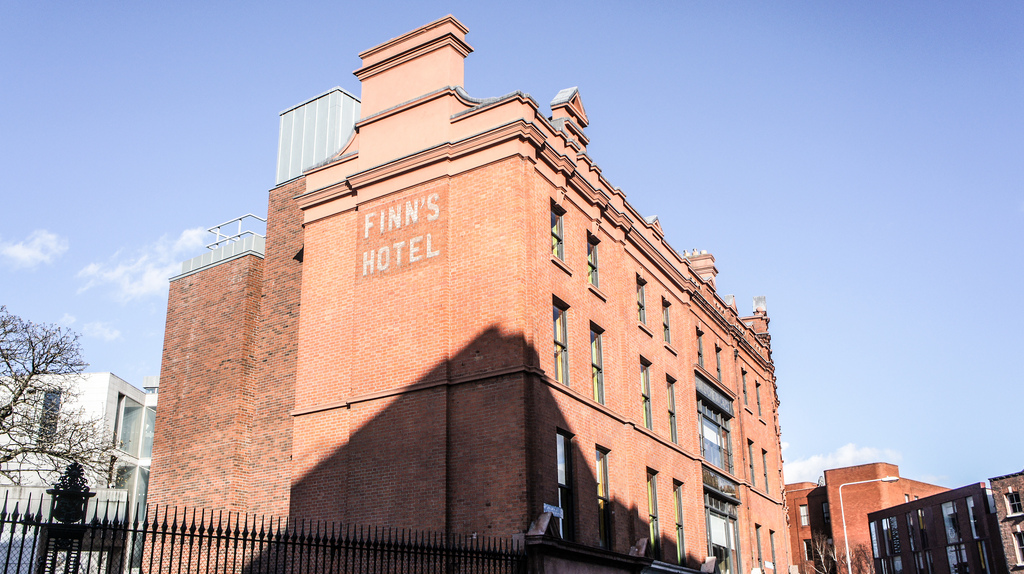
I see that, Miss Barnacle, says Miss Fitzgerald, looking into the glass behind her with a kind of smirk, more music-hall than spinster. And before Miss Fitzgerald had time to cajole, for she had a way of getting on the sweet side of you when she wanted something, Nora had pulled open the heavy front door of Finn’s and gone tripping out into the dusty sunlit lozenge of the street. 

But as she hurried, hand on hat, towards Merrion Square, a strange desolate feeling overtook her, a pang of doubt. She slowed her tripping step to a heavy-footed stroll, and then to a halt.  What had possessed her, to say yes?  Yes to a college boy with a boater. Though he wasn’t the first college boy she’d had. Hadn’t Sonny Bodkin been at the university, even if he didn’t finish, too old for her, they said – no, she wouldn’t think of him now, not now.  She darted around by Sweny’s Chemists and scurried across to the pillars of the Gospel Hall.  She could hear singing from within. The Brethren must be at it, but I thought they didn’t hold with singing. But the place is thronged with them. Just as well, this way she can spy on yer man without him seeing her. 

She remembered the specs he wore. He won’t pick her out from the crowd at this distance even though the sun is glancing coppery off her hair. And, sure enough, there he was, a stick of worry, standing at the corner, hands on hips. Then pacing a little this way and that. He had on the same get-up as the day he chatted her up. Not bad-looking up close, a bit skinny, pull-through for a rifle, when did he last have a square meal, I wonder, and his clothes had seen better days. Then she remembered she’d told him where she worked.  He could duck down to Finn’s, if he had a titter of wit, and ask after her and then her fib would be exposed.  He’d know then she’d stood him up.  Deliberate like. And it wasn’t that she wanted to say no, she just wasn’t sure about saying yes.  Outright. 

And if he had come to Finn’s looking for her, would that have decided her about him? She just wasn’t sure, not like with Sonny Bodkin. Poor Sonny who had stood in the Pres garden and called out to her in the flogging rain.  And she half-delighted, half-mortified by him standing there, loyal as a beaten dog while she hid in the darkness of the auntie-room letting on she wasn’t there.  But this fella was no Sonny Bodkin, she could tell that even from afar. Sure, no one could be.  No one could be the first after the first. 

He was dithering now, she could tell.  But so was she and the longer she waited the stranger he became.  Was he a foreigner, was that what made her hesitate? A Swede maybe with those blond looks?

 Reasons not to approach. Now that she was here she could find a dozen. The minutes passed, five, ten, and her delaying was like a jelly left to set. If she had a penny for every time he changed his mind she’d have a fortune. There he’d go, gathering himself up then doubling back like a dog at a post sniffing, then trying and sniffing again. The hum and the haw of him. 

Hello, hello, she could have rushed up all breathless and false and full of sorrys and old excuses he wouldn’t even listen to because he’d be so relieved. Fellas forget themselves. She almost moved then but she didn’t.  She was stuck to the spot as if she was the one being stood up. And as she stood there debating, didn’t he make her mind up for her.  Fixed his cap on his crown and strode away up the west side of Merrion Square.  In a temper, she’d have said, by the look of him.

 And then she felt the let-down. 

What did she go and do that for? 

What was all the mirror-gazing in Finn’s for, and wondering will I do? 

She remembered the lightness of her step as she had set off and now she was morose and cursing herself for being so perverse. 

What ails you, girl? That’s what Mamo used to say. What ails you.

 No, she told herself shaking her head, I did the right thing, a fella who’d pick you up on the street like that, what kind of fella would he be? Not a patch on Sonny Bodkin, that’s what. 

 She turned to go, checking one last time to see had he changed his mind.  But he hadn’t – he was a cross white speck in the summer sunlight now. She trailed back the way she came, her hat in her hand, her hair dejected. She hadn’t the heart to do anything else with her precious night off. If she knew where Vinny Cosgrave was she might seek him out, but no, if he saw she was keen, he’d only get a swelled head. 

Miss Fitzgerald was at the desk when she came in and raised an eyebrow. 

Back so soon, Miss Barnacle? She was a prissy one. 

He stood me up, Nora, said as she donned her apron, lucky for you.

Bringing up the bodies

nora b

T’is the season for exhumations. First it was Franco, now it’s Joyce.

Dublin city councillors agreed last week to approach the Government with a view to repatriating the remains of  James Joyce, buried with his wife Nora Barnacle in Fluntern cemetery in Zurich. Labour councillor Dermot Lacey, who proposed the motion, said it would be “honouring someone’s last wishes” – a delightfully vague locution. Does he mean Joyce?  Does he know something we don’t?

However, unwittingly, Cllr Lacey is right.  Seventy years ago, it was Nora Barnacle’s hope that Joyce’s remains be returned to Ireland. It was a matter of honour for her, perhaps tinged by a touch of funeral envy.

In 1948, still living in Zurich because she wanted to be close to her husband’s grave, Nora observed the official pomp and ceremony with which the body of the poet W. B. Yeats was repatriated to Ireland from the south of France where he’d died in 1939. (Yeats had long expressed a wish to be buried in Drumcliff  churchyard in Sligo.)

“The coffin was taken from France to Galway bay by a ship of the Irish navy; there the widow, her children and the poet’s brother were piped aboard.  Then a funeral procession escorted them from Galway to Sligo where Yeats was buried with a military guard of honour and representation from the Irish government,” writes Brenda Maddox in her biography of Nora. “Why not the same for Joyce?”

The answer at the time, of course, was that Yeats was in much higher standing in Ireland than Joyce was; he had served as a Free State senator, a “smiling, public man”, whereas Joyce remained in the Irish imagination of the time as “shocking, blasphemous and arrogant”, as Maddox puts it, whose books if not outrightly banned were seized at the borders.

However, unofficial approaches were made. Joyce’s American patron, Harriet Shaw Weaver asked Count Gerald O’Kelly, a former diplomat and art critic and Georgian afficionado, Constantine Curran, a boyhood friend of Joyce’s, to inquire if the Irish Government or the Royal Irish Academy would consider requesting the return of the body.

Miss Weaver believed that if Joyce’s remains were repatriated, then Nora and Joyce’s son, Giorgio, might consider returning themselves.  (Nora had told American interviewer, Sandy Campbell, that she’d like to have a “cottage in Ireland, but the Irish don’t like Joyce so there you are”.)

Maria Jolas, another lifelong campaigner for the Joyces, added her support saying that Joyce ‘s body should be be brought back because his widow wished it and because he was a towering figure of Irish literature.  With a view to her audience, she also declared that Joyce remained a good Catholic.

But this view was not shared in Dublin.  Count O’Kelly’s back-channel inquiries revealed there was little support for Joyce’s repatriation.  Ireland had apparently not forgiven him for his scandalous work and the plan came to nothing.

Unlike the 1948 campaign, the present move by Dublin city councillers seems motivated more by gain than honour.  The James Joyce “industry” has long been a tourist goldmine for the city.

The Bloomsday celebrations – memorialising June 16, 1904, the day Joyce had his first date with Nora, and the date he chose to set his novel Ulysses on – is a fixture on the tourist calendar, although it started as a spontaneous tribute to the writer by a small group of literati in Dublin.

Comic writer Brian O’Nolan (otherwise known as Flann O’Brien/ Myles na gCopaleen), poet Paddy Kavanagh, writer Anthony Cronin, registrar of Trinity College, A J Leventhal, publican John Ryan and dentist Tom Joyce, a cousin of Joyce’s, made the first Bloomsday pilgrimage on June 16, 1954.

The shambolic expedition, complete with two horse-drawn cabs – echoing the one taken by Bloom and his friends to Paddy Dignam’s funeral in Ulysses – was cut short before all the sites in the novel could be visited, due to the amount of alcohol that was consumed and the fractious mood of the participants. (Fisticuffs threatened between O’Nolan and Kavanagh)

Since then, Bloomsday  – still observed and enjoyed by Joyce’s literary admirers – has been all but hijacked for its tourist potential by the Dublin authorities.  It’s those same authorities who’ve been leading the charge to dig up Joyce from his burial place in Zurich and bring him home.

The Swiss authorities are thinking the same way. Director of the Joyce Foundation in Zurich, Fritz Senn said there would be “resistance” in Switzerland as Joyce’s  grave has become a major tourist attraction there. After all, Senn pointed out, Joyce never accepted Irish citizenship and the Irish Government of the time neglected to send an envoy to his funeral.

The Swiss provided much-needed sanctuary for the Joyces at the the outbreak of World War 2 and Nora continued to live there till her death in 1951.

Both cities clearly have their eye on the next big Joyce anniversary which comes in 2022, marking 100 years since the publication of Ulysses. 

In the meantime, is it a case of bring up your bodies? If so, who’s next – Samuel Beckett?  Look out, Montparnasse!


The eyes have it

hearn_portrait

Is having bad eyesight a pre-requisite for being a celebrated Irish writer?  Certainly James Joyce had his troubles often having to resort to wearing a patch to spare his eyes.  Throughout his life, he suffered from a catalogue of eye-related conditions –  iritis, conjunctivitis, glaucoma and cataracts. Some suggest his eye troubles were a by-product of syphilis, though this has never been confirmed.

Playwright Sean O’Casey was similarly afflicted, though it’s unlikely he had syphilis.  From the age of five he had continuous crippling bouts of conjunctivitis which in latter years developed into trachoma. In a letter to the American critic Brooks Atkinson in 1964, the year of his death, he wrote heartbreakingly of the plight of a writer going blind:

“I could read an illuminated sign out­doors,” he replied. “But not ordinary newsprint or the letter text in a book. All the hundreds of books around me are dumb. I can write a little, largely by sense of touch. But I cannot read back what I have put down.”

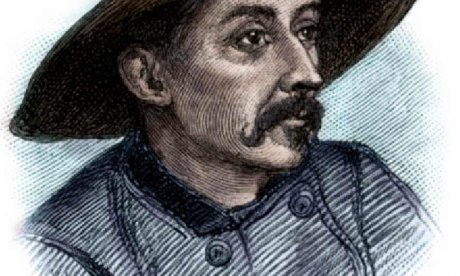
But perhaps the blindest of all was Patrick Lafcadio Hearn (1850 – 1904) – an Irish writer who is all but forgotten here now but who was a household name in Japan where he wrote a dozen or so books between 1891 and his death in 1904.

I discovered Hearn during an extended stay in Tokyo in 2010 where to be Irish meant you were automatically connected to the fame of Lafcadio Hearn. We visited Matsue, a city in the western Shimani region – a 16-hour journey by train from Tokyo where Hearn is the cornerstone of the city’s cultural tourism, although he only stayed there a little over a year.  There’s a Hearn memorial museum and his home is open to the public.  The city quarter where he lived in Matsue now bears his name and his stylised logo appears on the street lamps in the cobbled streets.  In souvenir shops you can even buy Lafcadio Hearn tea.

Hearn is considered a laureate in Japan, the single greatest foreign interpreter of the country at a time when the old Japanese ways and traditions were being abandoned.

But 20 years before he made his name in Japan, Hearn was a newly arrived emigrant in America, penniless and down on his luck.  From this lowly start he embarked on a career as a pioneering journalist in Cincinnati and New Orleans, specializing in closely observed depictions of the underbelly of society – grotesque murders, hangings, slaughter houses, dissection rooms, city dumps, and the lives lived in the poor black quarters of the city.  This despite the fact that he was blind in one eye, and the sight in the other was severely compromised as a result of an accident during a tug of war competition when he was a schoolboy.

Hearn was born on the Greek island of Lefkas in 1850.  His mother, Rosa Kassimati, was a native of the island; his father, an Irish surgeon stationed on Lefkas with the British Army. They called their first child after the island, hence Hearn’s exotic-sounding second name.  When he was two, his mother, Rosa, brought him to Dublin to live with the extended Hearn family, while his father was posted abroad.  But after a short period, Rosa, homesick and pregnant with a second child, decided to return to Lefkas, leaving Hearn in the care of his great-aunt, Sarah Brenane, in a house in Rathmines. (There is a plaque commemorating his time in this house on Prince Edward Terrace.) The little boy was never to see either parent again – they divorced when he was six.

Hearn’s education at a boarding school in England was brought to an abrupt end when his great-aunt Sarah’s finances crashed and at the age of 16 he had to start making his own way in the world.  It was the beginning of a peripatetic and picaresque existence that took him first to London, then Ohio, where he emerged aged 24 as a crime reporter and scandal chaser on the Cincinnati Enquirer and Commercial.

Hearn was one of the earliest exponents of the New Journalism, that is the original new journalism – the muck-rakers who dominated the American journalism scene in the late 1890s. (The term was resurrected again for the revolutionary immersive journalism of the 1960s).  Like his successors, Hearn used fictional techniques  – dialogue, literary description and placing himself as a character in the story –  that later exemplified the work of Tom Wolfe, Truman Capote, and Hunter S Thompson.

‘Gibbetted’, his eyewitness account of the botched hanging of an Irish youth was included in True Crime: An American Anthology (2008), a collection by the Library of America of the best American crime stories of the 19th and 20th centuries.

Hearn’s report contains some eye-watering details (forgive the pun) that must have been more imagined and felt then actually seen given the state of his eyesight. In the New Journalism style Hearn steeps himself in the story. He explores the background of the prisoner, visits the young man before the execution and examines the gallows as they are being constructed. He even gets to feel the pulse of the prisoner when the first hanging fails.

“The poor young criminal had fallen on his back, apparently unconscious with the broken rope around his neck, and the black cap veiling his eyes. The reporter knelt beside him and felt his pulse.  It was beating slowly and regularly.  Probably the miserable boy thought then, if he could think at all, that he was really dead – dead in darkness, for his eyes were veiled – dead and blind to this world but about to open his eyes upon another.  The awful hush immediately following his fall might have strengthened this dim idea.  But then came the gasps, and choked sobs from the spectators; the hurrying of feet, and the horrified voice of the Deputy Freeman calling ‘For God’s sake, get me that other rope, quick!!’  Then a pitiful groan came from beneath the black cap.

‘My god.  Oh my god!’

‘I ain’t dead – I ain’t dead!’

The insistent use of other senses in the piece – hearing and touch – speak of a man determined to compensate for his deficient eyesight. And his feel for atmosphere and his human empathy – essential for any journalist writing colour – is unquestionable.  His appetite for colour writing may have sprung from his personal life which was also extremely bohemian, to say the least, but that’s a story for another day.

Lafcadio Hearn was born on this day, June 27, 167 years ago.


Publication squared

wall inviteprosperity cover

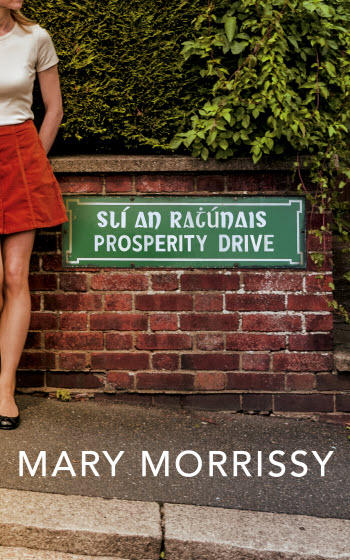
Saturday, April 23, sees the Cork launch of Prosperity Drive along with William Wall’s new short story collection, Hearing Voices, Seeing Things. The publication celebration – as it is billed – will round off a week of international book events in Cork’s World Book Fest and will be introduced by UCC’s Frank O’Connor scholar, Dr Hilary Lennon. William and I will be reading and may be asked a few questions. Wine will be free but books will be sold for ready cash. The event is on at 8pm in Triskel Christchurch, Cork.  All welcome!

Meanwhile, Prosperity Drive has been getting some great reviews.  Clare Kilroy in The Guardian (April 9) compares the collection to Joyce’s Dubliners – I’ll take that!

“Much of the considerable power of Morrissy’s prose lies in her technique of dipping seamlessly in and out of temps perdu,” Kilroy writes. “The compassion, immediacy, humour and delicacy with which Morrissy depicts their [the characters’] predicaments result in moments of profundity.”

Anne Cunningham in the Irish Independent (April 4) describes Prosperity Drive as close to both John Banville and Alice Munro: “Her style, her intense moments of close clinical dissection reminds me a little of John Banville. But she shows more compassion for her cast of characters, perhaps not unlike Alice Munro.  All human life is there on Prosperity Drive. . .It’s not a pretty picture.  But it’s a magnificent read.”

Joyce’s Other City

joyce's cafe

I’m just back from the Trieste Joyce School (June 30 – July 4) where I had the thrill of reading in the beautiful Art Deco Caffe San Marco, above, one of James Joyce’s many hang-outs in the city. Founded in 1914, when Trieste was still part of the Austro-Hungarian empire, the café was a meeting place for the city’s writers, radicals, and intellectuals. During Joyce’s ten years in the city beginning in 1904, he was a regular at the San Marco along with Triestine poet Umberto Saba and novelist Italo Svevo (often thought to be the model for Leopold Bloom in Ulysses).

It still attracts a literary crowd; in 2013 when the cafe was under threat of closure, writer and academic Claudio Magris, who regularly writes at a table there, made an impassioned plea to save the San Marco, describing it as “a place where you’re at peace, you read, you write, you chat. . . a heart of the city; a strong heart that beats calmly”.

The café has survived and hosted several events at the Trieste Joyce School. Now in its 19th year, the school is led by the calm and genial Irish scholar John McCourt, author of The Years of Bloom, about Joyce’s years in Trieste. He could be said to be following in Joyce’s footsteps as he has lived in Trieste since 1990. His local knowledge came to the fore during his immensely informative – and entertaining – walking tour where he brought to vivid life Joyce’s Triestine years.

During his research, McCourt recalled tracking down one of Joyce’s English language students in Trieste (Joyce worked for the Berlitz School), who was then aged 99. She remembered Joyce’s instruction – he apparently stuck to the manual – and wondered whatever became of Signore Joyce. (She hadn’t kept track of her erstwhile tutor.)

It seemed a little bit like coals to Newcastle reading from Dubliners 100 – Tramp Press’s centenary publication of new versions of Joyce’s stories ─ to Joycean scholars in a regular haunt in Joyce’s adopted city. (I rewrote An Encounter – see elsewhere on this blog.) But they were a great audience – despite the fact that it was a very hot night.

I also read from The Rising of Bella Casey, my novel about the sister of Sean O’Casey. Although O’Casey and Joyce were contemporaries, they never met – by the time O’Casey became prominent in Dublin, Joyce had already left, and even if he hadn’t, class and religion might have kept them apart. (Joyce was from a middle-class Catholic background; O’Casey working-class Protestant, though both shucked off their religion at an early age.)

But there were other echoes in the Joyce story that chimed with the experience of Bella Casey. When John McCourt talked about the relationship between James and his brother, Stanislaus, who came to Trieste on James’s urgings, the tensions he described seemed very familiar.

Stannie was a steady provider and a loyal – and very practical ─ supporter of his brother’s genius. He regularly saved Joyce and his family from penury, found them accommodation or shared his own with them. He was a fixer, debt-payer and first reader for his brother, but his was often a thankless role. After they became estranged – Stannie was less than enthusiastic about Ulysses and dismissed Finnegan’s Wake entirely – Joyce is said to have dismissed the loss of a brother as no more serious than mislaying a pair of gloves.

In the Casey family, Bella was often the one with her hand out. After her husband died, she was destitute, left with five children to raise alone, and she was forced to return to the family home, where O’Casey still lived. It was a situation that O’Casey deeply resented.

In his autobiographies (in which he referred to himself in the third person) he wrote: “So they struggled on, his mother always aiming at sparing as much as she could from her own dish as she dared, and paring a little from her own share of bread to faintly feed Ella (Bella) and her kids; and she went on darning night and day to prevent their rags from floating off their backs. It wasn’t a pleasant job for him (Sean) to be eating a dinner with a little army of hungry eyes watching him. . . At times, a surge of hatred swept through him against those scarecrow figures asleep at his feet for they were in his way, and hampered all he strove to do, and a venomous dislike of Ella charged his heart.”

Perhaps all this proves is that both Joyce and O’Casey were utterly single-minded in the pursuit of their art and that nothing – least of all the circumstances or the finer feelings of their siblings – was allowed to interfere with the work in progress.

True to the spirit of Joyce

Image

I’m really thrilled with this review by John Boland  in the Irish Independent of Dubliners 100, which gives special mention to  An Encounter, my take on Joyce’s story of the same name. The book, from newcomers Tramp Press – run by the indefatigable Lisa Coen and Sarah Davis-Goff –  showcases the work of 15 contemporary Irish writers who recast Joyce’s stories a hundred years after they first appeared in 1914.

‘It is not my fault,” James Joyce told his London publisher, Grant Richards, “that the odour of ashpits and old weeds and offal hangs round my stories. I seriously believe that you will retard the course of civilisation in Ireland by preventing the Irish people from having one good look at themselves in my nicely polished looking-glass.”

Less vehemently, he also told Richards that his intention was “to write a chapter of the moral history of my country and I chose Dublin for the scene because that city seemed to me the centre of paralysis. I have tried to present it to the indifferent public under four of its aspects: childhood, adolescence, maturity and public life”.

He wrote those words more than a 100 years ago and now, on the centenary of the first publication of Dubliners, we are offered 15 new stories bearing the same titles that Joyce used, each of them written by a contemporary irish author, and each of them purporting to offer modern ‘cover versions’ of the original.

That, at any rate, is the phrase used by Thomas Morris, who has edited the book for Tramp Press, which was founded in the past year by Sarah Davis-Goff and Lisa Coen, both of whom met when when they worked at Antony Farrell’s Lilliput Press – where the former discovered Donal Ryan’s The Spinning Heart, which was previously rejected by more than 40 publishers.

It’s unclear, though, what Morris (who recently took up editorship of The Stinging Fly magazine) means by “cover versions” – indeed, his blithely offhand introduction, which is more about himself than the project in hand, suggests not only that he’s unsure himself, but also that he’s not really too bothered about it anyway.

This may explain why he includes a story by Paul Murray that was originally published in 2011 under the name Saint Silence and that’s here been retitled A Painful Case, even though its account of the strange relationship that evolves between a contemptuous (and implausible) restaurant critic and a contemplative monk bears only the most tenuous connection, whether in scenario or tone, to Joyce’s tale about Mr James Duffy.

Nor can it easily be discerned how Patrick McCabe’s raucously fanciful The Sisters bears any relation to Joyce’s opening story, or Peter Murphy’s laboriously contrived The Dead to its majestic antecedent.

And a few other stories are simply too poorly conceived and executed to have merited inclusion in any serious collection. But there are some intriguing – and, indeed, a few outstanding – stories here by writers who have sought to imagine current correspondences to their assigned originals – even if very obliquely in the case of Donal Ryan’s take on Eveline and Eimear McBride’s on Ivy Day in the Committee Room.

Yet while Ryan and McBride have been the two greatest recent discoveries in Irish fiction, the finest stories here – and also the truest to the spirit of the enterprise – are by less acclaimed writers, though mention should also be made of John Boyne’s Araby, in which a boy’s crush on a rugby-playing older boy evokes some of the desolation to be found in Joyce’s original beautiful story. John Kelly’s A Little Cloud, which recasts the condescending Ignatius Gallaher as a New York-based novelist and has him meeting the hapless Little Chandler (here Inky Chandler) in the Merrion Hotel, is also persuasive, as is Andrew Fox’s After the Race, set in Manhattan and involving boasting businessmen as the embodiments of paralytic malaise. Joyce would have known them for what they are.

And he would have appreciated Michelle Forbes’s affecting version of Clay, in which Maria has become the overweight and innocent Conor making his way home to the bleak domestic outpost of Cherrywood, where he’s mocked by a group of trick-or-treating teenage girls.

He would have recognised, too, the hollowness of housewife Kathleen’s existence in Elske Rahill’s A Mother. The story falters towards the end, but the desperation of the loveless Kathleen as she contrives a ghastly social evening is poignantly captured.

Finest of all, though, is Mary Morrissy’s reimagining of that great story, An Encounter, with mitching schoolboy Joe Dillon now becoming schoolgirl Jo Dillon as she and the narrator embark on a mundane though ultimately life-changing jaunt through the middle-class peacefulness of Churchtown and Dartry. The story stands on its own but it’s also true to the spirit of Joyce, who would have applauded its lovingly detailed evocation of place.